If you have ever walked up to a house and thought, How do their porch planters look that put-together? I can almost guarantee they are following some version of the same simple recipe: thriller, filler, spiller.
It is my favorite container shortcut because it works on a grand wraparound porch and on a tiny stoop with one pot. You pick a tall focal plant (the thriller), surround it with lush “body” plants (the filler), and finish with something that drapes over the rim (the spiller). Done right, it looks intentional from the curb and cozy up close with your morning coffee.

What the formula means
Thriller: the star
The thriller is your eye-catcher. It brings height, structure, and that “designed” look. Think spiky, upright, or architectural plants.
- Goal: height and drama
- Where it goes: usually the center of a round pot, or slightly back in an urn that will be viewed from the front
- How many: typically one per container, unless your pot is very large
Filler: the fluffy middle
The filler makes your container look full and lush. These are mounding or bushy plants that knit everything together and hide bare soil.
- Goal: fullness, color, texture
- Where it goes: around the thriller, filling most of the pot
- How many: often 2 to 6 plants depending on pot size and plant spread
Spiller: the soft edge
The spiller trails over the rim and instantly makes a pot feel abundant. It also softens hard porch lines like steps, railings, and brick.
- Goal: movement and a finished look
- Where it goes: near the edge so it can drape naturally
- How many: 1 to 3, depending on how “cascading” you want the look
Step-by-step: build a professional-looking porch planter
Step 1: Pick the right pot size
If you want that full, magazine-worthy porch moment, size matters more than people think. A too-small pot dries out fast and looks skimpy, even with good plants.
- Front door flanking planters: aim for 18 to 24 inches wide (or larger if your porch can handle it).
- Single accent pot by steps: 14 to 20 inches wide is usually plenty.
- Drainage: non-negotiable. Make sure there is at least one drainage hole.
My porch rule: a pot should feel “heavier” than you think you need. It reads more grounded and welcoming from the curb.
Quick safety note: bigger containers get very heavy once watered. Set them in place before you fill, and keep walkways and door swings clear. If your porch is windy, consider a heavier pot or a wider base so it is less likely to tip.
Step 2: Match plants to your light
Before you fall in love with a plant at the nursery, stand on your porch and check how many hours of sun the pots actually get. Labels vary a bit by source, but these guidelines work well for most containers.
- Full sun (6+ hours): great for heat lovers and blooms.
- Part sun or part shade (about 3 to 6 hours): often the easiest zone for mixed containers.
- Shade (under 3 hours): focus on foliage texture and a few shade bloomers.
Step 3: Do a quick “tall, medium, trailing” sketch
I like to make a quick mental sketch: one tall shape, two or three medium mounds, one trailing edge. This prevents the classic impulse-buy cart that does not play nicely together once you get home.
Step 4: Use potting mix, not garden soil
Use a quality potting mix so water drains and roots can breathe. Garden soil compacts in containers and leads to unhappy, soggy plants.
If you are planting for a whole season, I also mix in a slow-release fertilizer (follow the bag directions) so the pot keeps performing without constant fuss.
Step 5: Plant in layers
- Place the thriller: center (round pot) or slightly toward the back (one-sided viewing, like against a wall).
- Add fillers: cluster them around the thriller, alternating colors and textures.
- Tuck in spillers: near the rim where they can drape over the edge.
Spacing tip: plants look best when they can touch a little. I plant containers a bit more snug than I would in a garden bed, because I want that full look quickly.
Step 6: Water deeply and finish the top
Water until you see it run out the bottom. Then top-dress with a thin layer of pine fines, small bark, or even a simple ring of smooth stones if you love a tidy look. It helps hold moisture and looks finished.
If your porch surface is precious, lift pots slightly with pot feet or a low-profile tray so water can drain without leaving a stain.
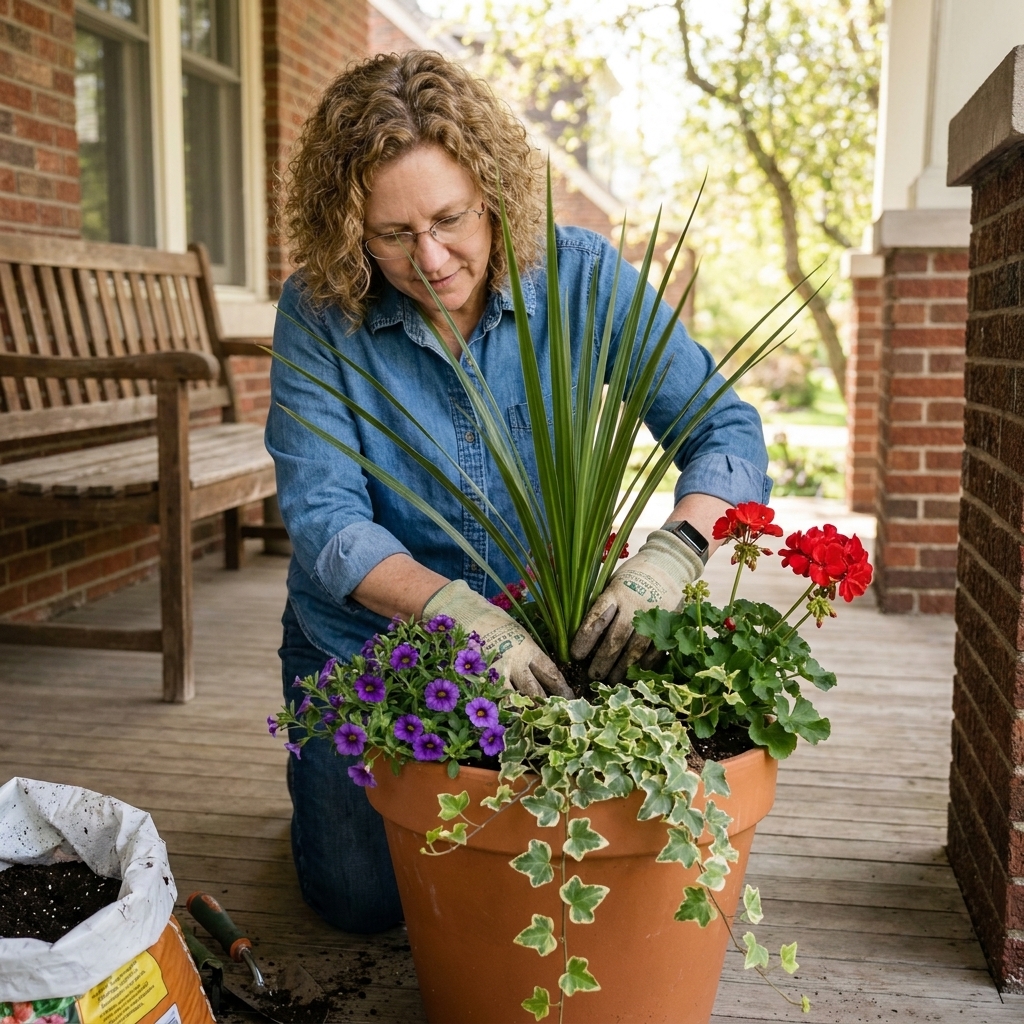
Easy plant picks for thrillers, fillers, and spillers
These are tried-and-true porch container plants that are commonly available and play nicely together. Always double-check that a specific variety suits your sun level and your climate.
Thriller ideas
- Full sun: ornamental grasses (like purple fountain grass), cordyline, canna, upright rosemary
- Part shade: coleus (taller types), dracaena spike, compact hydrangea (large pot; overwintering may be needed in cold zones), dwarf conifer (cool seasons)
- Shade: cast iron plant, taller ferns, caladium (taller cultivars; tender/seasonal), large hosta (bold focal foliage)
Filler ideas
- Full sun: petunias (mounding types), lantana, geraniums, dusty miller, zinnias (compact), angelonia
- Part shade: impatiens, begonias, coleus (mounding types), heuchera, torenia
- Shade: begonias, ferns, heuchera, caladium, browallia
Spiller ideas
- Full sun: sweet potato vine, calibrachoa, trailing verbena, nasturtium
- Part shade: creeping jenny (likes consistent moisture), sweet potato vine, trailing bacopa
- Shade: creeping jenny (best when kept moist; can spread aggressively in-ground), trailing ivy, lamium
3 easy porch combos
If you just want a plan you can run with, here are three combinations that look polished without feeling fussy.
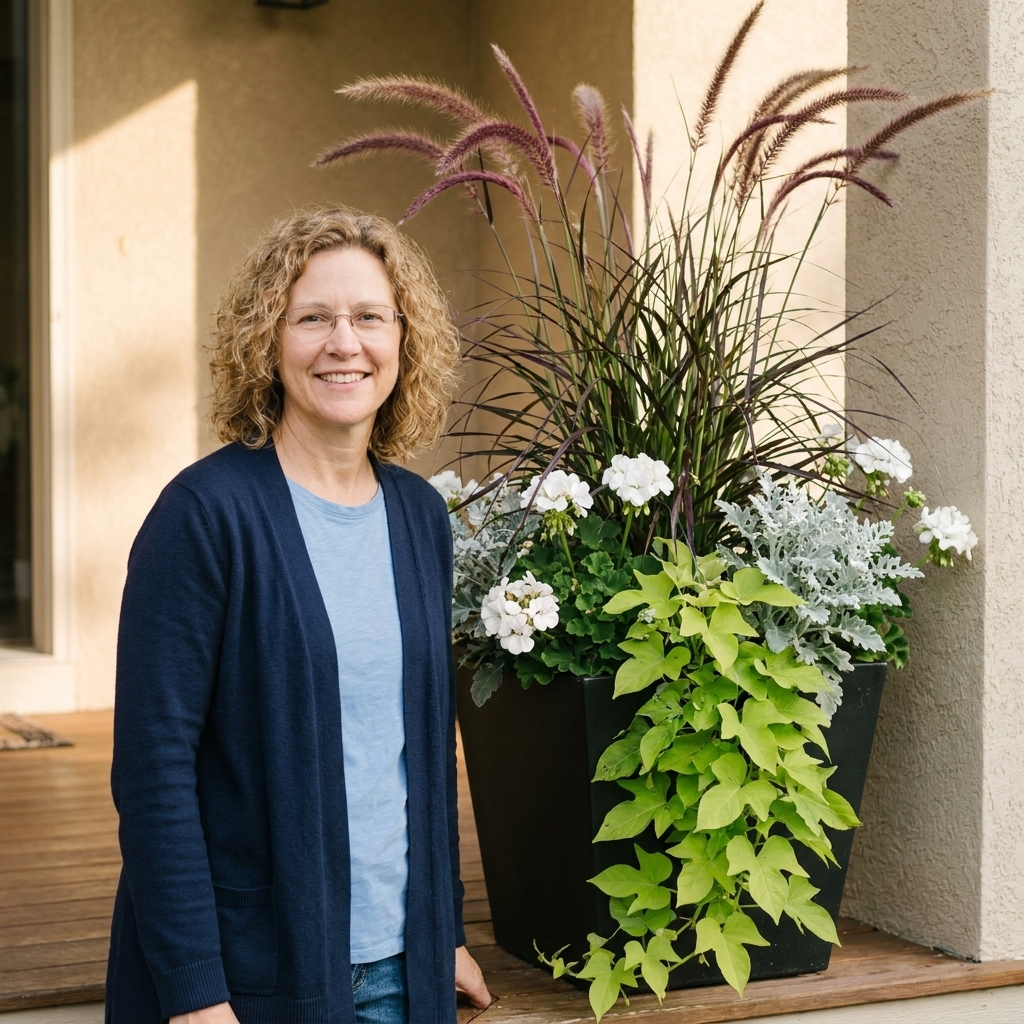
Classic sunny porch
- Thriller: purple fountain grass
- Filler: white geraniums + dusty miller
- Spiller: sweet potato vine (lime green)
This one is hard to mess up. The grass adds height, the geraniums give sturdy color, and the vine spills like a waterfall when it is happy.
Part-shade porch
- Thriller: dracaena spike or tall coleus
- Filler: begonias (wax or tuberous) + coleus (mounding)
- Spiller: creeping jenny
Great for covered porches that get morning sun or dappled light. You get color even without blasting sun.
Mostly shade porch
- Thriller: tall fern or cast iron plant
- Filler: heuchera + caladium
- Spiller: trailing ivy
In shade, texture does the heavy lifting. This mix looks rich and layered, even with fewer flowers.
Make it look intentional
Repeat one element
Professional-looking porches almost always repeat one element: matching pots, the same thriller in both planters, or a repeated color (like white blooms on both sides of the door).
Keep the color story simple
- Soft and classic: white + green + a touch of silver
- Cheerful cottage: pink + purple + chartreuse foliage
- Modern: green foliage + one bold color (like red or deep magenta)
Design for the viewing angle
If your planter sits against a wall, treat it like a mini stage. Put the thriller slightly back, fillers in the middle, and let spillers trail forward. For pots you walk around, place the thriller dead center and distribute spillers evenly.
Use odd numbers when it fits
In one container, clusters of 3 (three of the same filler, for example) tend to look more natural than pairs.
Care basics
Watering
Porch planters dry out faster than in-ground beds, especially in sun and wind. In peak summer, daily watering is not unusual for smaller pots.
- Water in the morning when you can.
- Soak deeply until water drains out the bottom.
- If the soil pulls away from the pot edge, it is too dry. Water slowly, let it soak, then water again.
Feeding
Even with slow-release fertilizer mixed into the soil, blooming containers usually appreciate a liquid feed every 2 to 4 weeks, depending on the product and plant load (always follow label directions). Your fillers and spillers are doing a lot of work, so a little snack helps.
Trim for fullness
If your spiller gets leggy or your filler starts looking tired, trim it back by a few inches. It feels scary the first time, but most container plants bounce back bushier and happier.
Seasonal swaps
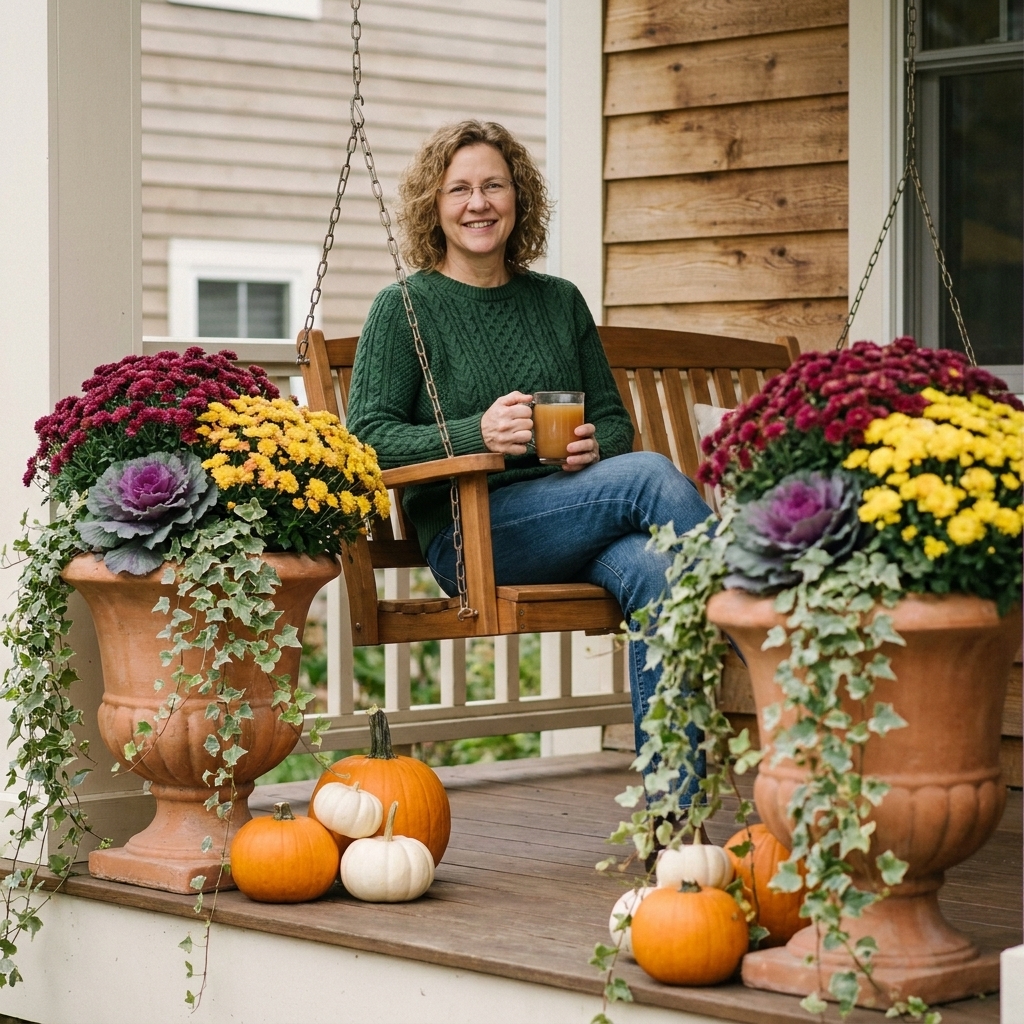
The same formula works year-round. In spring and summer, most people lean on annuals for nonstop color. In fall, you can swap in mums, ornamental kale, and peppers. In winter, evergreens, twigs, and berries make beautiful porch pots without needing a single bloom.
If you use shrubs or perennials in containers (like hydrangea or a small conifer), remember that roots in pots feel colder than roots in the ground. In cold climates, plan for winter protection or treat them as seasonal features.
Common mistakes and quick fixes
“My pot looks flat.”
You are missing height. Add a thriller, or swap in a taller one. Even an inexpensive dracaena spike can transform a container.
“Everything is the same texture.”
Mix leaf shapes: something spiky, something rounded, something trailing. Texture contrast reads as “designer,” even in a simple green-and-white pot.
“It looked great for two weeks, then fizzled.”
Usually watering and nutrition. Check drainage, water more deeply, and add a regular feeding schedule. Also make sure your sun conditions match what you planted.
“My spiller is not spilling.”
Move it closer to the rim, give it time, and make sure it is getting enough light. Some spillers trail slowly at first, then take off once roots settle in.
FAQ
How many plants do I need for one porch planter?
For an 18 to 20 inch pot, a common starting point is 1 thriller + 3 fillers + 1 to 2 spillers. Larger pots can handle more fillers. The goal is “comfortably full,” not crammed solid.
Do I have to use flowers?
Not at all. Foliage-only containers can look very high-end, especially on a porch. Think grasses, heuchera, ferns, ivy, and interesting leaf colors like chartreuse, burgundy, and silver.
How do I make two planters by my door look coordinated?
Keep at least one element the same in both pots: matching containers, the same thriller, or the same main color. Then you can vary the fillers a bit for a relaxed, collected look.
A cozy takeaway
If you remember nothing else, remember this: one tall plant, a handful of lush “body” plants, and something that trails. The thriller, filler, spiller formula is not about rules for the sake of rules. It is a shortcut to that welcoming, lived-in feeling we all want when we come home.
And if you try a combo you do not love, that is not failure. That is porch practice. Every season teaches you something, and your next container will be even better.