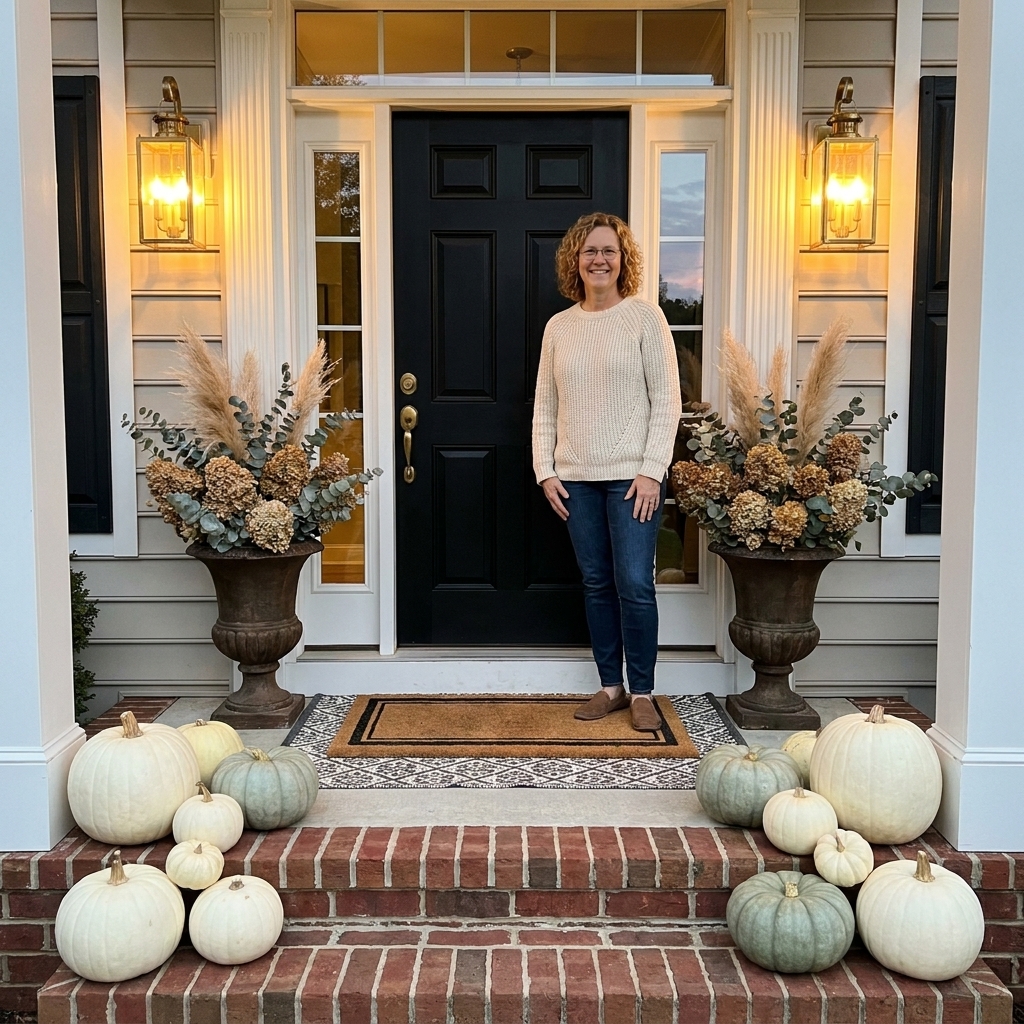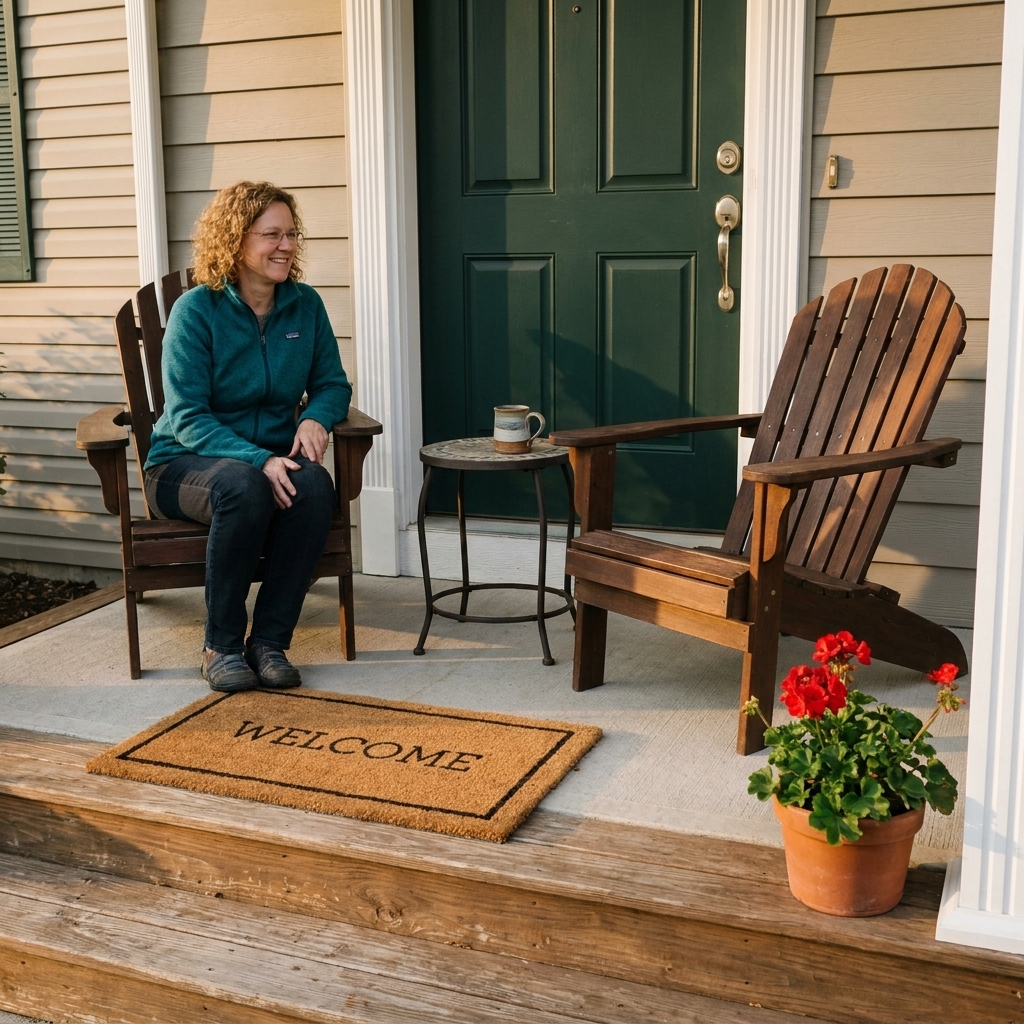
There is a certain week in late summer when my front porch starts to feel like it is asking for a sweater. The petunias get a little leggy, the heat-loving trailing “spiller” plants look tired by afternoon, and suddenly that first cool morning coffee feels like a hint. The good news is you do not need brand-new planters or a total redo. With a quick clean-out and a few cold-hardy swaps, your summer pots can become fall showstoppers in an afternoon.
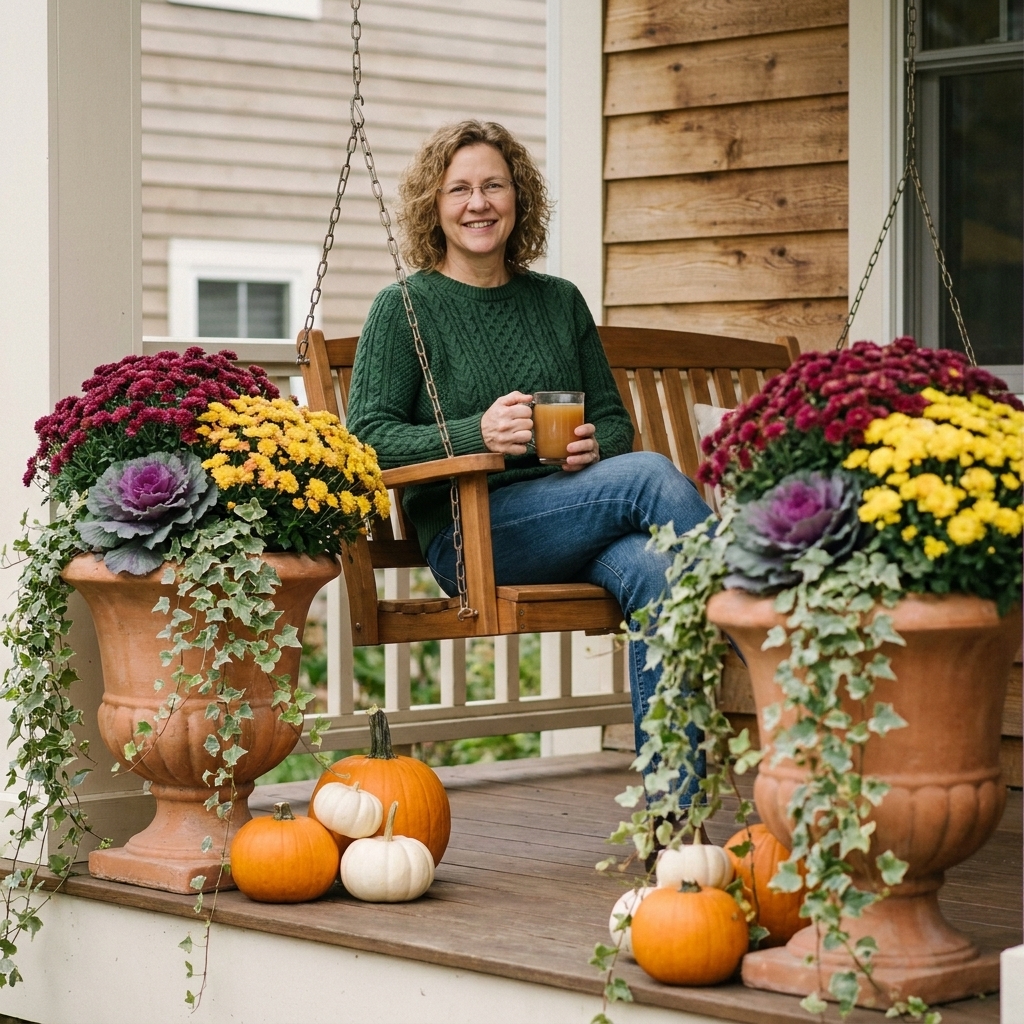
Before you start: pick your fall porch vibe
I always decide on a simple color story before I buy a single plant. It keeps the whole porch feeling intentional, even if you are mixing grocery store mums with yard clippings.
- Classic harvest: orange pumpkins, yellow mums, burgundy accents.
- Moody fall: plum mums, deep greens, lots of texture.
- Neutral cozy: white pumpkins, creamy mums, ornamental cabbage, dried grasses.
- Farmhouse green: evergreen boughs, kale, ivy alternatives, minimal pumpkin color.
Then take a quick look at your porch from the curb. If your front door is a bold color, let the planters be a little calmer. If your door and siding are neutral, your planters can do the talking.
One timing note: first frost dates vary wildly. If you love tender plants (coleus, dracaena, purple fountain grass), check your average first frost and treat those as “early fall” only.
Supplies I actually use (and why)
- Hand pruners for cutting out summer annuals and trimming roots.
- Garden gloves because dried stems and old soil can be scratchy.
- Fresh potting mix to fluff and top off tired summer soil.
- Fertilizer (optional) only if plants look pale and temperatures are still mild. Once nights turn cold, I usually skip it.
- One thriller plant, 1 to 2 fillers, and 1 spiller for each pot.
- Natural accents: mini pumpkins, gourds, dried hydrangea, grasses, pinecones.
If you are reusing soil, do yourself a favor and add fresh mix to lighten it. Summer soil is often compacted and salty from frequent watering, and fall plants love a fluffier home.
Step-by-step: swap summer annuals for fall-ready planters
Step 1: Remove what is done, keep what still works
Start by cutting back and pulling out tired annuals like petunias, calibrachoa, impatiens, and vinca. If anything still looks lush and will tolerate cooler nights, you can keep it as a temporary filler. I sometimes leave sweet potato vine or a hardy trailing plant for a week or two while I transition.
Quick tip: If the roots are circling the pot like a spaghetti bowl, take a few minutes to loosen and remove the thickest root mass. It makes room for new plants and helps water soak in.
Step 2: Check drainage and reset the soil
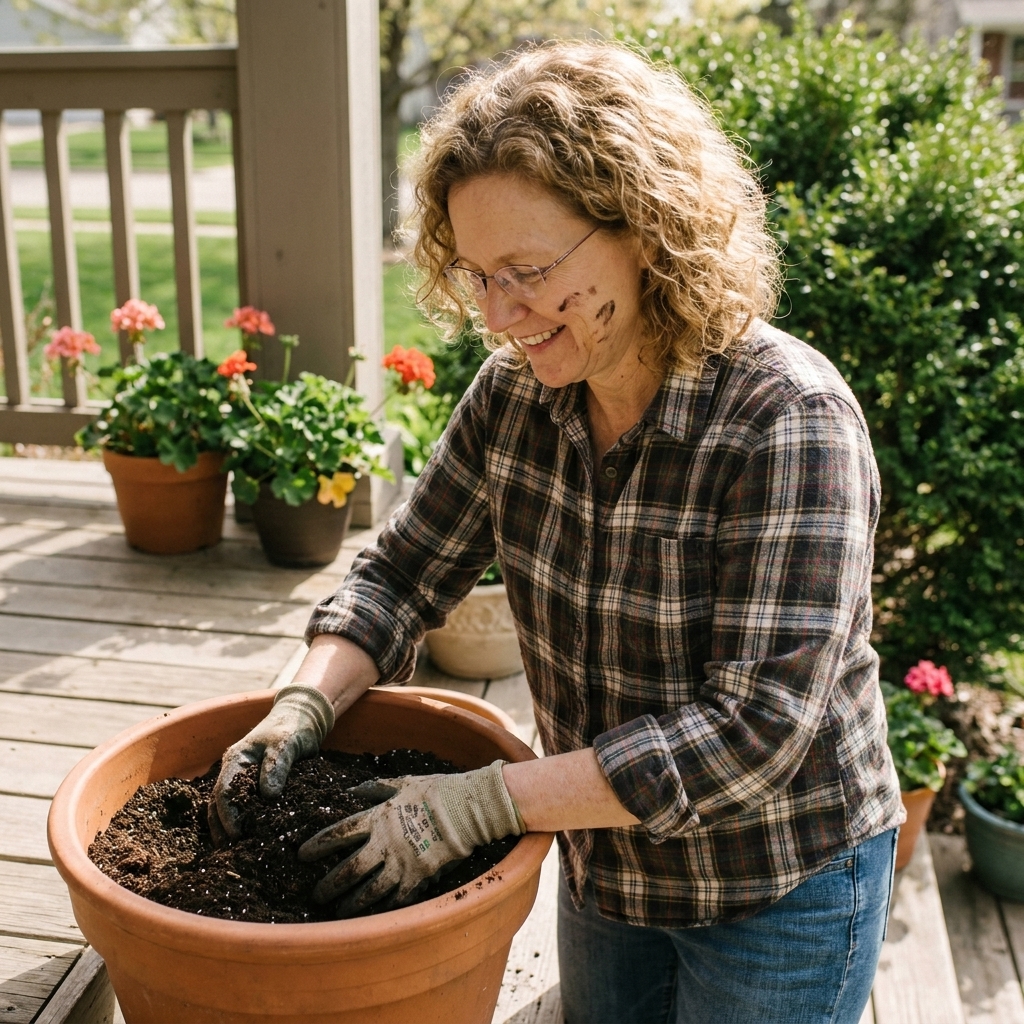
Fall plantings rot faster in soggy pots, especially when nights turn cool. Make sure your planter has a drainage hole, and clear it if it is clogged. Then fluff what is left of your soil and top off with fresh potting mix.
Also worth saying out loud: skip the gravel layer at the bottom. It does not improve drainage in a container. A clear hole and quality potting mix do the heavy lifting.
Step 3: Choose cold-hardy stars
These are my go-to porch plants because they handle chilly nights and keep their looks.
- Mums (Chrysanthemum): the easiest fall color. Treat them as seasonal accents, and they will carry your pots for weeks.
- Ornamental kale and cabbage: big ruffled rosettes that look better as temperatures drop.
- Pansies and violas: sweet faces that tolerate cold and bounce back after light frost.
- Heuchera (coral bells): strong foliage color, great for a pulled-together look.
- Evergreen accents: small conifers, dwarf spruce tops, or tucked-in cedar bits later in the season.
- Grasses and grass lookalikes: for true cold, look for sedges or hardy switchgrass. Purple fountain grass is gorgeous, but it is tender in many climates, and it can be invasive in some regions, so I treat it as a short-term, early fall option.
- Bonus fall bloomers (region-dependent): asters are great where you can find them, and cyclamen can be a pretty porch choice in mild climates.
Heads up on frost: “Cold-hardy” is not one-size-fits-all. A light frost is often fine for kale, pansies, and many heucheras. Tender plants like coleus and some ornamental grasses will collapse once true cold arrives.
Step 4: Plant using a simple formula
Even if you do not love rules, this one saves money because you buy only what you need.
- Thriller: something taller for the back or center. Try an ornamental grass that is hardy for your area, a small evergreen, or dried branches. Black mondo grass and burgundy dracaena can look stunning, but they are best for mild climates or early fall before a hard freeze.
- Fillers: one to three mounds for fullness. Mums, kale, pansies, and heuchera shine here.
- Spiller: something that cascades. Ivy can work into early winter in some areas, but containers freeze faster than the ground, so expect dieback after hard freezes. Also, English ivy is invasive in many regions, so I treat it as a container-only plant and never toss it into the yard. If ivy is a no for you, try creeping wire vine, hardy sedum trailers, or just let a kale leaf edge do the drape.
Set plants in the pot (still in their nursery containers) before you commit. Step back and look from the sidewalk. If it feels lopsided, rotate the pot or shift your tallest plant slightly off-center for a more natural look.
Pot reality check: bigger pots buffer temperature swings better than small ones, and they dry more evenly. Also, resist overstuffing. A little airflow helps prevent rot once days get shorter and damp mornings show up.
Step 5: Water deeply, then let the pot dry slightly
Right after planting, water until it drains out the bottom. After that, fall pots usually need less water than summer pots. Check with your finger. If the top inch feels dry, water. If it still feels cool and damp, wait.
How to add pumpkins and dried elements without making a mess
This is where porch planters really start to feel like fall. I like to think of these as the jewelry for your pots.
Pumpkins and gourds
- Place them at the base of the planter for a gathered, welcoming look.
- Tuck mini pumpkins into the soil only if the pot is roomy and you can keep them dry. Too much moisture speeds up rot.
- Use odd numbers like 3 or 5 for a natural grouping.
- Mix textures by combining smooth white pumpkins with bumpy gourds.
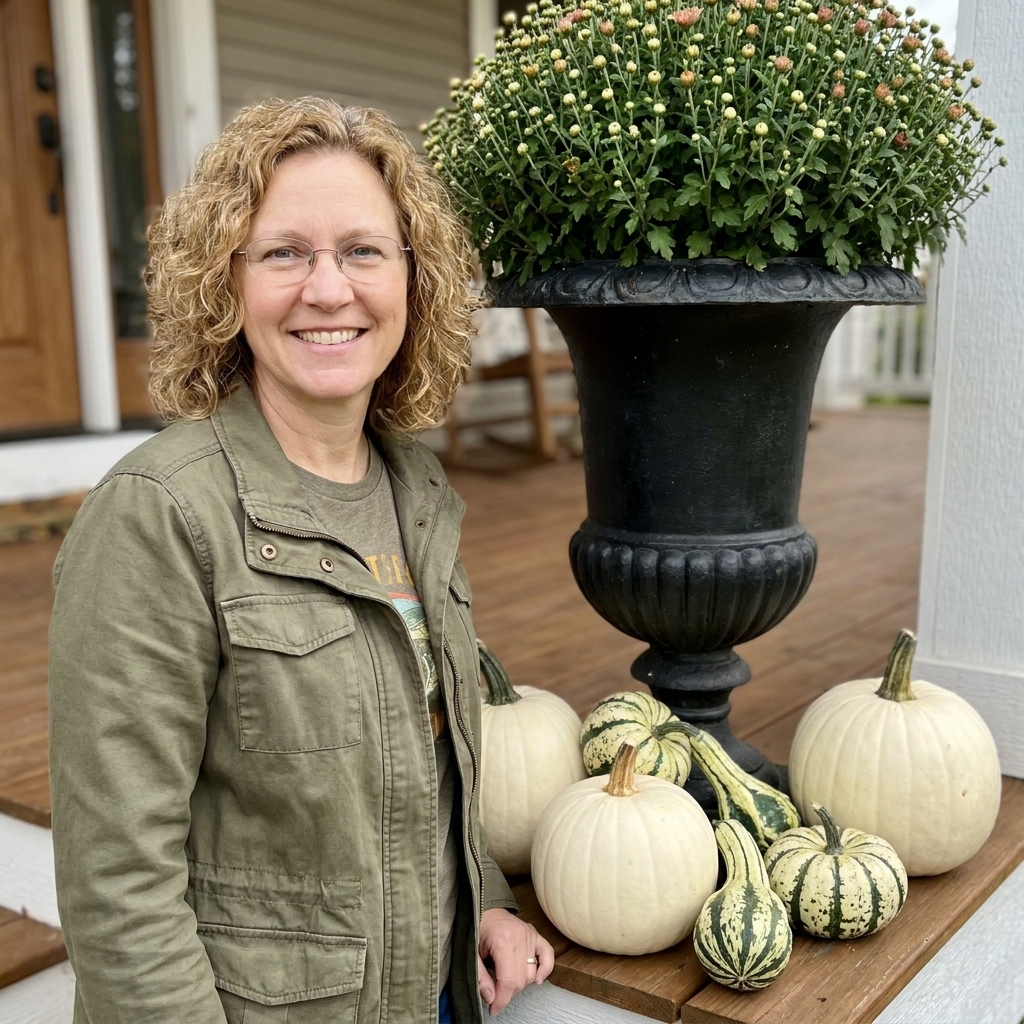
Dried stems
Dried elements add height and that crisp, swishy fall feeling. Just keep them out of the main splash zone when you water.
- Dried hydrangeas: cut from your yard, air-dried, then tucked in like floral picks.
- Wheat, oat grass, or dried millet: great for a farmhouse look.
- Birch branches: add clean, sculptural height.
- Magnolia leaves: glossy, rich, and beautiful against white pumpkins.
My porch trick: If a stem is floppy, I slide it into the soil beside a thin stake or a leftover plant tag for support. Invisible, but it stands tall.
Fall planter recipes you can copy
1) Cozy neutral urn
- Thriller: dwarf evergreen or tall dried birch branches
- Filler: cream mums + ornamental cabbage
- Spiller: sedum trailer or container-only ivy where appropriate
- Accent: white mini pumpkins at the base
2) Classic harvest porch pot
- Thriller: hardy grass or dried stems for height
- Filler: yellow mums + burgundy heuchera
- Spiller: trailing sedum or a tough trailing annual until frost
- Accent: orange pumpkins and a few pinecones tucked near the rim
3) Moody fall statement planter
- Thriller: small spruce or upright branches
- Filler: deep plum mums + purple kale
- Spiller: variegated sedum or container-only ivy where appropriate
- Accent: dried hydrangea heads in burgundy tones
Keeping your fall planters looking fresh
- Deadhead mums by pinching off brown blooms. It instantly tidies the pot.
- Rotate pots every week or two if one side gets stronger sun.
- Watch watering as temperatures drop. Overwatering is the fastest way to lose fall plants.
- Protect on the first hard freeze by pulling pots closer to the house or under cover. Even a little shelter helps.
- Refresh accents instead of replanting by swapping in new pumpkins, adding fresh pinecones, or replacing tired dried stems.
If you want your porch to glide from fall into early winter, choose at least one evergreen element now. Later, you can pull the mums and kale and replace them with pine boughs without starting over.
FAQ
When should I switch my summer planters to fall?
I usually transition when nights consistently cool down and my summer annuals start looking worn out even with regular watering. If you are seeing leggy growth and fewer blooms, it is a good moment to refresh. If you are using tender “early fall” plants, aim to do it before your average first frost.
Do mums come back next year if I plant them in a porch pot?
Sometimes, but I plan as if they are seasonal. Mums need time to establish roots, and pots can freeze solid in winter. If you love them, transplant them into the ground early in the season and keep them watered for a better chance.
What fall plants handle frost the best?
Ornamental kale and cabbage, pansies and violas, and many heucheras handle chilly nights beautifully. They are my first picks when I want porch pots to last.
How do I keep pumpkins from rotting next to my planters?
Keep them off soggy soil and away from sprinkler spray. I like setting them on the porch surface or on a flat stone, and I always choose pumpkins with no soft spots.
A final neighborly nudge
If you are on the fence, start with one pot. One refreshed urn by the door changes the whole feel of your entry. Once you see that first little cluster of pumpkins and those crisp kale leaves, you will want to keep going, and I fully support that.