
I used to think off-season storage was just “shove it in a tote and hope for the best.” Then I opened a bin in November and found crushed faux greenery, a mouse-chewed ribbon situation I will never emotionally recover from, and a string of lights that had somehow tied itself into a sailor’s knot.
The good news is this: storing seasonal outdoor decor is not hard once you set up a simple system. You want three things working in your favor: dry, clean, and uncrushed. Add a little pest prevention and smart labeling, and your porch will feel instantly pulled together every time you swap seasons.
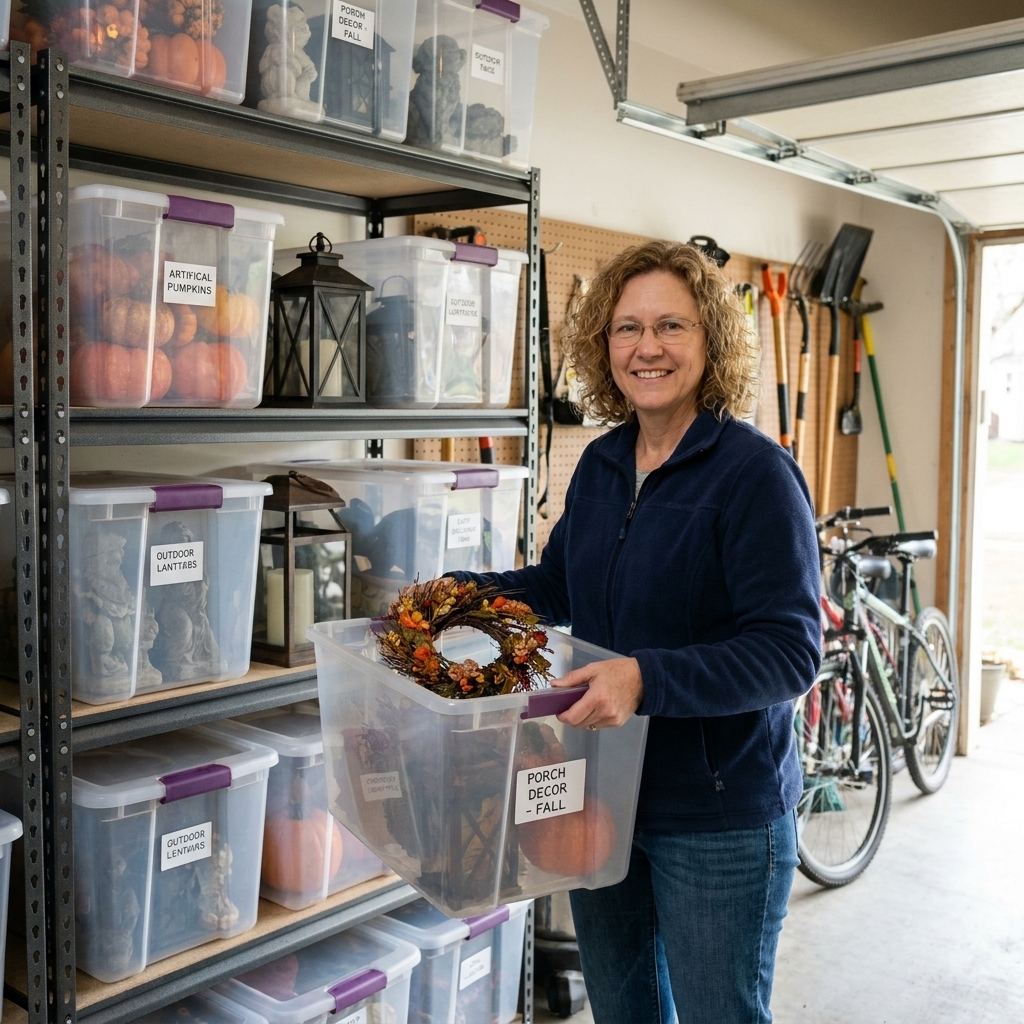
My golden rules before anything gets packed
1) Clean it first, even if it looks clean
Outdoor decor collects invisible grime, pollen, and moisture. If you store it dirty, you are basically “setting” stains and inviting mildew.
- Hard decor (lanterns, planters, metal signs): Wipe with a damp microfiber cloth and a drop of dish soap. Dry completely. Avoid abrasive cleaners on painted or powder-coated finishes.
- Fabrics (pillows, table linens, bows): Follow the care tag, then make sure items are fully dry before boxing. If you cannot wash, vacuum and spot clean, then air out for a day.
- Faux greenery: Shake outside, then use a soft paintbrush or hair dryer on cool to dust. Wipe stems with a barely damp cloth and let dry.
- Outdoor rugs: Vacuum both sides. If it is washable, wash and dry fully. If not, hose off and let it dry in sun and breeze until there is zero dampness.
2) Dry time is non-negotiable
Moisture is the enemy of everything you love. If you are storing in a basement, shed, or garage, moisture control matters even more. Let items dry overnight if you can, especially rugs and faux garlands.
3) Sort by season and by “fragile level”
I like three quick piles:
- Fragile: glass ornaments, ceramic pieces, breakable figurines
- Crushable: faux garlands, wreaths, bows, delicate stems
- Durable: plastic lanterns, metal decor, sturdy signage
4) Don’t store anything directly on concrete
Concrete can pull and hold moisture, especially in damp basements and garages where condensation is common. Use shelving, pallets, or even a couple of 2x4s under bins. It is such a small step that prevents so many “why does this smell weird?” moments.
Choose the right containers (and skip the heartbreak bins)
Not all totes are created equal. The flimsy ones crack, warp, and invite pests through tiny gaps.
Best container options for outdoor seasonal decor
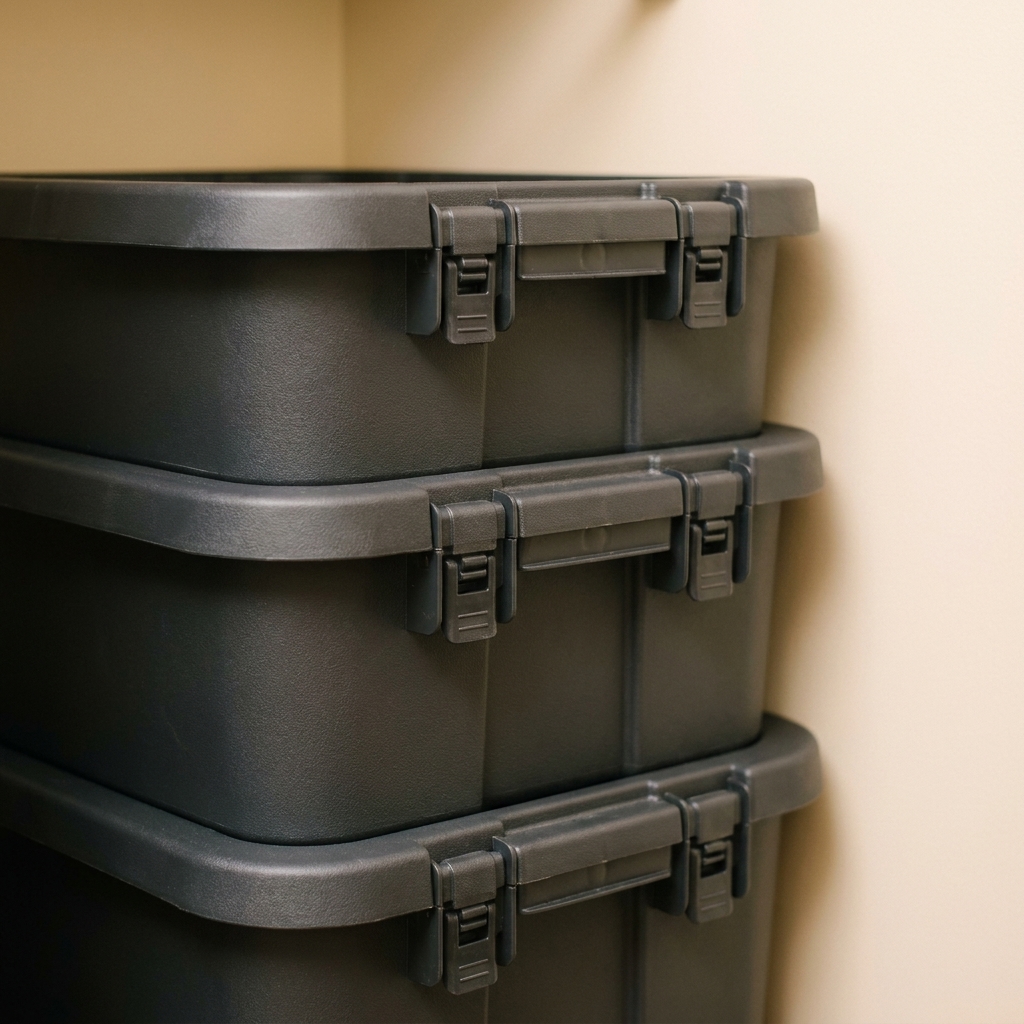
- Heavy-duty latching totes: Great for most decor. Look for tight lids and sturdy sides that will not bow when stacked.
- Clear totes: My favorite for quick seasonal swaps, especially if your labels ever fall off.
- Gasket-seal bins: Ideal for ornaments, ribbon, and anything you want more pest-resistant. They are not mouse-proof, but they do cut down on easy access.
- Wreath and garland storage bags or hard-sided cases: Best for keeping greenery fluffy and uncrushed.
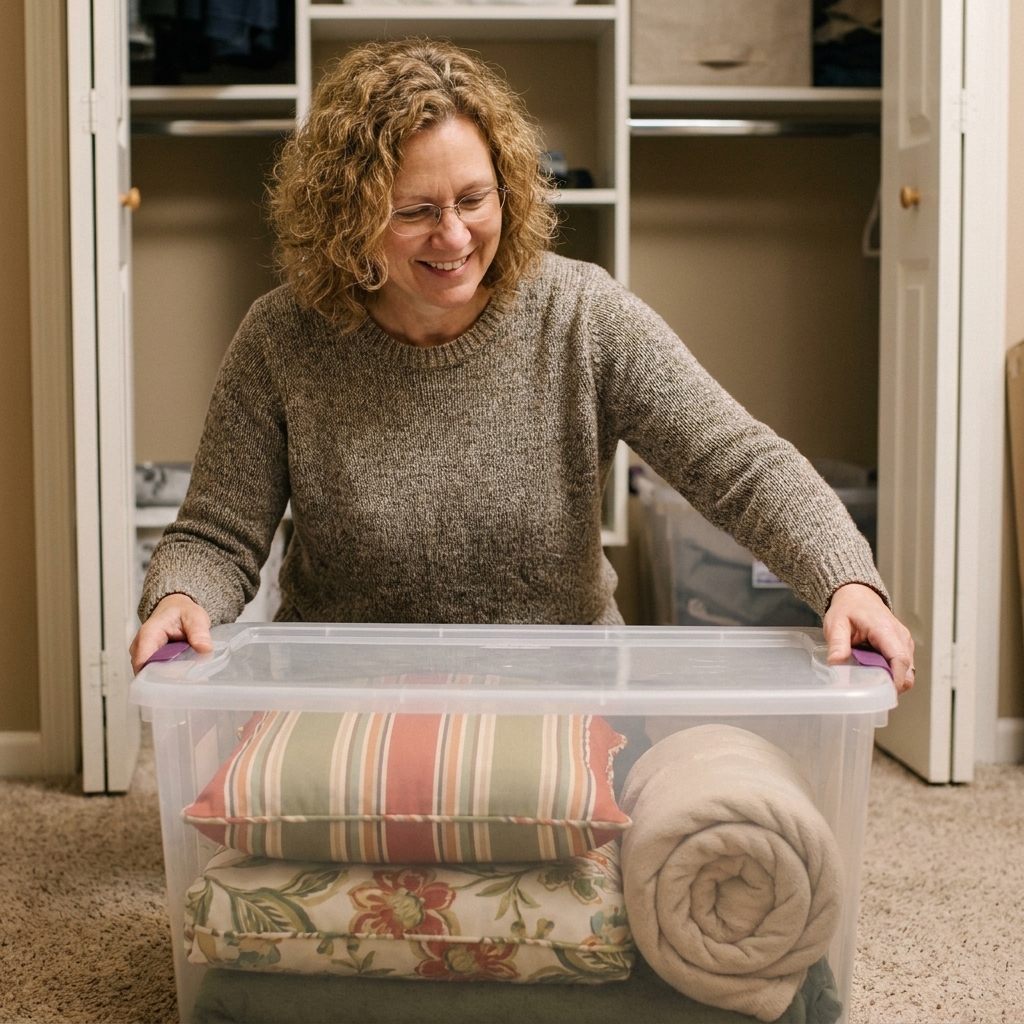
- Under-bed style bins: Handy for porch pillows and table linens if you store indoors in a closet.
What I avoid
- Cardboard in garages, sheds, or basements: It absorbs moisture and is basically a welcome mat for pests.
- Thin trash bags as “storage”: They trap moisture and crush everything. Use only as temporary dust covers, not long-term storage.
How to pack fragile holiday ornaments for outdoor use
If you hang ornaments outdoors, they take more of a beating than indoor-only pieces. Wind, temperature swings, and the occasional drop on the porch steps. I store mine like they are heading to a moving truck.
Ornament packing method that actually works
- Use divided ornament cases if you have them. If not, use plastic cell dividers, foam sheets, or store-bought inserts inside a sturdy tote. (If you are storing indoors, cardboard dividers are fine. In damp garages, I skip cardboard.)
- Wrap the extra-fragile ones individually in unprinted packing paper or bubble wrap. Avoid newspaper for long storage because ink may transfer, especially if things get humid.
- Fill empty space so nothing shifts. Crumpled packing paper works well and is less likely than fabric to trap lingering odors or hidden dampness. It still absorbs moisture, so only pack once everything is fully dry.
- Keep scent and moisture away from delicate finishes. Skip strongly scented dryer sheets in ornament bins. Use a small silica gel pack instead.
A note on ornament hooks and hangers
I store hooks in a small lidded container inside the same bin. That way I am not hunting for them while balancing on a step stool in December.
Label smarter, not louder
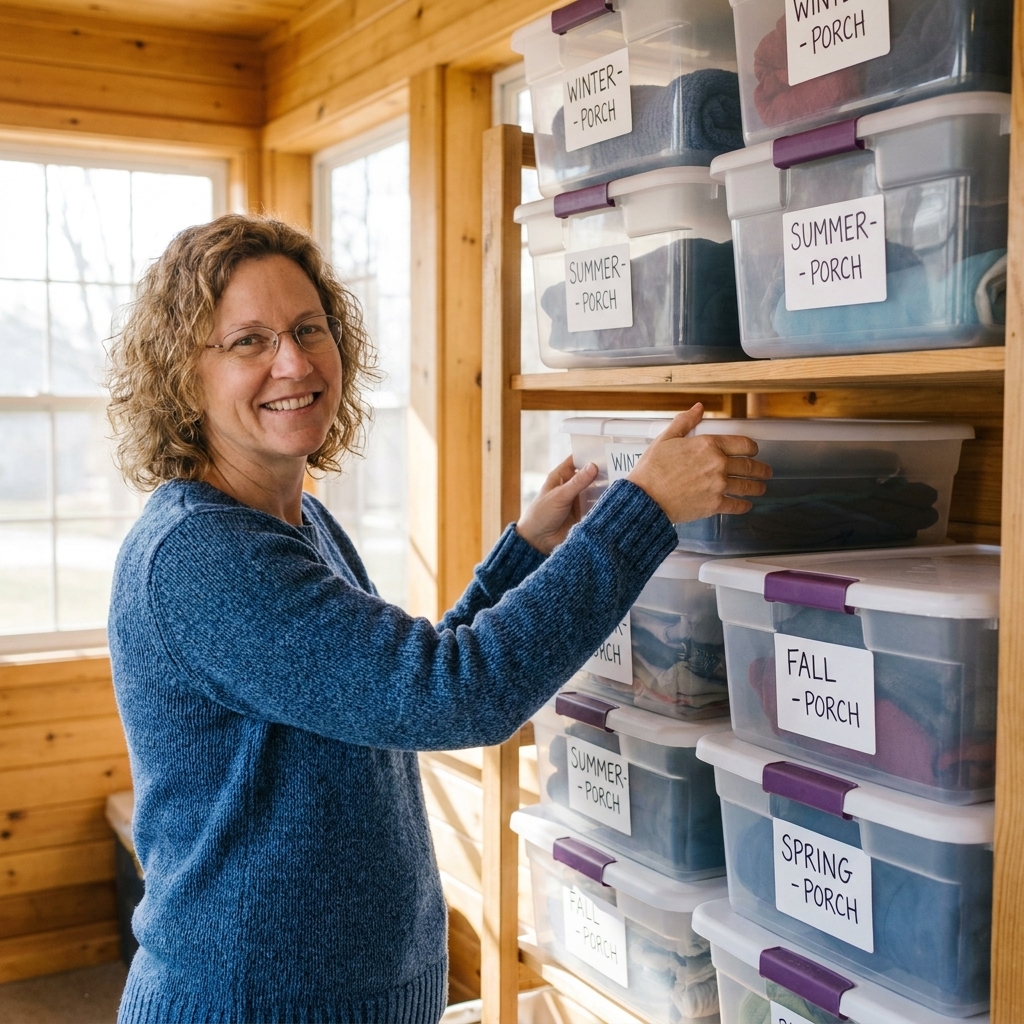
My favorite label format is: Season + Location + Notes. Example: “Winter Porch, front door, fragile.”

Outdoor rugs: keep them fresh, flat, and mildew-free
Seasonal rugs are one of the fastest ways to change the whole porch mood, but they can turn into a musty mess if stored wrong.
Before storage
- Vacuum both sides thoroughly.
- Make sure the rug is completely dry, including the backing.
- Spot treat stains now. They are harder to remove after months in storage.
Roll, don’t fold
Folding creates deep creases and can crack some rubber backings. Roll the rug with the pattern side in, then secure with soft cotton ties or wide Velcro straps.
Use breathable protection
For rugs stored in a garage or shed, I like a breathable canvas rug bag or wrapping in a cotton sheet. If you use plastic, leave a little airflow so you do not trap moisture. The goal is dust protection, not a humid terrarium. (Synthetic outdoor rugs like polypropylene usually handle plastic better than natural fibers, but humidity still matters.)
Add pest prevention the porch-safe way
Rugs can attract critters looking for nesting material. Store rolled rugs off the floor and consider placing cedar blocks nearby. Avoid loose mothballs around fabrics, especially if you are sensitive to strong fumes.

Faux garlands and wreaths: keep them fluffy
Faux greenery is the biggest “storage heartbreak” category because it is so easy to crush. The trick is to protect it from pressure and dust without smashing the branches.
Best storage options
- Hard-sided wreath case: My top pick for front-door wreaths. It keeps the shape intact.
- Garland bag: Great for long runs of greenery, especially if you coil it loosely.
- Oversized tote with no stacking on top: Works if you have space. The “no stacking” part is key.
How to pack garland without tangles
- Remove detachable picks and stems first and store them in a smaller bin.
- Coil garland in wide loops, not tight circles.
- Layer tissue paper or packing paper between loops to prevent snagging and glitter transfer.
- If the garland has lights, wrap lights separately whenever possible. Built-in lights should be gently tucked and secured with soft ties.
Where people go wrong
Don’t wedge garland into a too-small bin. Those bent branches never quite forgive you.

Seasonal porch pillows, cushions, and fabric decor
Nothing ruins that first crisp fall morning like pulling out damp, musty pillows. Fabrics need to be clean, bone-dry, and protected from pests.
My fabric storage routine
- Wash or vacuum before storing.
- Store indoors if possible, like a coat closet or under a bed. Climate control is your friend.
- Use the right “container” for the space: breathable cotton storage bags (or fabric bins) for indoor closets, and tight latching bins for garages or sheds, plus moisture control.
- Keep sets together by storing pillow covers in one labeled zip pouch inside the bin.
Don’t compress for months
Those vacuum-seal bags are tempting, but long compression can crease some inserts and leave you with sad, wrinkly pillows, especially with budget poly-fill. Down inserts usually rebound, but they may need a serious fluffing session. If you must compress due to space, store just the covers compressed and keep inserts fluffy elsewhere.
String lights and cords: the no-tangle system
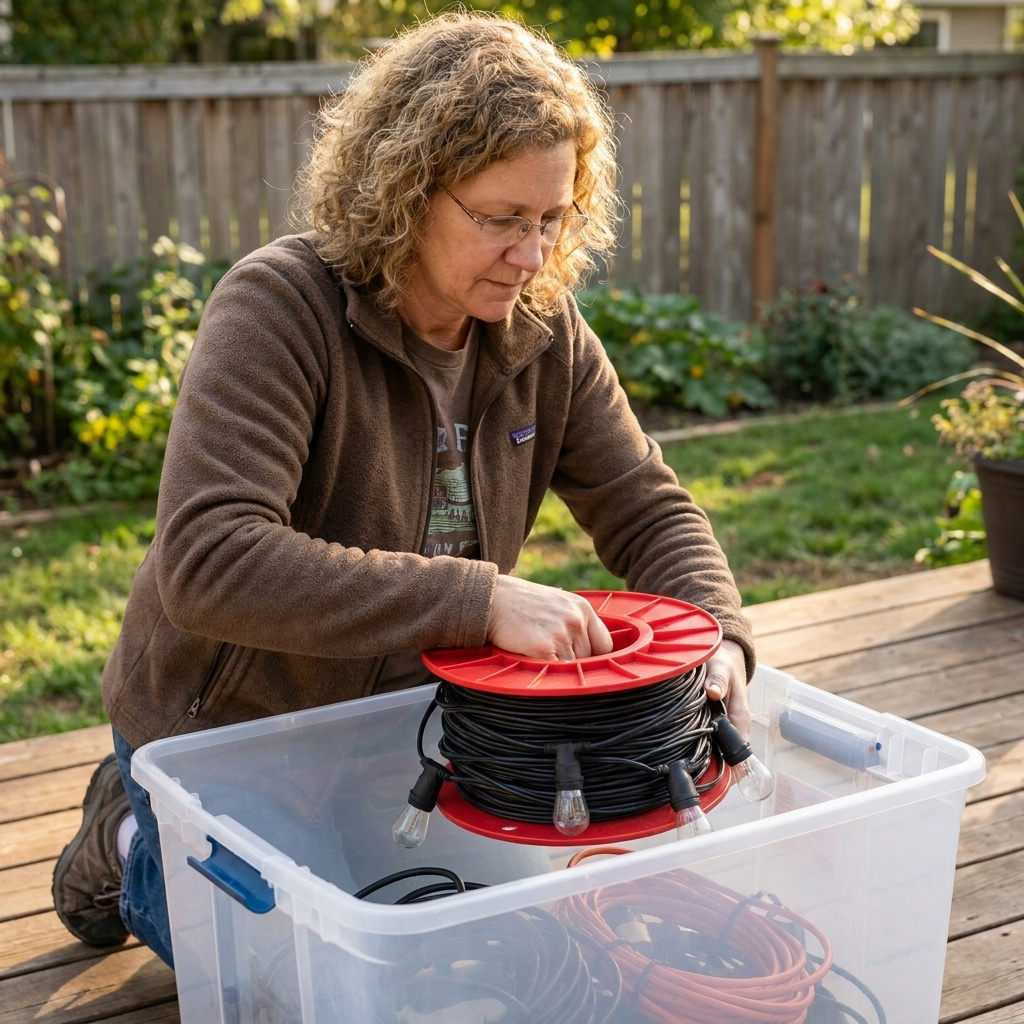
Lighting is my favorite porch magic, but only if it is not a knotted mess. The secret is giving lights a “spool” so they cannot twist around themselves.
Easy ways to wrap lights
- Plastic cord reel: The neatest option, especially for long bistro strands.
- Piece of cardboard (for indoor storage): Cut a rectangle and add two notches on each side to hold the cord ends. If your storage area is damp or pest-prone, use a plastic reel instead.
- Coil in wide loops: Secure with Velcro straps, not rubber bands that can degrade and stick.
Protect bulbs, plugs, and sockets
- Wipe down cords and bulbs before storage.
- Test strands first, then store the working ones. Toss anything with cracked sockets, exposed wire, or loose plugs.
- Store in a tote where the strand will not be crushed.
- Keep adapters, remotes, and spare bulbs in a small labeled container taped to the reel or stored in the same bin.
- Remove batteries from timers, remotes, and battery packs before storage to avoid corrosion surprises.
Weather and pest protection made simple
I am not trying to turn your garage into Fort Knox. I just want your decor to come out looking the way it went in.
Moisture control
- Silica gel packs: Great in ornament and metal decor bins.
- Moisture absorber tubs: Useful near storage shelves in damp basements.
- Airflow: Store bins with a little space around them. Don’t cram everything into one humid corner.
Pest prevention basics
- Seal what you can: Latching totes or gasket bins reduce access, but they are not a full solution if you have active mice.
- Elevate everything: Shelving beats floor storage.
- Make the area less inviting: Keep storage away from birdseed, pet food, and clutter that makes cozy hiding spots.
- Address the bigger problem if it keeps happening: Seal gaps, consider traps, and get help if you are dealing with a recurring issue.
- Skip food-scented “hacks”: Anything that smells edible can backfire.
- Check annually: A quick peek mid-season can catch issues early.
Temperature notes
Extreme heat can warp cheap plastic, soften adhesives, and damage battery packs. If you can store delicate items indoors, do it. Garages and sheds are fine for durable decor, but fragile or sentimental pieces deserve a closet.
Labeling and inventory: future-you wins
My goal is a 30-minute seasonal swap, not a three-hour scavenger hunt.
Label each bin on two sides and the top
One label always ends up facing the wall. Two sides plus the lid saves so much time.
Use simple categories
- Season: Spring, Summer, Fall, Winter
- Zone: Front Porch, Patio, Back Deck, Garden Gate
- Fragile note: Fragile, Crushable, Heavy
Quick photo inventory
Take one photo of the open bin before you close it. Save it in a phone album called “Porch Storage.” When you cannot remember where the mini pumpkins went, you can find them in seconds.
Where to store what
If you have a mix of spaces, here is how I decide what goes where.
| Item | Best place | Why |
|---|---|---|
| Glass ornaments, ceramic decor | Indoor closet or climate-controlled area | Protects from temperature swings and breakage |
| Faux wreaths and garlands | Indoor if possible, or top shelf in garage | Prevents crushing and keeps them cleaner |
| Outdoor rugs | Dry indoor space or elevated garage shelf | Reduces mildew risk and pest access |
| String lights and cords | Garage shelf or indoor utility closet | Keeps them dry and prevents tangles |
| Metal lanterns and sturdy signage | Garage shelving in latching bins | Durable, just needs moisture control |
End-of-season checklist
- Vacuum or wipe everything down.
- Let items dry fully, especially rugs and greenery.
- Wrap fragile pieces and fill empty bin space.
- Roll rugs and store off the floor.
- Bag or case wreaths and keep heavy items off them.
- Test lights, remove batteries from timers and remotes, then wrap lights on a reel.
- Add moisture control where needed.
- Label on top and two sides.
- Snap a quick photo of what is inside.
If you only do one thing differently this year: store everything dry and off the floor. That single change prevents most of the musty, rusty, chewed-up surprises.
FAQs
Can I store outdoor decor in a shed?
Yes, but choose sturdy latching bins, elevate them off the ground, and avoid storing fragile ornaments or anything sentimental in extreme heat or cold. Moisture control matters a lot in sheds.
How do I keep faux garland from getting dusty in storage?
Use a garland bag or a large tote with packing paper layered between coils. Dust usually sneaks in when greenery is stored uncovered on open shelves.
What’s the best way to store outdoor rugs if I have no room indoors?
Roll them, tie them loosely, and store them on a high shelf or rack in the garage. Make sure the rug is completely dry, and avoid sealing it airtight if your space is humid.
How do I prevent mice from getting into seasonal decor?
Start with clean decor, switch from cardboard to latching bins, and store everything off the floor. If you have recurring issues, gasket-seal bins help, but you will also want to seal entry points, reduce nearby food sources (including birdseed), and use appropriate traps or professional help if needed.
A porch writer’s final pep talk
Your seasonal decor does not need to be expensive to feel special, and it does not need to be replaced every year, either. A little end-of-season care turns “one-and-done” porch pieces into reliable favorites. When the next season rolls around, you will open a bin and feel that tiny thrill of everything being ready to go. And that, to me, is porch peace.