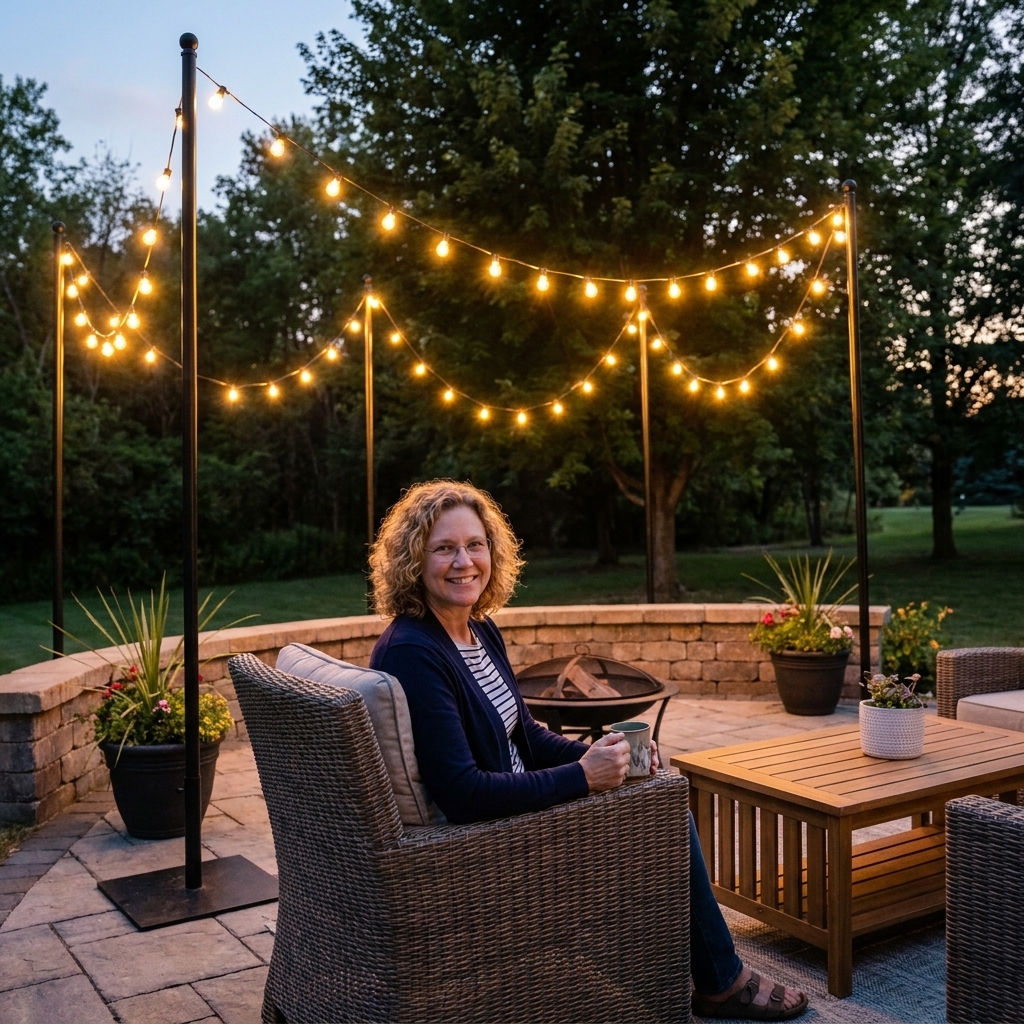
There is nothing like a porch that feels breezy and softly lit at the same time. A ceiling fan with a light can do both, but outdoors you have to choose the right rating (damp vs wet) and size carefully or you will end up with a fan that corrodes, flickers, or just does not move air where you need it.
Below is exactly how I choose a wet-rated ceiling fan with lights for a covered porch, including what “wet-rated” really means, how to size the fan, and how bright the light kit should be so your porch feels cozy instead of like a parking lot.
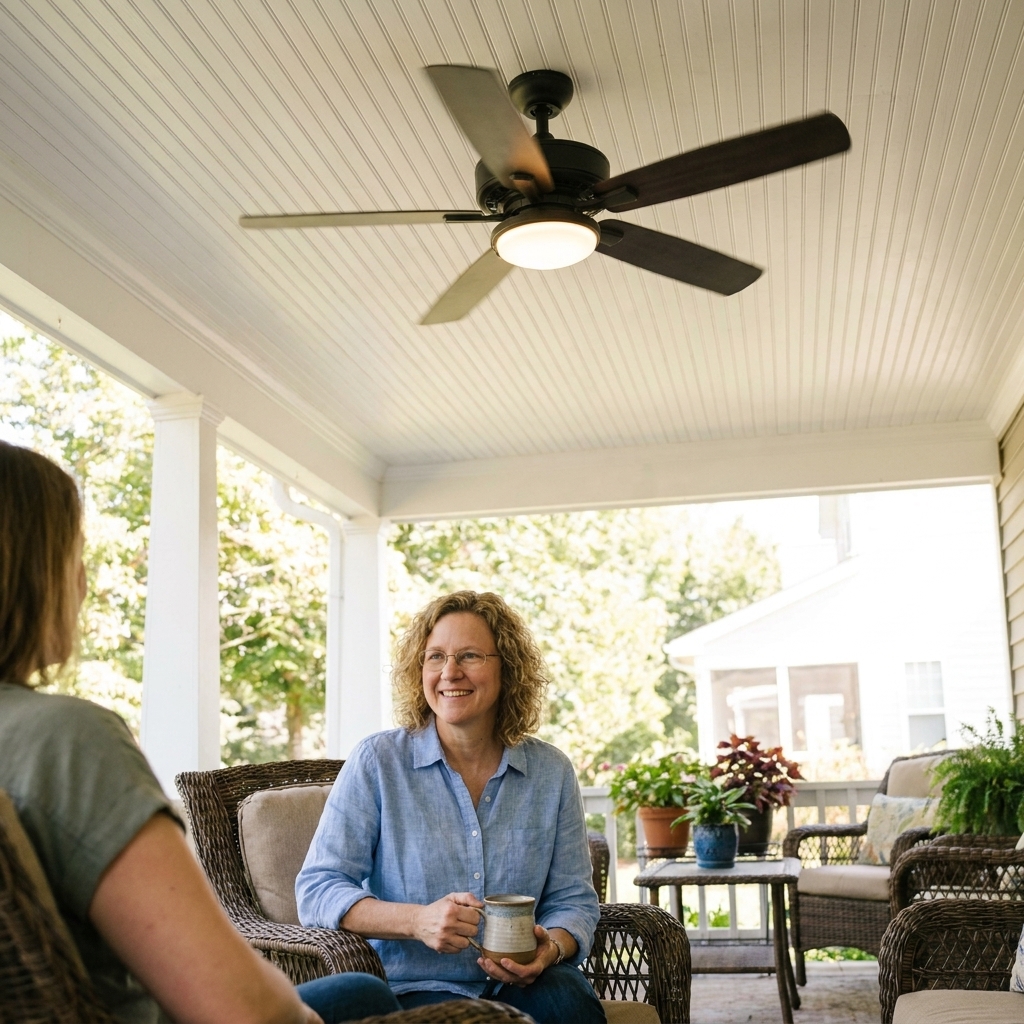
Damp vs wet ratings
This is the part most people skip, and it is the part that saves you money later.
What damp-rated means
Damp-rated fixtures are designed for humidity and moisture in the air, like a screened porch, a covered patio that rarely sees wind-driven rain, or a sunroom that gets muggy. They can handle dampness, but they are not meant to be hit with water.
What wet-rated means
Wet-rated fixtures are designed for direct exposure to water, including rain that blows in from the side, splashing, and heavy moisture. In listing language, you will often see this described as “suitable for wet locations” (and it should be clearly marked on the box or spec sheet with a UL or ETL listing).
Which one works for a covered porch?
- I recommend wet-rated if your porch is open on the sides, gets stormy wind, sits on a corner lot, or you have ever seen your ceiling get dotted with rain during a downpour.
- Damp-rated may be enough only if your porch is deeply covered, well-protected, and stays dry even in wind-driven rain.
If you are on the fence, I lean wet-rated. Covered does not always mean dry, especially in real life weather.
Measure first
A fan that is too small will look lost and feel weak. Too big can overwhelm the space and feel like it is hovering over your head. These are the typical porch-friendly sizing guidelines I use as a starting point, then I confirm the manufacturer’s specs before buying.
Fan blade span by porch size
| Porch or patio size | Typical fan size | Porch-friendly note |
|---|---|---|
| Up to about 75 sq ft (small entry porch, bistro nook) | 29 to 36 inches | Great for a small seating pair and keeps the look tidy. |
| About 76 to 144 sq ft (most standard front porches) | 42 to 44 inches | My most-used “sweet spot” size for covered porches. |
| About 145 to 225 sq ft (large porches, outdoor living rooms) | 52 inches | Moves serious air, especially over sectionals or dining sets. |
| Over 225 sq ft (extra wide or long spaces) | Two fans, often 52 inches each | Two smaller air zones almost always feel better than one giant fan. |
Mounting height and clearance
- Minimum blade height: Aim for at least 7 feet from the floor to the lowest point of the blades. Always check your local code and the manufacturer’s requirements.
- From the ceiling: Many standard-mount fans place the blades roughly 8 to 12 inches below the ceiling. Low-profile and flush-mount models sit closer, so use the manufacturer’s mounting options and measurements to choose what fits your ceiling height.
- Wall and beam clearance: Try for 18 inches or more from blade tip to the nearest wall, beam, or hanging fixture when you can, and confirm the exact clearances in the install manual.
Porch ceilings love to surprise us with beams, slopes, beadboard, or haint-blue ceilings. If you have a sloped ceiling, make sure the fan is approved for angled mounting and that you get the correct downrod length.
Pick the right light
Outdoors, “bright enough” depends on what you do on the porch. Are you sipping iced tea and chatting, or are you playing cards and reading? The nice thing about fans with lights now is that many have dimmable LEDs, which gives you options without swapping bulbs constantly.
Lumens for most porches
- Soft ambient glow: about 800 to 1,200 lumens (cozy sitting, casual conversation)
- Everyday porch lighting: about 1,300 to 2,000 lumens (hosting, kids coming in and out, general visibility)
- Task-friendly brightness: about 2,000 to 3,000 lumens (games, reading, bigger porches, or higher ceilings)
If your fan light is the only overhead light source, I usually choose something closer to the middle or upper end, then make sure it is dimmable so evenings can stay soft.
Color temperature
For a porch that feels like an extension of your living room, I recommend:
- 2700K to 3000K for warm, welcoming light
- Avoid very cool light (often 4000K and up) unless you truly want a crisp, daylight look
Glare control
On a porch, bare or clear glass can create harsh points of light, especially if the fan sits above eye level when you are standing near the door. Look for:
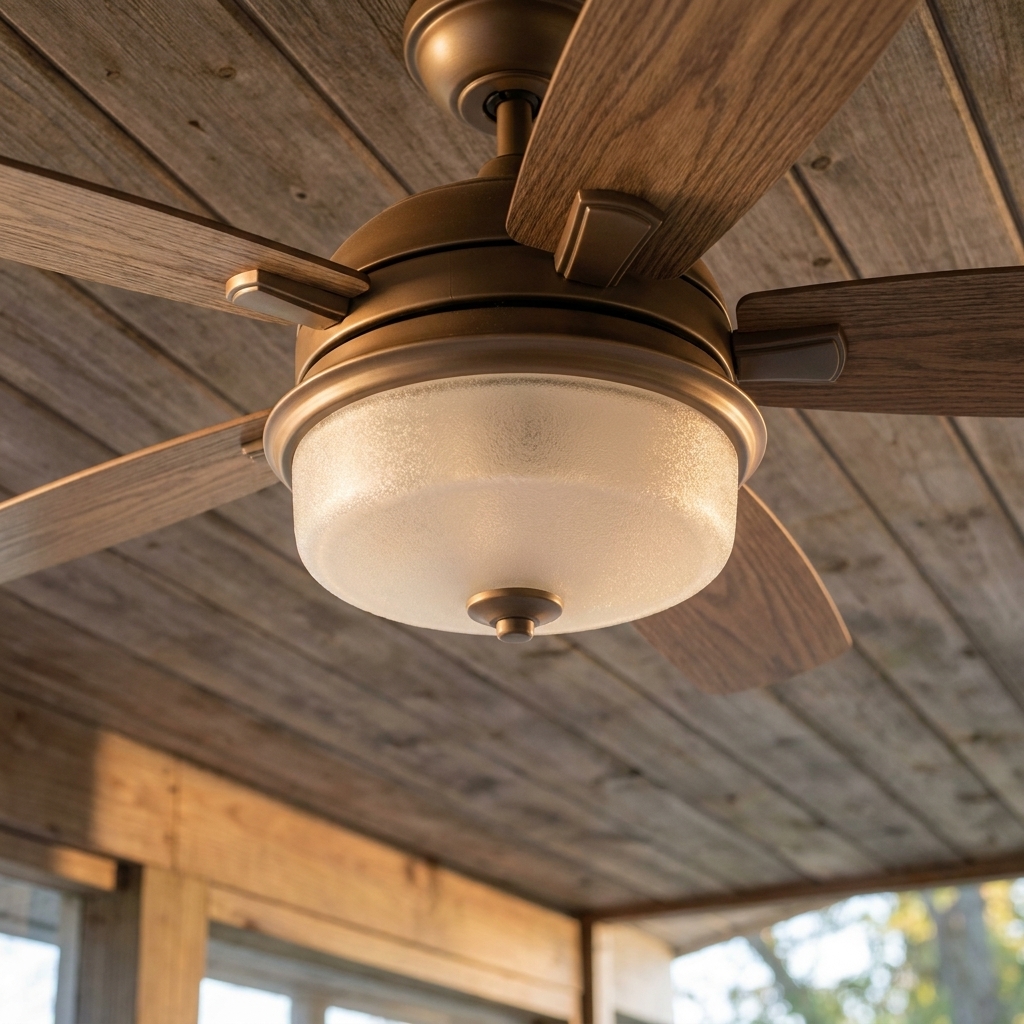
- Frosted or opal diffusers to soften the light
- Integrated LED with a diffuser for the most even glow
- Downward-focused optics if you want to keep light from spilling into the yard or neighbors’ windows
A quick note on LED serviceability
Integrated LED kits can be fantastic outdoors, but I always check the warranty and whether the LED module is replaceable. If the light source is sealed and non-serviceable, a failure can turn into a bigger repair than swapping a bulb.
If you like specs, compare airflow (often listed as CFM) at high speed, and look at whether the fan still performs well on the lower speeds you will actually use.
Materials and finishes
Wet-rated is the big safety and durability checkbox, but materials still matter, especially if you live near salt air, have heavy pollen seasons, or get long humid summers.
What I look for
- Corrosion-resistant hardware (stainless or treated fasteners are a plus)
- All-weather blades that will not warp, peel, or swell
- Sealed motor housing designed for outdoor exposure
- UV-resistant finishes so the color does not chalk or fade quickly
Finish tips
- Matte black disappears beautifully against darker ceilings and looks sharp with modern or farmhouse decor.
- White is my go-to for beadboard porch ceilings because it blends in and feels classic.
- Bronze and darker metals hide dust and pollen better than shiny finishes.
Maintenance reality check
Open porches collect dust, pollen, and the occasional bug situation. I plan on a quick wipe-down of blades and the light diffuser every few weeks in peak season. If you hate cleaning, choose finishes and blade materials that wipe clean easily.
Airflow features
When you are choosing a fan, you are really choosing comfort. These are the details that change how your porch feels at 8 p.m. in July.
Speed and motor features
- Multiple speeds: A low, quiet setting is the one you will use most for everyday porch lounging.
- Reversible motor: Helpful year-round. In warm weather, you want a downward breeze. In cooler months, an upward setting can help mix the air a bit, which can be a subtle comfort boost on covered porches.
- DC motor (if available): Often quieter and more efficient, with smoother low-speed control.
Wind considerations
If your porch is exposed, coastal, or regularly gets strong gusts, look for an outdoor fan described as high-wind or built for windy locations, and make sure it is installed exactly as the manufacturer specifies. A stable mount and the right downrod matter a lot when the weather turns.
Noise level
A porch is where you hear everything: crickets, wind chimes, neighbors chatting, and your own conversation. If noise bothers you, prioritize a fan known for quiet operation, and avoid installing a fan that is too small and has to run at high speed all the time.
Controls
On a porch, convenience matters because you are often stepping outside with drinks, food, or an armful of cushions.
- Wall control: Clean, dependable, and great if you already have a switched fan box by the door.
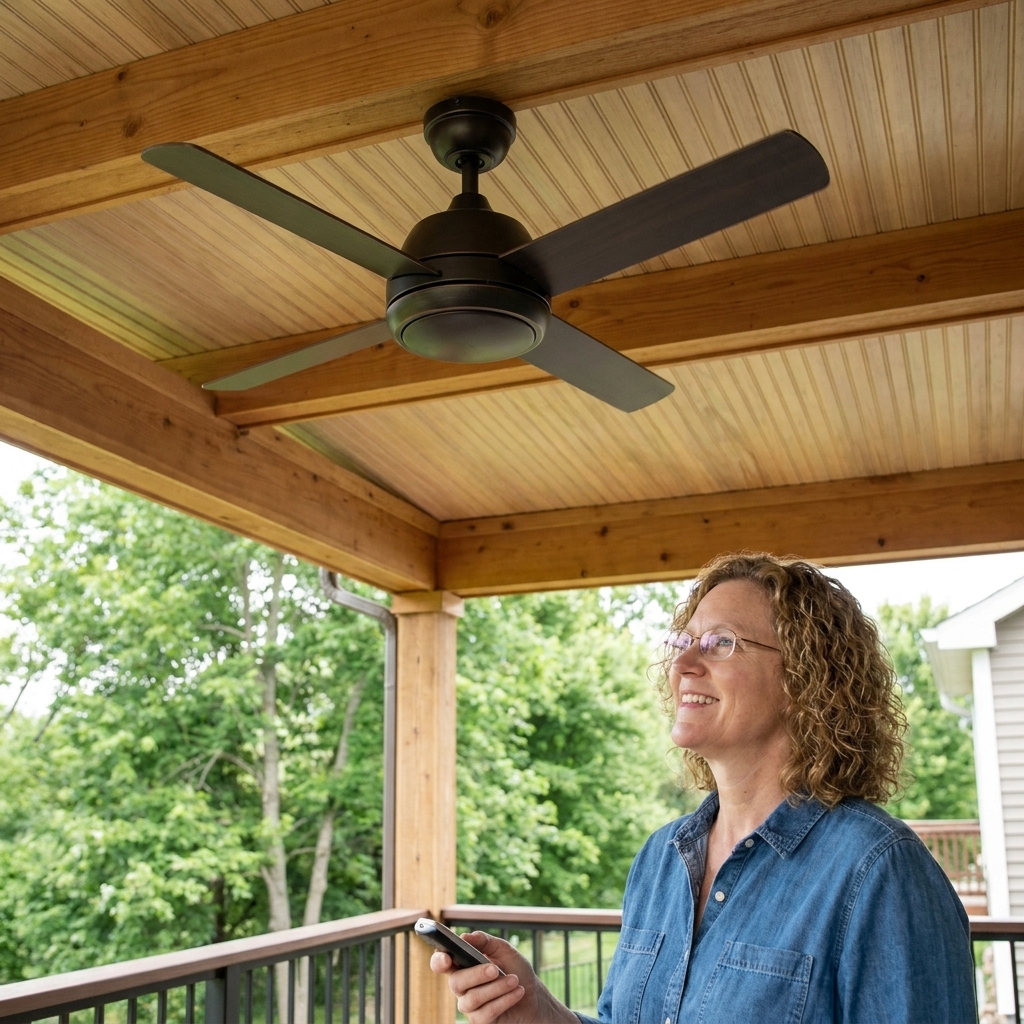
- Remote control: Perfect for porches with multiple entries or when you want dimming from the sofa.
- Smart control: Handy for schedules and voice control, but check compatibility with your fan and your home setup.
One tip from my own trial-and-error: if you go with a remote, choose a setup with a real home for it (a wall cradle, magnetic holder, or a nearby console table bowl) so it does not disappear into the cushion void.
Also worth knowing: many outdoor fans use a receiver and a proprietary remote system. If you plan to add a wall switch (or swap to a smart switch), confirm it is compatible with the fan’s receiver so you do not end up with humming, flicker, or a fan that only works sometimes.
Installation and safety
I am all for DIY when it is safe, but porches add a few extra considerations. If you are unsure, hiring an electrician for a fan install can be money well spent.
- Use a fan-rated ceiling box: A standard light box is not always strong enough for a fan.
- GFCI protection: Outdoor circuits often require GFCI protection under current electrical codes, but details vary by location and the existing circuit. When in doubt, ask an electrician and follow the code in your area.
- Outdoor-rated wiring and connectors: Especially important in damp or wet locations.
- Follow the manufacturer’s instructions: Wet-rated fans often have specific mounting and sealing requirements.
My quick checklist
If you want a simple decision tool, here is the checklist I run through before I commit to a fan.
- Is it listed as suitable for wet locations (wet-rated) for my exposure to wind-driven rain?
- Is the blade span right for my porch size, and will it clear beams, slopes, and walls per the install manual?
- Do I have a fan-rated box and the right ceiling height?
- Is the light output in the 1,300 to 2,000 lumen range for everyday use (and dimmable)?
- Is the color temperature 2700K to 3000K for a warm glow?
- Are the blades and hardware truly all-weather and corrosion-resistant for my climate (especially salt air)?
- If it is an integrated LED, is the warranty solid and is the LED module serviceable?
- Will I like using the control method every day (wall, remote, smart), and is it compatible with the fan?
FAQ
Can I put a damp-rated fan on a covered porch?
Sometimes, yes. If your porch stays dry even in storms and the fan will not be exposed to direct water, a damp-rated fan can work. If rain can blow in, I recommend wet-rated for peace of mind and longer life. To be extra sure, look for UL or ETL labeling that matches your location.
How bright should a porch ceiling fan light be?
For most covered porches, 1,300 to 2,000 lumens is a comfortable everyday range. Go higher for larger spaces or if the fan light is your only overhead lighting, then rely on dimming to keep evenings cozy.
What is the best light color for a porch?
I prefer 2700K to 3000K. It flatters faces, plays nicely with string lights and lanterns, and feels inviting instead of stark.
Is an integrated LED light kit okay outdoors?
Yes, as long as the fan and its light kit are rated for your location (wet-rated if you need it). I also recommend checking warranty length and whether the LED module is replaceable, since you cannot always treat it like a standard bulb swap.
Final styling note
Once your wet-rated fan is in, you can make the whole porch feel layered and intentional by pairing it with softer light sources at eye level. I love a small table lamp rated for outdoor use, battery lanterns, or a strand of warm bistro lights along the beam line. The fan light becomes your practical overhead glow, and the rest is where the magic happens.