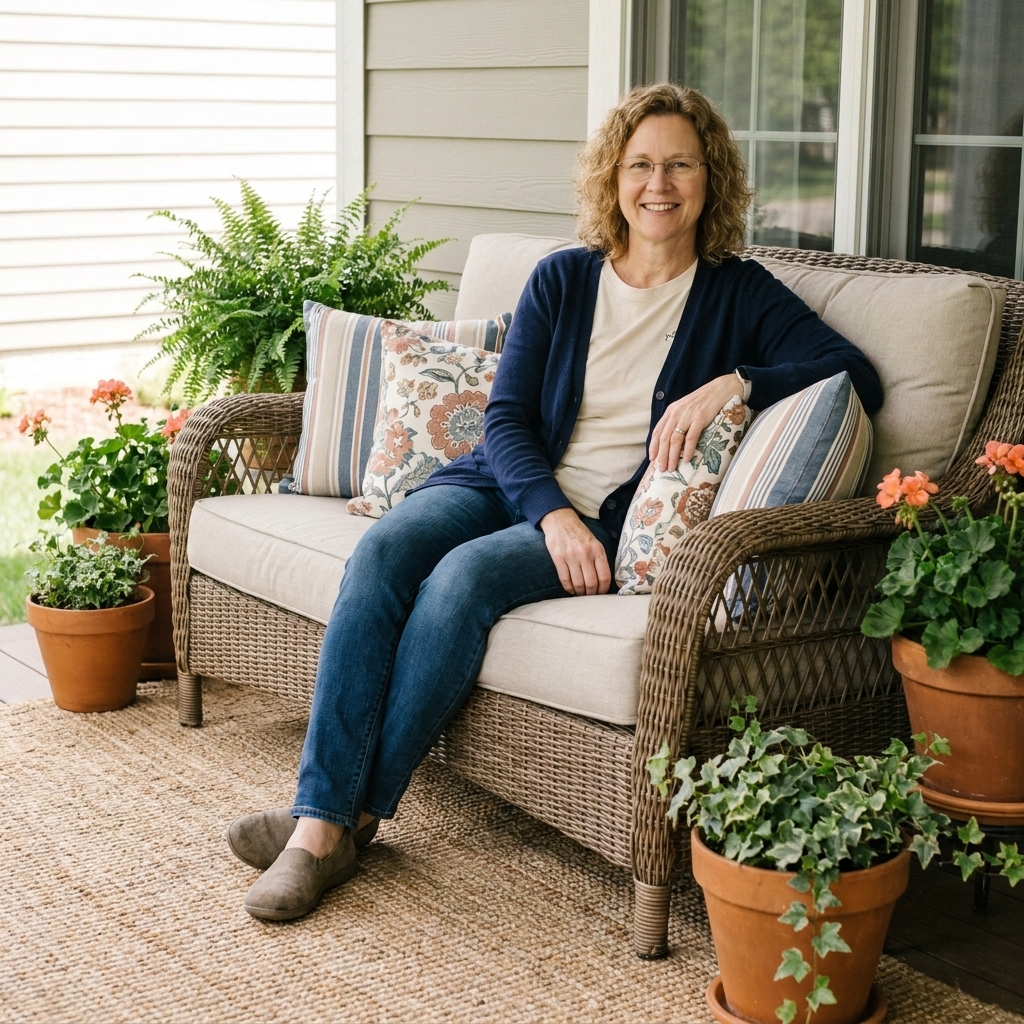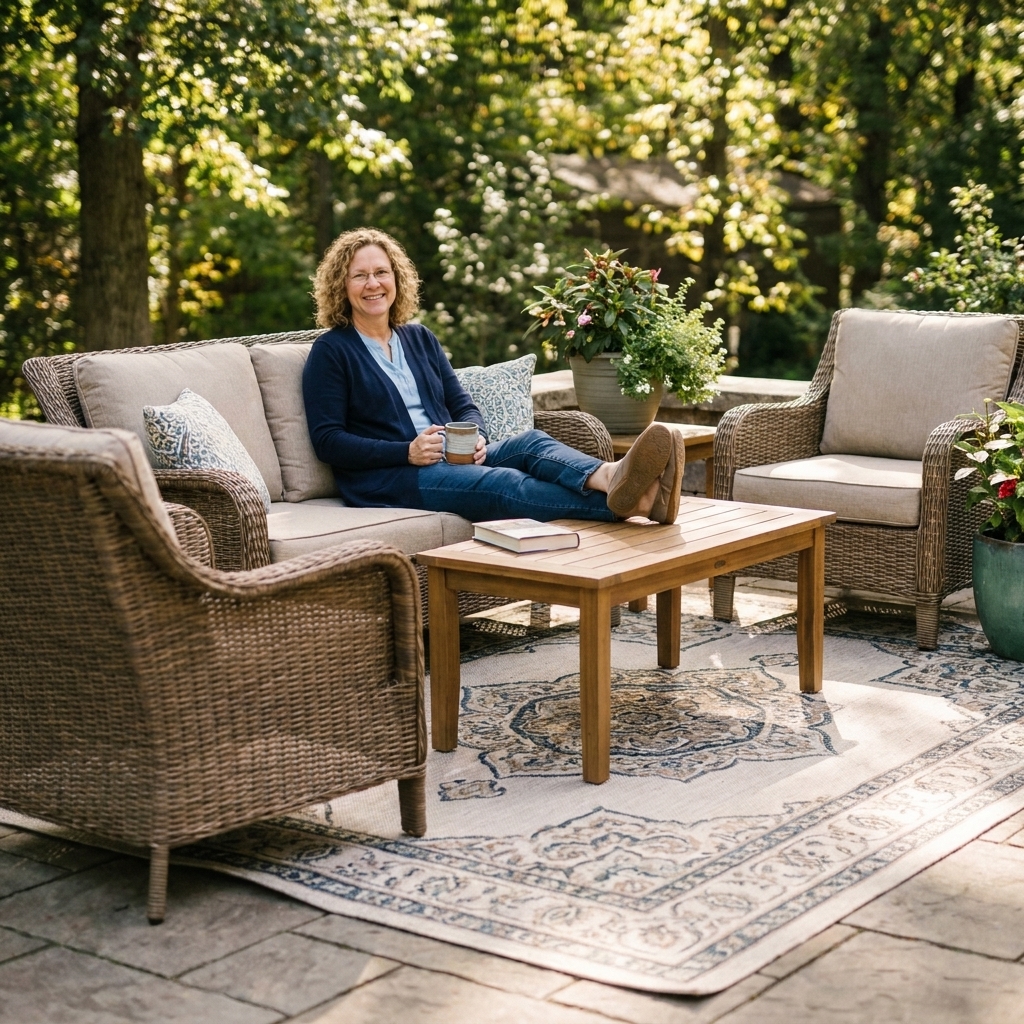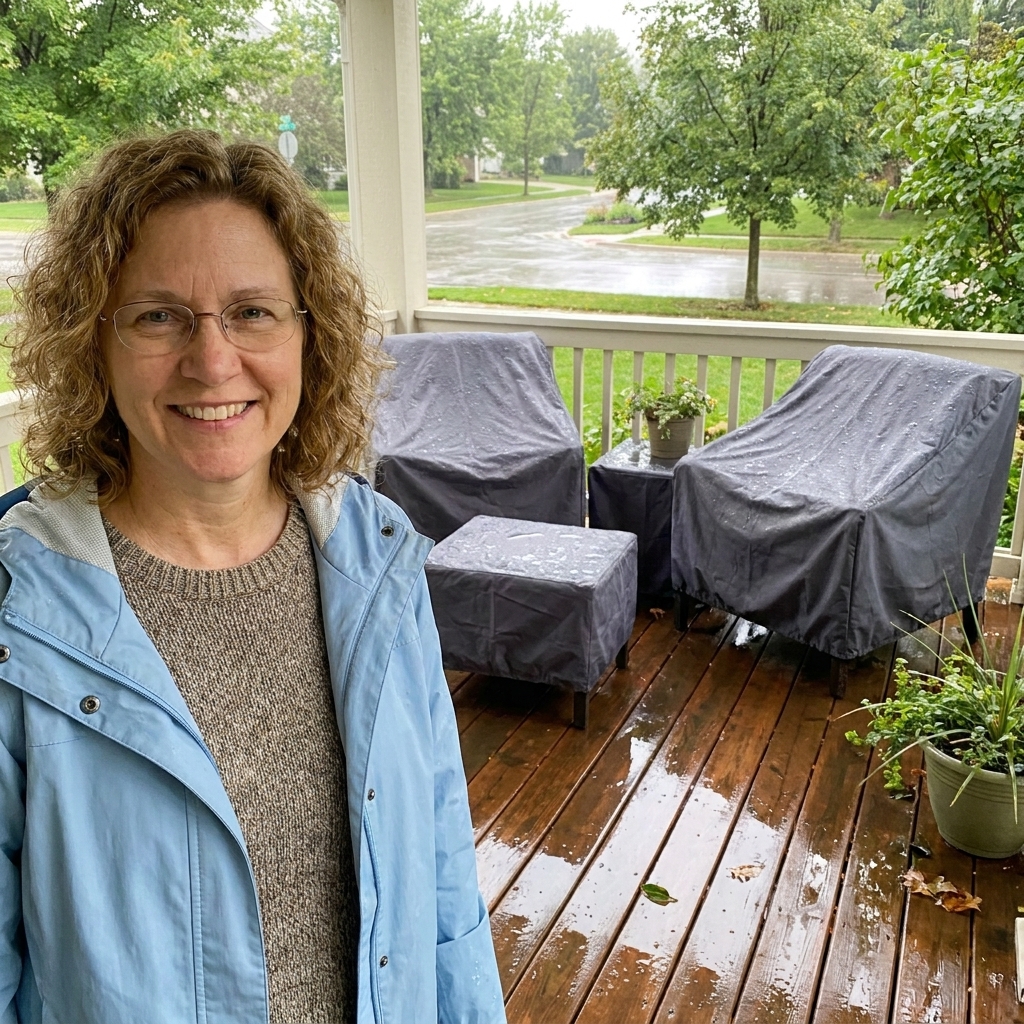
An outdoor sectional is one of the best things you can add to a patio or porch because it instantly says, “Come sit a while.” But freshly assembled, most sectionals look a little too bare and a little too matchy. The good news is you do not need a designer budget to make it feel inviting. A few well-chosen pillows, a blanket or two, and the right side table setup can turn a basic sectional into a true outdoor living room.
Below are the exact styling moves I use on my own deck when I want maximum comfort and that cozy, finished look.
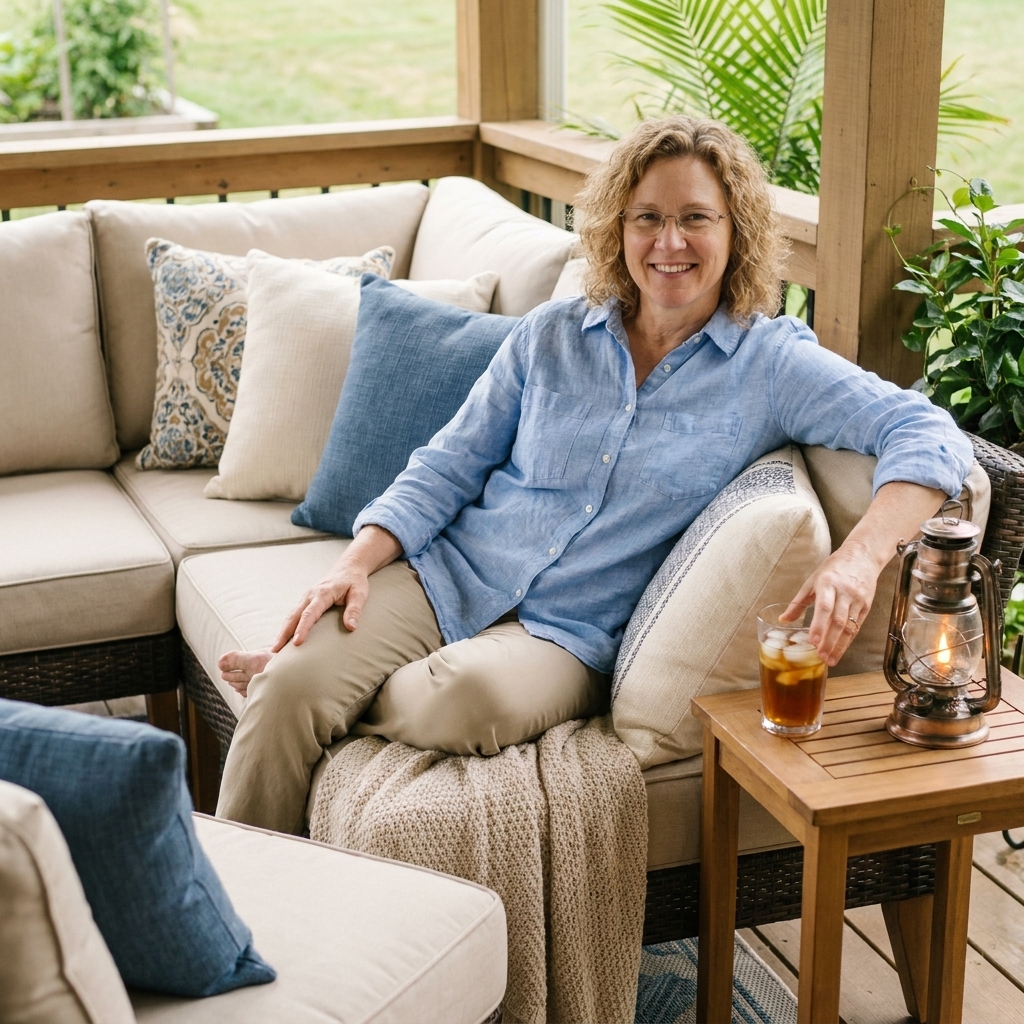
Start with a comfort-first layout
Before we talk pillows and pretties, make sure your sectional is set up to be used, not just admired. Outdoor spaces have a way of turning into obstacle courses if you are not careful.
- Leave an easy walkway. A good starting point is about 30 to 36 inches of clear space for main paths so people can slide in and out without doing the sideways shuffle. Go wider if you need accessibility or if doors swing into the space.
- Face the “view.” That might be the yard, the garden beds, the fire pit, or just the spot where you want conversation to naturally happen.
- Anchor the sectional. Even a small outdoor rug helps the sofa feel intentional and keeps the seating area from floating.
Quick rug sizing tip: If you can, choose a rug big enough that the front legs of the sectional sit on it. It instantly makes the whole setup look more grounded.
Once the bones feel right, styling is where the fun starts.
Throw pillows that look styled but feel livable
Pillows are your quickest win. They add softness, color, and the “ahh” factor. The trick is using a simple formula so it feels collected, not cluttered.
My easy pillow formula for an outdoor sectional
Pick a number based on sectional size, then stick with it.
- Small sectional (2 to 3 seats): 4 to 5 pillows
- Medium sectional (4 to 5 seats): 6 to 8 pillows
- Large L-shaped sectional: 8 to 10 pillows
Then build your mix like this:
- 50% solids (these calm everything down)
- 30% simple patterns (stripes, small geometrics)
- 20% “personality” pillows (a bold print, a fun texture, or a seasonal color)
Best pillow sizes and where they go
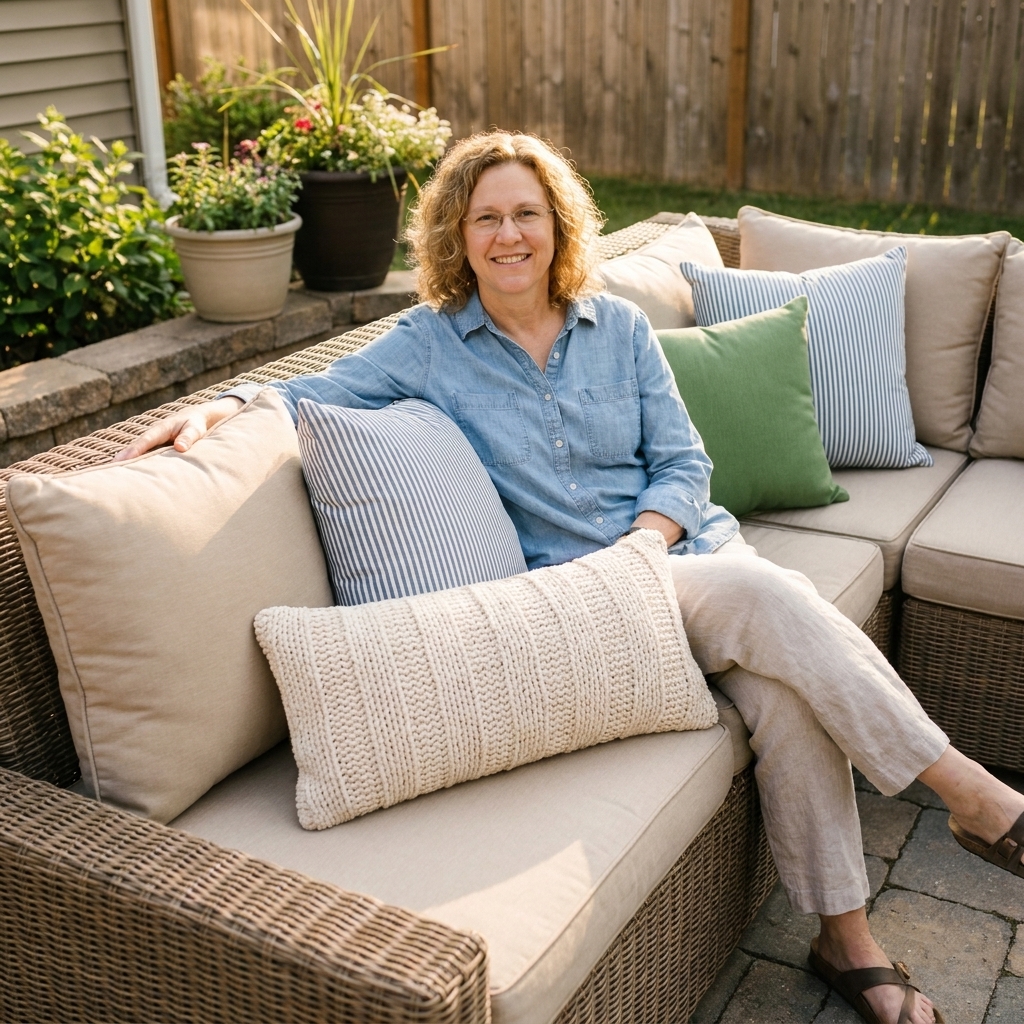
- 22x22 or 20x20 inches: Your main back-corner anchors. Start with one in each corner of the L.
- Lumbar pillows (about 12x20 inches): Place one or two where people naturally sit most. Lumbars are the secret weapon for comfort.
- Smaller squares (18x18 inches): Use these to fill gaps or soften an armless end piece.
Quick arrangement that always works: In each corner, do one larger square pillow with a lumbar in front. If you have extra pillows, add one medium pillow near the center seat to keep the look from being too symmetrical.
Choose outdoor-friendly inserts and fabrics
Nothing ruins the look faster than sad, pancaked pillows. Outdoors, your fabric and inserts matter just as much as the pattern.
- Fabric: Look for solution-dyed acrylic, olefin, or performance polyester labeled for outdoor use. These tend to handle sun and the occasional drizzle better than indoor fabrics, but quality varies by brand.
- Inserts: If you can, choose outdoor inserts or quick-dry fill. If you are using indoor-style inserts, keep pillow covers on the thicker side and bring them in during heavy rain.
- My “no stress” habit: Store extra pillows and blankets in a deck box or waterproof storage bench. It makes daily tidying easy.
Weather reality check: After a rain, stand cushions on their sides so airflow can do its thing, and rotate pillows now and then to even out sun fading.
Outdoor blankets: drape them on purpose
Even in summer, an outdoor blanket makes a sectional feel finished. It adds that relaxed, lived-in vibe and gives you something cozy when the sun drops.
What blankets work best outside
- Woven throws: Great for texture and they shake out easily.
- Recycled polyester or performance throws: Dry fast and often perform better than cotton in damp conditions.
- Quilted outdoor blankets: Perfect if you like a slightly more structured look.
Three drapes that look effortless
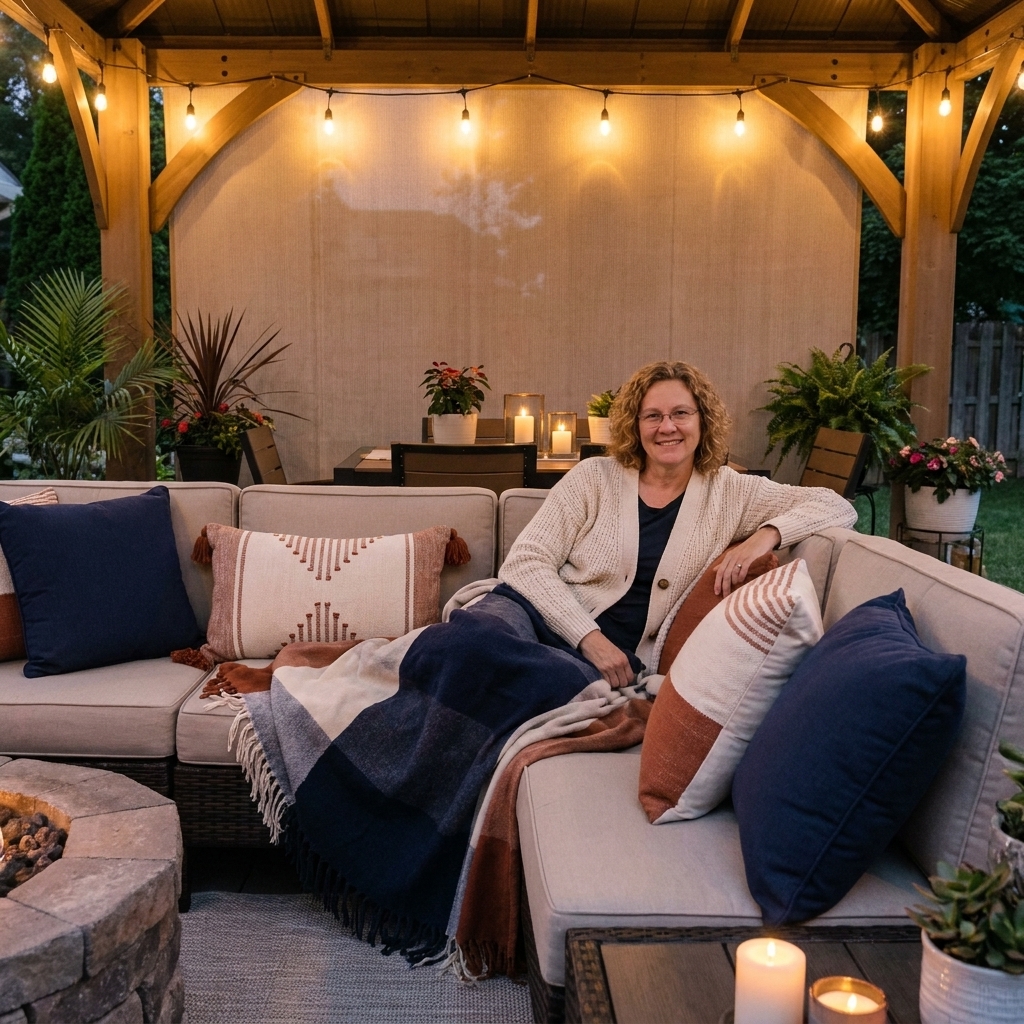
- The arm drape: Fold lengthwise into thirds and drape over the outer arm or armless edge so it falls about halfway down. Neat, classic, tidy.
- The corner cascade: Toss it into the inside corner where the sectional turns, then let it spill over the seat a bit. This is my favorite for making the space feel “come on in.”
- The basket-ready fold: Fold into a rectangle and place in a nearby basket under a side table. Looks styled, keeps it clean, and guests can grab one.
Little detail that makes it look designer: Repeat a color from your pillows in your blanket. Even if it is subtle, it ties the whole scene together.
Side table pairings that feel balanced
If pillows are the soft styling, side tables are the part that makes your sectional work for real life. Drinks need a landing spot. So do phones, books, and citronella.
The simplest side table setup
- One table at each end of the sectional if space allows. This is the most convenient for guests.
- One table at the inside corner if you are tight on space. Choose a slightly larger top so it can serve two seats.
Mixing shapes keeps it from looking flat
Most sectionals are big and boxy, so your tables are a great place to soften the look.
- Round drum table: Adds curves and feels sturdy in wind.
- C-shaped slide table: Great for small patios because it tucks under the seat edge.
- Nesting tables: Perfect for entertaining since you can pull one out when needed.
Height rules that prevent spills
- Best height: Aim for roughly level with the seat cushion, within a couple inches either way.
- If your table is lower: Use it for decor and keep a tray handy for drinks when needed.
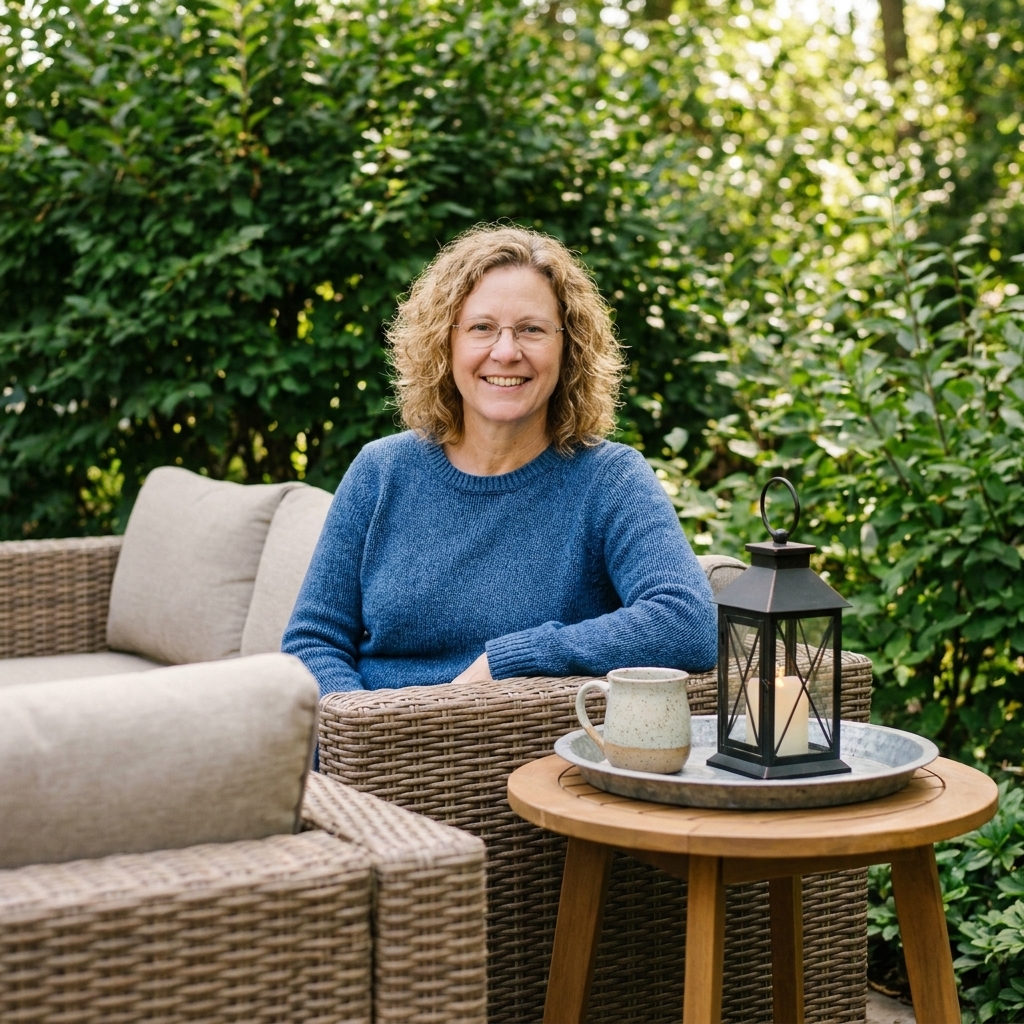
My favorite styling trick: Put a weather-friendly tray on one side table. It corrals a candle, matches, and a little vase, and it also makes the table feel intentional even when nothing is on it.
Material tip: Powder-coated metal, teak, concrete, and outdoor resin all hold up well outside. Just remember metal can get hot in direct sun, so plan placement accordingly.
Style the little moments on the tables
You do not need much. In fact, outdoor tables look better when they are not overcrowded.
A foolproof table trio
- Something tall: Lantern, small table lamp, or slim planter
- Something personal: A book, a pretty drink glass, or a coaster set
- Something living or seasonal: A small potted plant, herbs, or a bud vase
If you entertain a lot, swap the personal item for a bowl of snacks and call it done.
Color tips that make it look expensive
Most outdoor sectionals come in a neutral base like gray, beige, or black. That is a gift because you can change the vibe with textiles.
- Choose one main color. Think navy, sage, terracotta, or butter yellow.
- Add one supporting neutral. Cream, sand, charcoal, or warm white keeps it grounded.
- Finish with one accent. Brass-toned lanterns, a black metal table, or a pop of deep green looks sharp and intentional.
If you are stuck: Pull colors from what you already have nearby, like your front door color, your landscaping, or the cushions on your dining set. Repeating even one shade makes the whole patio feel cohesive.
Comfort upgrades you will feel fast
If your sectional looks cute but is not quite “stay for dessert” comfortable, try one of these quick fixes.
- Add a lumbar pillow where you sit most. Back support changes everything.
- Use a soft outdoor rug underfoot. Bare concrete can feel chilly at night. A rug instantly warms the space.
- Bring in layered lighting. A lantern on the table plus string lights overhead is my favorite combo for that cozy evening glow.
- Keep a basket of blankets nearby. It signals comfort and makes guests feel taken care of.
Quick styling recipes
Coastal calm
- Solid white and sand pillows with one or two navy stripes
- A woven throw in ivory
- Round drum side table in light wood or concrete look
- Lantern with a warm LED candle
Modern porch lounge
- Charcoal and cream pillows with one geometric print
- A simple gray performance throw
- Black metal C-table
- Tray with a low plant and coasters
Garden party cozy
- Sage and cream pillows with one floral or block print
- A textured throw in a soft green or warm neutral
- Nesting tables for flexible seating
- Small pot of herbs on the table
Mistakes I see all the time
- All pillows are the same size. Fix: Add 1 to 2 lumbar pillows for shape and comfort.
- Too many tiny patterns. Fix: Bring in more solids to let the eye rest.
- No place to set a drink. Fix: Add a slim C-table or a small stool that can act as a side table.
- Blankets look messy in a bad way. Fix: Fold into thirds before draping, or store in a basket so it looks intentional.
- Everything matches perfectly. Fix: Mix in one contrasting texture like a woven pillow, a wood tray, or a ceramic planter.
FAQ
How many pillows are too many on an outdoor sectional?
If you have to move more than two pillows just to sit down, you have crossed into showroom territory. Keep it cozy: enough pillows for comfort, but still easy to use.
Can I leave outdoor pillows and blankets outside all season?
Outdoor pillows usually do fine day to day, but heavy rain and long stretches of humidity can shorten their life. I recommend a deck box or storage bench so you can tuck blankets away and protect pillows during storms.
What is the best side table for a small patio sectional?
A C-shaped slide table is my top pick because it takes up very little floor space and still gives you a spot for a drink and your phone.
One last cozy tip
When you think you are done, sit down with a drink like a real person. Notice where you reach for a table, where you want a pillow, and where the sun hits at your usual relaxing hour. The best-styled patio sectional is the one that makes you linger. Once you get that right, the pretty part almost takes care of itself.