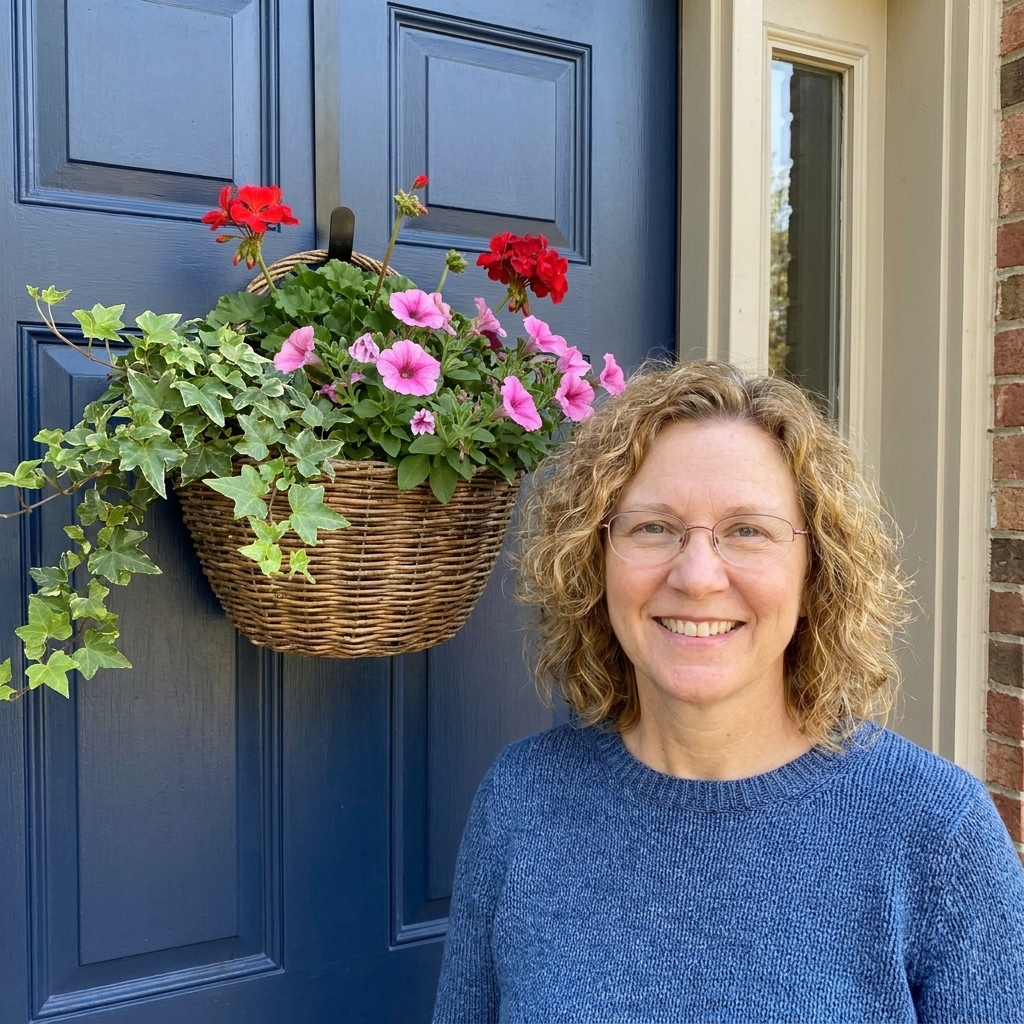
There is nothing like a lush hanging basket to make a porch feel finished. But summer does not play nice. Wind, blazing afternoon sun, and that tiny little root zone up in the air can turn a once gorgeous basket into a crispy mess fast.
The good news is that keeping hanging baskets alive and blooming is not about having a “green thumb.” It is about a few habits that work with heat instead of fighting it. Here is the exact routine I use on my own porch to keep baskets looking fresh from the first cookout to the last back-to-school sunset.
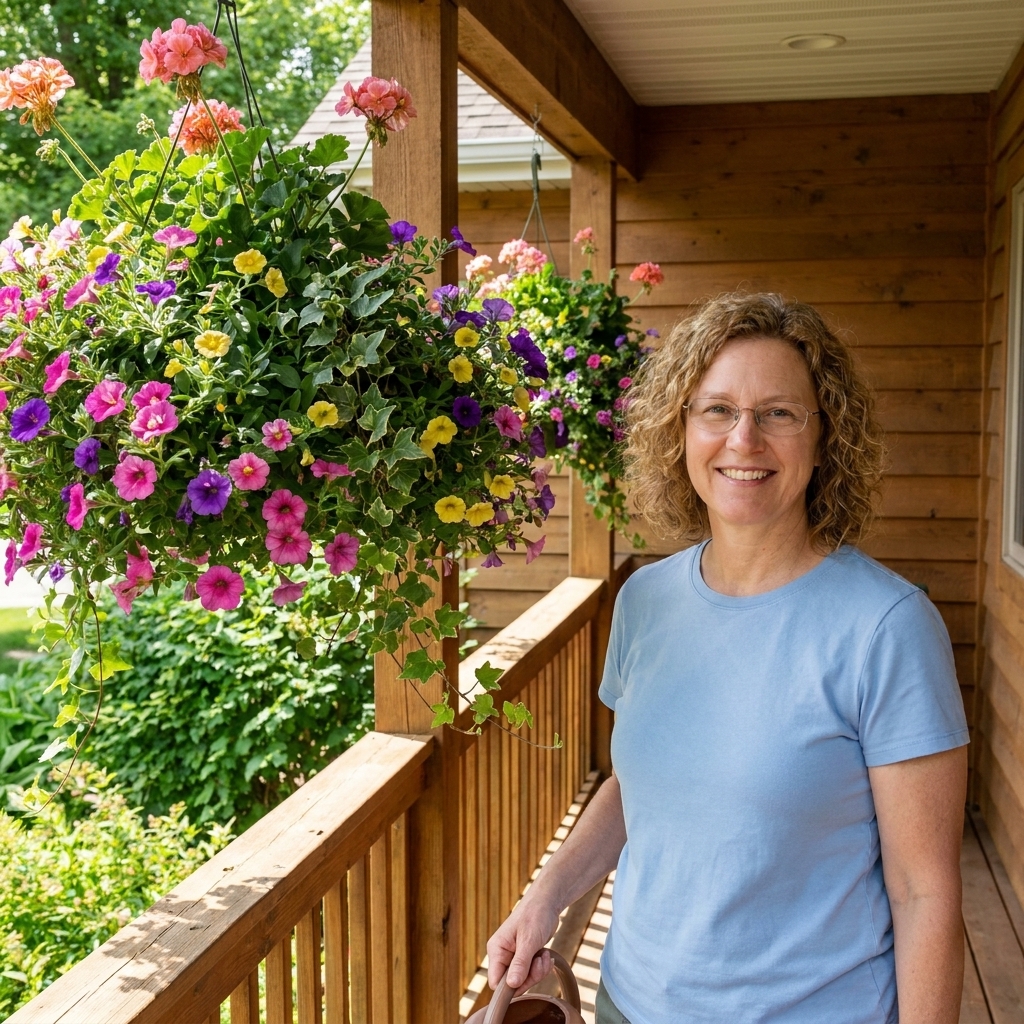
Know why hanging baskets dry out so fast
Before we talk fixes, it helps to understand the problem. Hanging baskets dry out quicker than almost any other container because:
- Air hits them from all sides, so moisture evaporates faster than pots sitting on the ground.
- They are usually packed with plants, which means more leaves pulling water and more roots competing for it.
- They heat up, especially plastic baskets and dark liners, which warms the root zone and speeds water loss.
- Wind is a sneaky thief. One breezy day can undo your watering.
Once you accept that baskets are basically “high performance containers,” your care routine starts to make sense.
The best watering routine (and the trick that prevents dry pockets)
Water deeply, then water again
In peak summer, many hanging baskets need water every day, especially in hot, sunny, or windy conditions. In a true heat wave, some baskets do need two checks a day. But the real rule is simpler: let the soil tell you.
My favorite method is what I call the two-pass soak:
- First pass: Water until you see a steady stream coming out of the bottom.
- Pause 30 to 60 seconds: Let the potting mix re-wet and soak it in.
- Second pass: Water again until it runs out. This second watering catches dry pockets that repel water, especially in peat-heavy mixes.
Morning is best, but “late is better than never”
Early morning watering sets your basket up for the day. If you only have time in the evening, do it. A thirsty basket overnight is still a stressed basket in the morning.
Use the lift test and the finger test
- Lift test: A basket that feels surprisingly light needs water.
- Finger test: Stick your finger in up to your first knuckle. If it is dry, water. If it is damp, check again later.
When water runs straight through
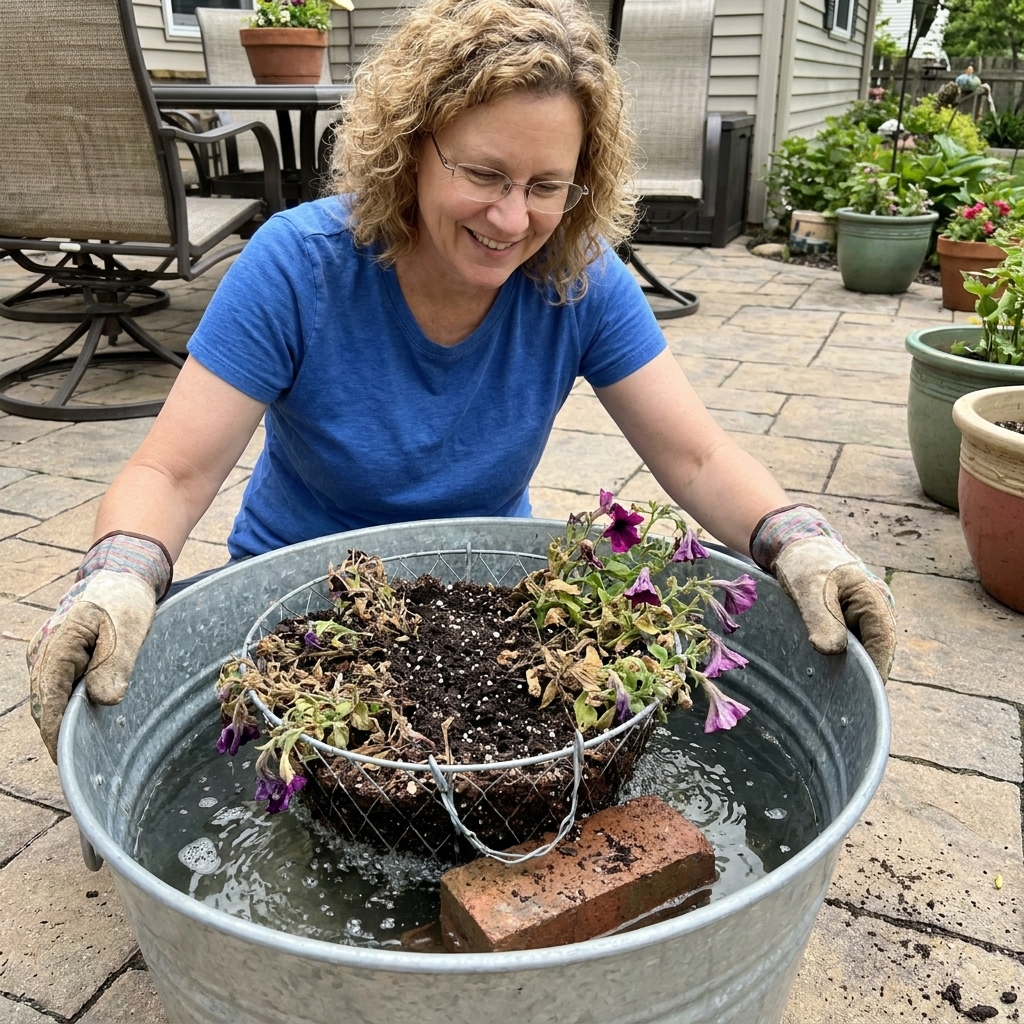
If you water and it immediately pours out the bottom, your basket may be hydrophobic, meaning the mix got so dry it started to repel water.
Try this quick rescue:
- Set the basket in a shallow tub or bucket (or your sink) with a few inches of water.
- Let it soak for 15 to 30 minutes.
- Lift it out and let it drain fully before rehanging.
Porch safety tip: If you can, take the basket down to water or soak it. Less dripping on steps and floorboards means fewer slippery spots.
Heat-proof your baskets with a few smart adjustments
Give them shade during the harshest hours
If your baskets get full afternoon sun and you live where summer is intense, consider moving them so they get morning sun and afternoon shade. Even a few feet can change everything.
If moving is not possible, add shade in a porch-friendly way:
- Hang a simple outdoor curtain panel or shade cloth on the hottest side.
- Use a patio umbrella positioned to block late-day sun.
- Shift a shepherd’s hook basket under an eave for partial protection.
Mulch the top like you would a garden bed
This is such a small step, but it makes a big difference. Tuck a thin layer of moisture-holding topper on the surface:
- Fine pine bark
- Chopped sphagnum moss
- Coconut coir
You are not trying to make it pretty. You are trying to slow evaporation and keep the top layer from baking.
Use the right liner (it matters)
Liner choice changes how fast a basket dries:
- Coco liners breathe and look classic, but they can dry fast in wind and sun.
- Plastic-lined baskets hold water longer, but they can stay too wet if drainage is limited.
If you use a liner that dries fast, plan on more frequent moisture checks. If you use a liner that holds water, make sure drainage holes stay open.
Watch for wind tunnels
Porches can create odd wind patterns, especially near corners and railings. If one basket always struggles, it may be getting blasted with drying wind. Relocating it a foot or two can be the difference between thriving and constant wilting.
Fertilizing: the secret to blooms that do not quit
Most summer baskets are heavy bloomers. Blooming takes energy, and energy comes from nutrients. If your basket is watered well but still looks tired, pale, or stingy with flowers, it is often hungry.
My simple feeding system
- Once a week: Water-soluble fertilizer at the label rate (or half-strength if you prefer a gentler approach).
- Midweek: Plain water only, unless the basket is clearly struggling.
Consistency beats intensity. A steady weekly feed keeps growth even and helps prevent that sad late-summer stall.
Pick a fertilizer that fits containers
Look for a fertilizer formulated for containers or flowering annuals. You will see plenty of “bloom booster” products out there, but you do not need to chase sky-high phosphorus numbers to get flowers. In most quality potting mixes, the better move is to feed regularly and avoid overdoing it. Too much fertilizer can push soft leafy growth and stress plants.
A note on slow-release granules
Slow-release fertilizer is handy, especially if you travel. But in extreme heat, it can release faster than expected. If you use it and your basket starts growing fast but blooming less, skip extra liquid feeding for a couple of weeks and let it level out.
Deadheading: five minutes that keeps your basket looking “just planted”
Deadheading is not about being fussy. It is about redirecting the plant’s energy. When spent blooms stay on, many plants shift into seed-making mode, and flowering slows down.
How to deadhead without overthinking it
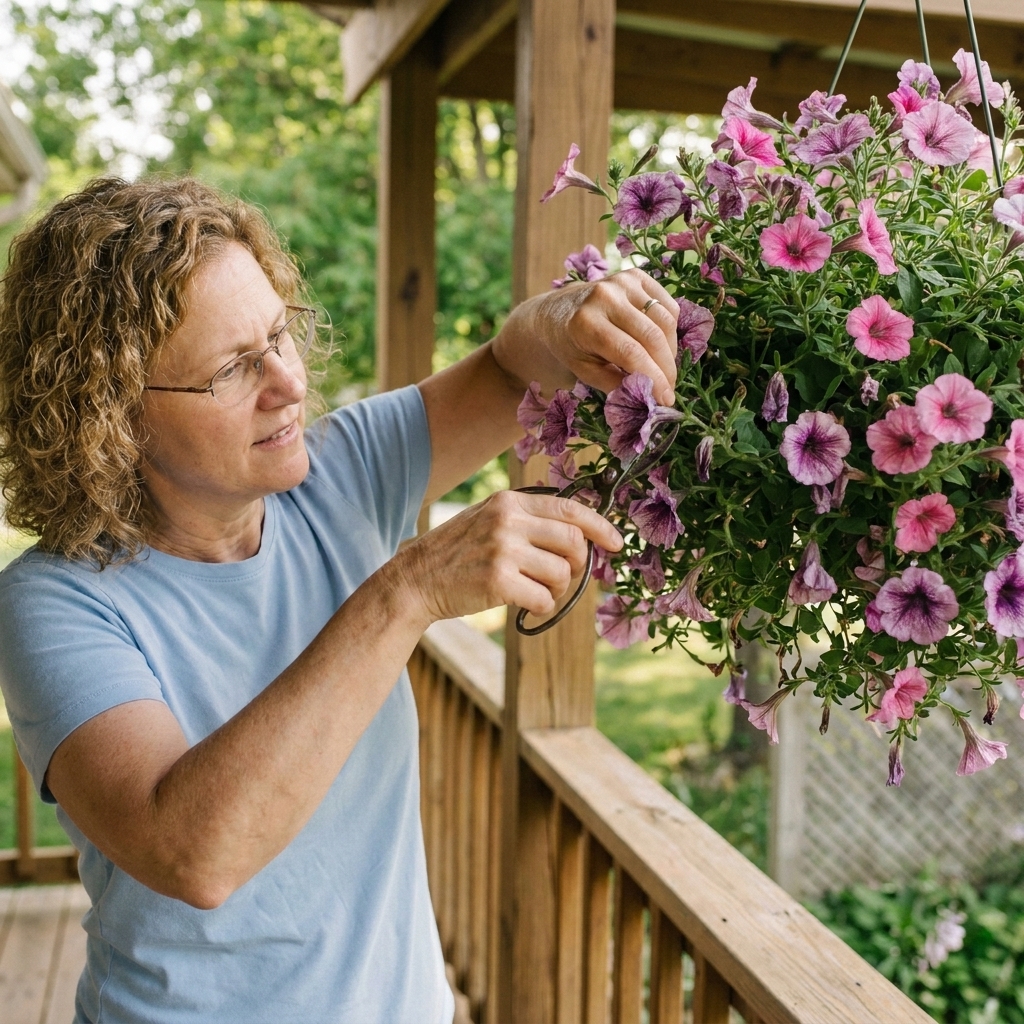
- Pinch or snip faded blooms off with clean scissors or your fingers.
- When possible, cut back to the next set of leaves, not just the flower head.
- Make it a habit: I do a quick sweep every 2 to 3 days when I am already outside with coffee.
Plants that love regular deadheading
- Petunias (especially larger-flowered types)
- Geraniums
- Verbena
- Fuchsia
- Lantana
Self-cleaning does not mean no maintenance
Some plants drop old blooms on their own (many calibrachoa and some newer petunias do this), but you still want to remove brown bits and do light trimming. It keeps airflow up and prevents that tired, stringy look.
Trim for shape: the mid-summer haircut that saves baskets
If your basket starts looking leggy, uneven, or like it is blooming only on the ends, it is time for a gentle trim. I know it feels scary, but most basket plants bounce back quickly and bloom even harder afterward.
Quick trimming rules
- Trim no more than one-third of the length at a time.
- Focus on the longest runners first to bring the shape back.
- After trimming, water well and fertilize at the next scheduled feeding.
This is especially helpful for petunias, calibrachoa, verbena, and trailing combos that want to turn into a tangled mop by August.
Drainage matters more than you think
A basket can dry out and still suffer from root issues if drainage is poor. Roots need oxygen. If water sits in the bottom, roots can decline, and the top will look wilted even when it is wet.
Do a quick drainage check
- Make sure there are open drainage holes.
- If your basket sits inside a decorative outer pot, ensure it is not standing in water.
- Empty saucers or reservoirs after heavy rain. (They can be handy, but they are also a quick way to accidentally drown a basket.)
After big storms
Summer downpours can turn baskets soggy, especially under eaves where they get splashed but do not dry quickly. If a basket feels heavy for more than a day, move it to a brighter, breezier spot temporarily so it can dry down.
Heat-wave emergency plan (when everything wilts at 3 p.m.)
On the hottest days, even well-watered baskets can look dramatic in the afternoon. Here is how to tell normal from trouble, and what to do.
Normal afternoon wilt
If the basket perks up by evening, it is usually heat stress, not drought. Keep up morning watering and consider shifting to afternoon shade.
Not normal: wilt that does not recover
If it is still limp in the evening, do this:
- Water using the two-pass soak.
- Check the soil: If it is bone dry and water runs through, do the bucket soak.
- Move to shade for 24 to 48 hours to recover.
Extra-credit cooling tricks
- Group baskets closer together so they create a slightly more humid microclimate.
- Misting can cool leaves briefly, but it does not replace watering the root zone. If you mist at all, do it early morning, not at night.
Common hanging basket problems (and what fixes them fast)
Yellow leaves
- Often: under-feeding, inconsistent watering, or roots staying too wet.
- Try: a consistent weekly feed and check drainage. Remove yellow leaves so the basket looks fresh.
Lots of leaves, not many flowers
- Often: too much fertilizer, too little sun, or no deadheading.
- Try: feed at label rates (not extra), give more light if possible, and tidy and deadhead regularly.
Crispy edges and crunchy stems
- Often: missed waterings or wind exposure.
- Try: soak to rehydrate, then commit to morning watering and a second moisture check on hot days.
Sticky leaves or tiny bugs
Aphids and whiteflies love tender new growth. If you notice stickiness, distorted leaves, or little insects when you shake the basket:
- Rinse the basket gently with a strong spray of water in the morning.
- Follow with insecticidal soap as needed, according to label directions.
- Remove badly infested tips.
Also watch for spider mites in hot, dry, breezy weather. They are sneaky. Look for tiny speckling on leaves and fine webbing. A hard rinse (especially on leaf undersides) and keeping the plant from going bone-dry helps a lot.
Set your baskets up for success next time (quick upgrades)
If you are building or refreshing baskets mid-season, these small choices pay off all summer.
- Use a quality potting mix labeled for containers. Garden soil is too heavy and dries oddly in baskets.
- Choose a slightly larger basket when possible. More soil volume means more water buffer.
- Do not overcrowd. Full is pretty, but jam-packed baskets dry out fastest.
- Match plants to your light. Sun-loving bloomers struggle in shade, and shade plants scorch in full sun.
- Pick mixes that re-wet easily. Potting mixes that include coir and fine bark tend to rehydrate more smoothly than straight peat-heavy mixes.
- Use water-holding additives carefully. Water-retaining crystals can help in some baskets, but too much can keep roots overly wet. If you use them, follow label rates exactly.
Plant note: Succulents in hanging baskets are their own category. They like a soak-and-dry cycle, not daily watering. And shade lovers like fuchsia and impatiens will appreciate protection from harsh afternoon sun in most climates.
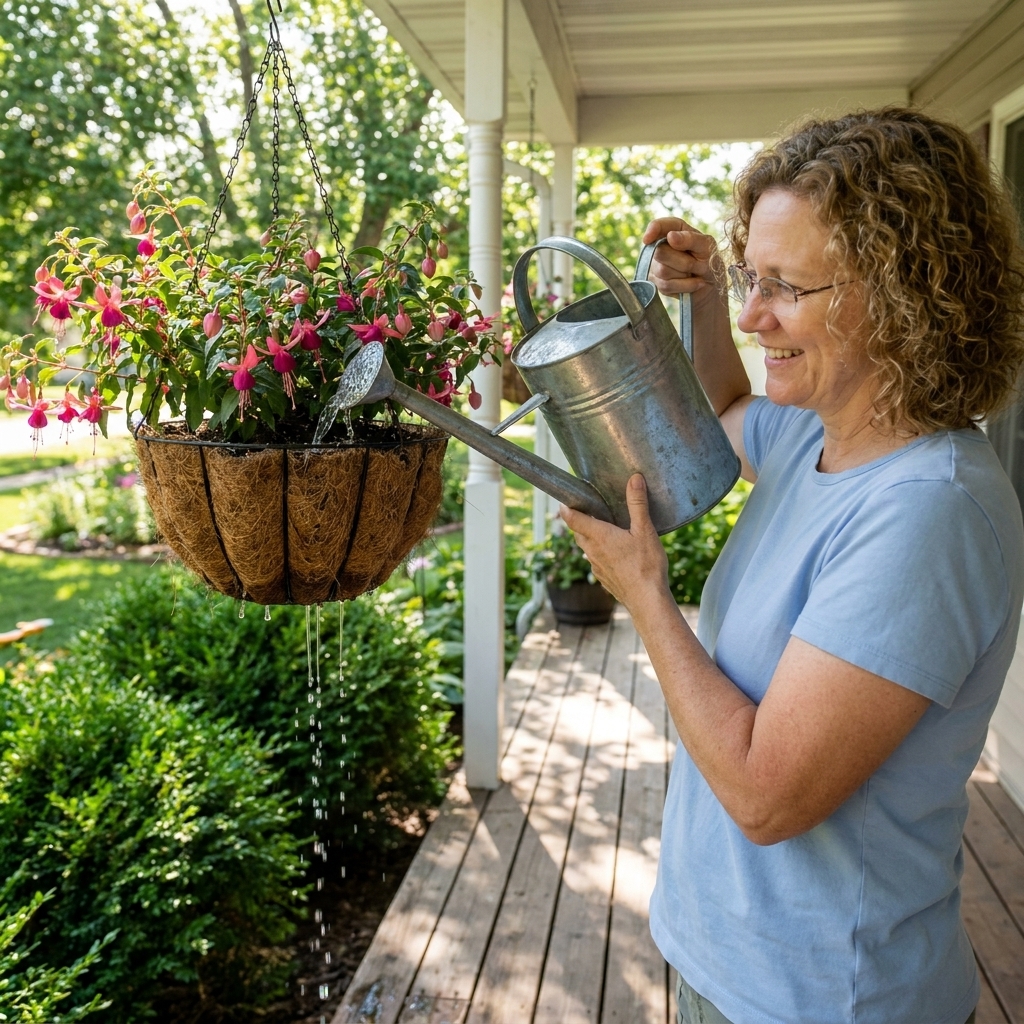
A simple weekly checklist (the porch-friendly version)
- Daily: Check moisture and water deeply as needed.
- 2 to 3 times a week: Quick deadhead and remove browned leaves.
- Weekly: Fertilize with a water-soluble feed.
- Every 2 to 4 weeks: Light trim to keep shape and encourage fresh growth.
- Any heat wave: Add an afternoon moisture check and give temporary shade if baskets look stressed.
If you stick to that rhythm, your baskets stay thick, colorful, and welcoming, which is exactly what we want on a porch. Flowers should feel like a warm hello, not a daily guilt trip.
FAQ
How often should I water hanging baskets in summer?
Check daily in summer and water when the top inch of soil feels dry. In hot, sunny, or windy weather, many baskets need water every day, and some need a second check later in the day. Always water until it drains out the bottom.
Should I water hanging baskets at night?
Morning is best, but evening watering is fine if that is when you can do it. Focus on soaking the soil, and avoid leaving foliage wet overnight.
Why does my hanging basket wilt even after I water it?
If it perks up later, it may be heat wilt. If it stays wilted, the mix may be so dry it is repelling water. Soak the basket in a bucket for 15 to 30 minutes, then let it drain and recover in shade.
What is the best fertilizer schedule for hanging baskets?
Use a water-soluble fertilizer once a week during the growing season, following label rates, and water normally in between.
Do I really need to deadhead?
For many flowering baskets, yes. Deadheading keeps plants blooming instead of turning energy toward seed production, and it keeps the basket looking tidy and freshly planted.