If your patio gets the kind of sun that makes metal chairs too hot to touch by noon, you are not alone. I have scorched more “full sun” flowers than I care to admit. The good news is there are plenty of container plants that actually thrive in heat, forgive missed waterings, and still look styled and intentional from morning coffee to evening string lights.
Below is my curated Porch Lush list of drought-tolerant container plants for sun-baked porches, plus the simple setup tweaks that make them truly low-maintenance.
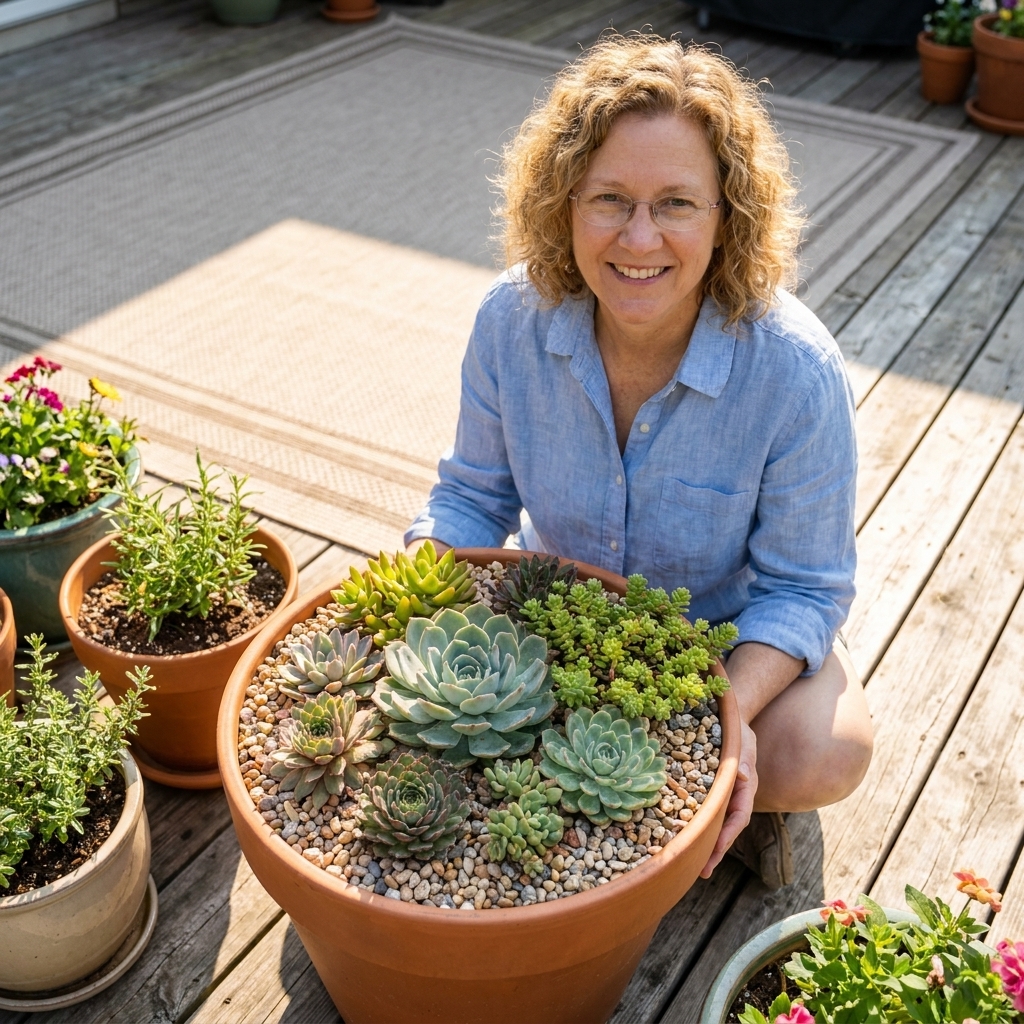
First, set yourself up for success
Low-maintenance starts with the container and the soil. If you get these two right, your plants work less hard and you do too.
What “full sun” means
For most of the plants below, “full sun” means 6+ hours of direct sun. A west-facing porch can feel like a solar oven thanks to afternoon sun and reflected heat from brick, stucco, or concrete, so treat it like extra-intense sun even if the hours are fewer.
Pick the right pot (it matters more than you think)
- Drainage holes are non-negotiable. If you love a hole-free decorative pot, use it as a cachepot and keep the plant in a nursery pot inside.
- Terracotta breathes. Great for succulents and cacti, but it dries out faster in extreme heat and wind.
- Glazed ceramic and resin hold moisture longer. Helpful for flowering drought-tolerant plants that like to dry slightly, not bone-dry.
- Size up for summer. Bigger pots dry out slower and buffer roots from temperature swings. For most sun plants, I like 12 to 18 inches wide as a starting point.
Use a gritty, fast-draining mix
For succulents and cacti: choose a cactus mix, or blend 2 parts potting mix + 1 part perlite/pumice. For drought-tolerant “regular” plants (like lantana or salvias): a high-quality potting soil with extra perlite is usually perfect.
Top-dress for a tidy finish
A 1 inch layer of pea gravel, pumice, or small decorative stone can help reduce soil splash, slow evaporation, and make even a simple pot look styled. In very hot climates, choose light-colored stone and keep an eye on moisture since dark rock can warm the surface.
My porch rule: if it looks finished, it feels cared for, even if you only water once a week.
Heat-loving succulents that look designer
Succulents are my go-to when I want a porch arrangement that can handle a heat wave without drama. Most prefer a deep soak, then time to dry out.
1) Aloe (Aloe vera)
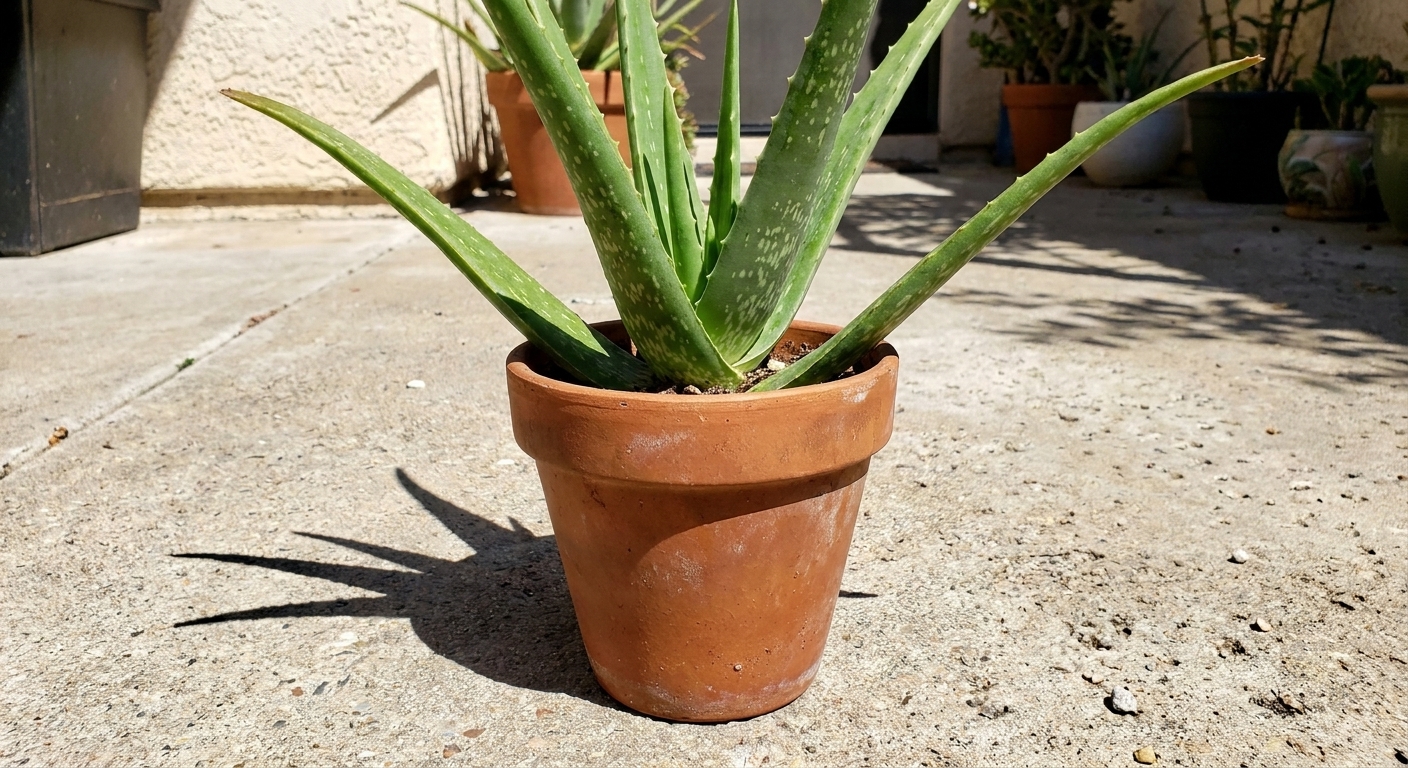
Aloe is sculptural, forgiving, and looks amazing in a simple terracotta pot. Give it bright sun and let the soil dry between waterings.
- Why I love it on porches: It reads “collected” and architectural.
- Watch for: Too much water. Mushy leaves are the warning sign.
2) Agave (Agave spp., dwarf types)
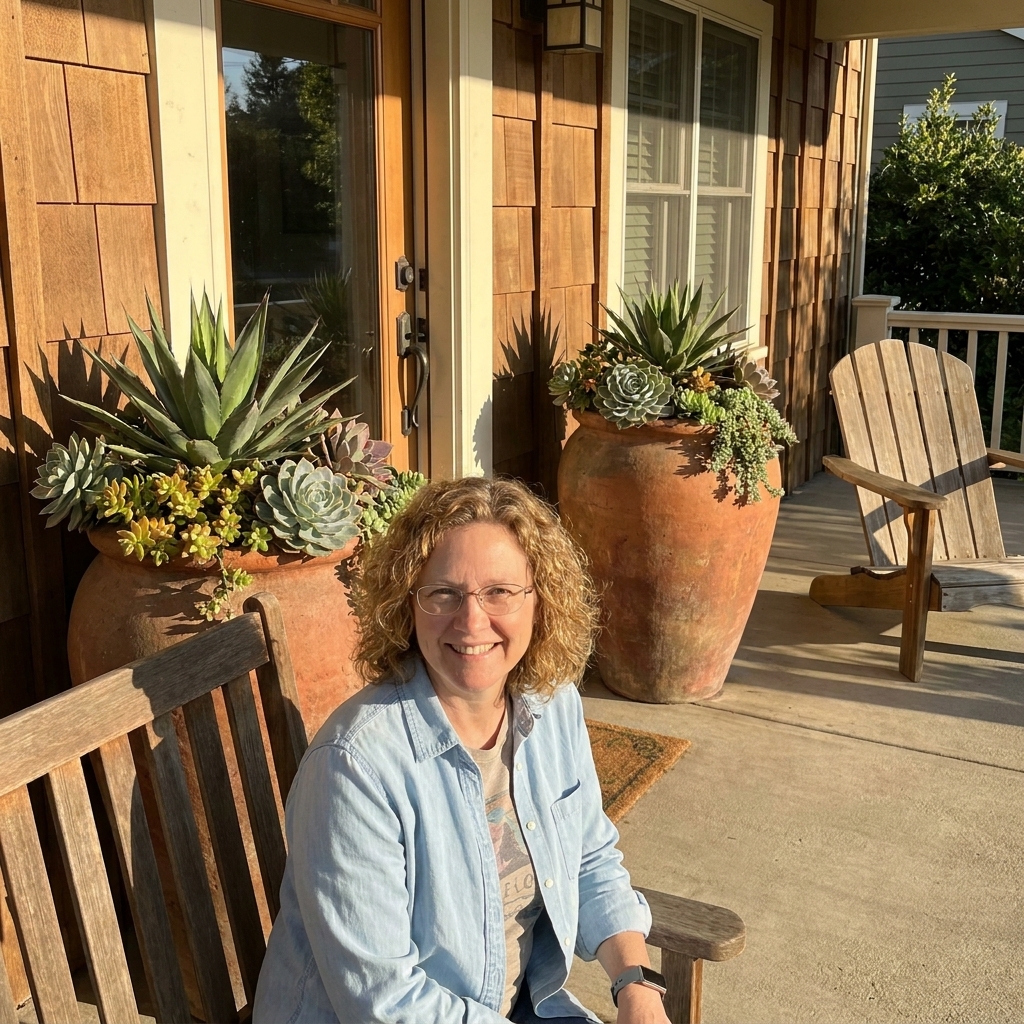
Agave brings that bold desert look, especially paired with smooth river rock. Choose compact types labeled for pots or smaller spaces.
- Best look: One agave per pot for a clean, modern statement.
- Watch for: Spines and sharp leaf tips. Place where guests and kids will not brush against it.
3) Echeveria
Echeverias are the rosettes everyone falls for. In hot sun they can color up beautifully, with blushy edges and deeper tones.
- Pro tip: Water the soil, not the rosette. Standing water in the crown can cause rot.
4) Sedum (stonecrop)
Sedums are workhorses. Some trail, some mound, and they fill in containers quickly without demanding much.
- Great for: Softening the rim of a pot or spilling over a railing planter.
5) Elephant bush (Portulacaria afra)
This one is my “I want a tiny drought-tolerant shrub in a pot” pick. It can be kept bushy or trained into a little tree form over time.
- Looks especially pretty with: Simple white gravel top-dressing.
Drought-tolerant bloomers for sunny porches
If you want color that holds up in relentless sun, these are the plants I reach for again and again. Think “soak well, then let the pot dry a bit” instead of constant sips.
6) Lantana (Lantana camara)
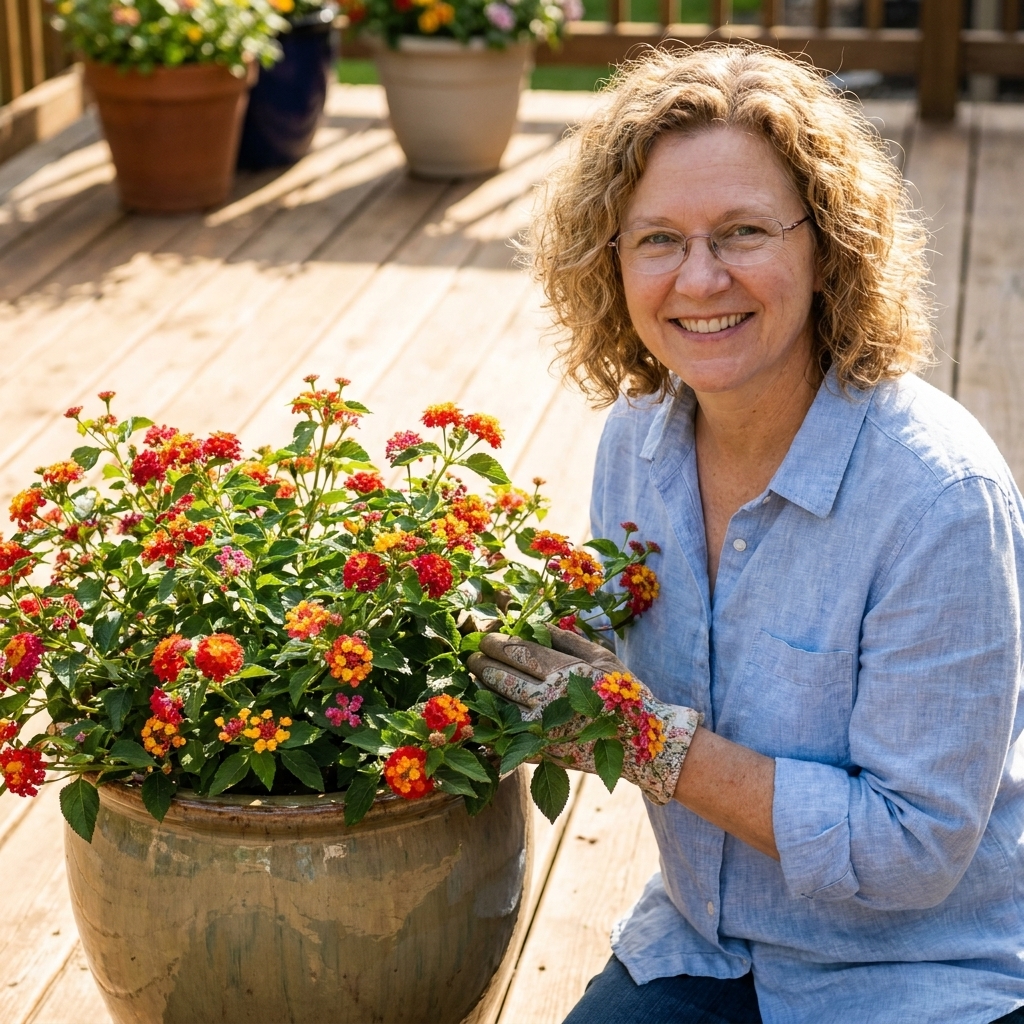
Lantana is practically made for hot patios. It blooms like crazy, handles reflected heat, and keeps going when other annuals throw in the towel.
- Container tip: Give it room. A crowded pot means more watering.
- Look: Cottagey, cheerful, and pollinator-friendly.
- Good to know: Lantana can be invasive in some regions and is toxic if ingested. If you have pets or curious toddlers, place it out of reach and check local guidance before planting.
7) Portulaca (moss rose)
Portulaca is the “cute but tough” answer for shallow bowls and window boxes that bake in full sun. The flowers open wide in sunshine.
- Perfect for: A low, spilling edge over a pot.
- Bonus: It is a succulent annual, so it laughs at heat.
8) Verbena
Verbena gives you that airy, fluttery bloom without a lot of fuss. Many varieties are heat tolerant and do well in containers with good drainage.
- Quick care: Snip spent blooms for a fresh flush, or let it go for a wilder, cottage look.
9) Lavender (Lavandula spp.)
Lavender is the porch plant that makes everything feel like a little getaway. It prefers sun, drainage, and not being babied with water.
- Best bets for pots: English lavender (Lavandula angustifolia) in drier climates, and Spanish or French lavender (Lavandula stoechas or Lavandula dentata) where winters are mild.
- Humidity note: In humid summers, lavender can struggle in containers if airflow is poor. Use a gritty mix, avoid overcrowding, and let the pot dry slightly between waterings.
- Styling note: Lavender in a simple clay pot is instant charm.
10) Salvia (Salvia spp.)
Salvia is a sun lover with beautiful spikes of color. Many types are drought tolerant once established and do well in big containers.
- Why it works on porches: Upright shape, long bloom season, pollinators adore it.
Silvery and strappy plants that take heat
These are the plants that quietly make your containers look elevated. They add texture, soften bright flowers, and keep looking good even when summer is at its rudest.
11) Rosemary (Salvia rosmarinus)
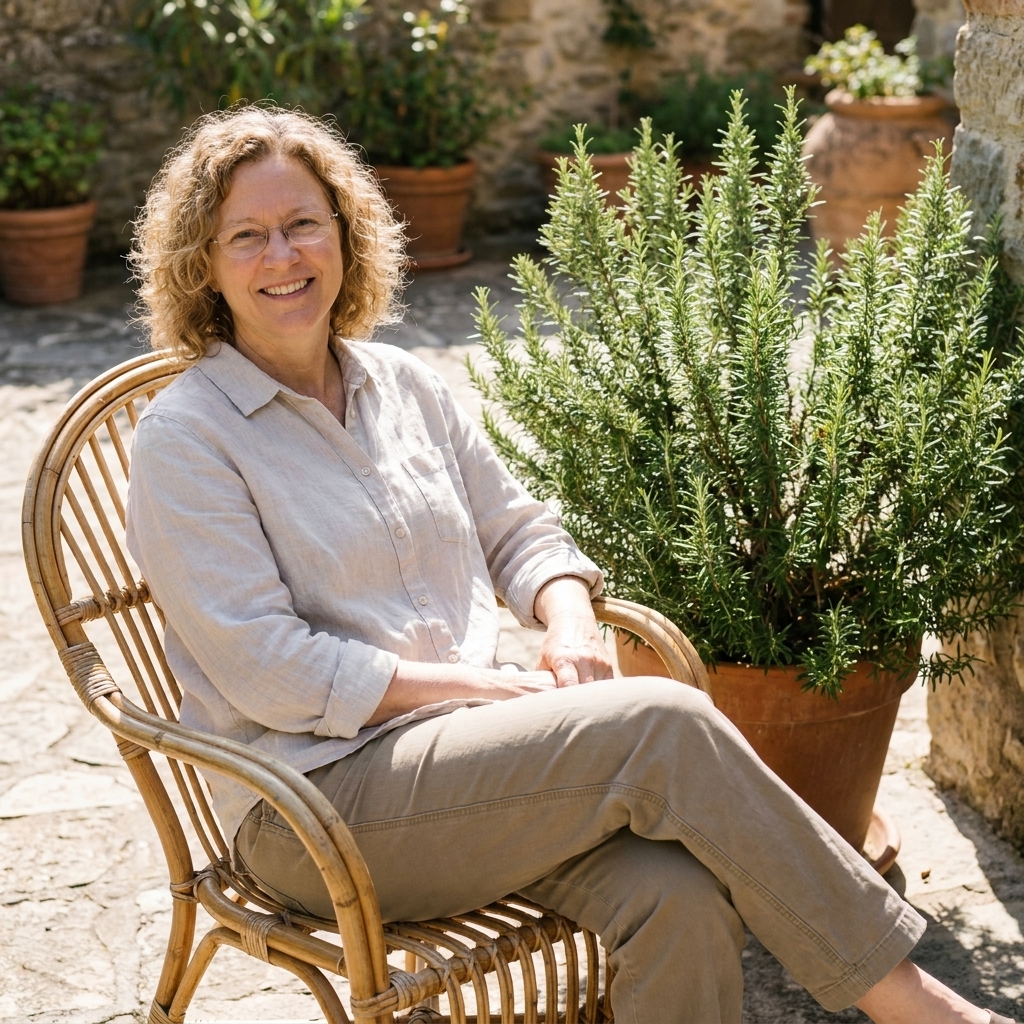
Rosemary is hardy, fragrant, and gives you that tidy, upright structure that designers love. It is also one of my favorite “porch plants that earns its keep” because you can snip it for dinner.
- Best container style: A tall pot near seating so you brush past it and smell it.
- Watering rhythm: Deep soak, then let the top 1 to 2 inches dry before watering again. In small pots, terracotta, or wind, it will need water more often than it would in-ground.
12) Yucca (Yucca spp.)
Yucca brings instant resort vibes. Look for varieties marketed as softer-tipped and give it a sturdy pot that will not tip in wind.
- Design win: A single yucca in a clean planter looks intentional and modern.
- Placement tip: Even “spineless” yuccas can have stiff, pointed leaves, so skip high-traffic edges.
13) Blue fescue (Festuca glauca)
Blue fescue adds a neat little fountain shape and cool blue tone that plays beautifully with terracotta and warm wood decks.
- Why it is low-maintenance: Minimal fuss, tidy habit, drought tolerant once established.
- Climate note: In very hot or humid summers, it can look tired. It often performs best in cooler, drier conditions or with a bit of afternoon shade.
14) Artemisia (silver foliage)
Artemisia is a secret weapon for hot patios. That soft silver foliage looks gorgeous all season and makes bright blooms pop.
- Container tip: Give it airflow and avoid overly rich, wet soil.
My favorite low-water combos
If you like the “grab a few plants and make it look styled” approach, try one of these tried-and-true combos. They are built for sun and forgiveness.
Combo 1: Desert modern
- 1 dwarf agave (thriller)
- 2 to 3 echeverias (fillers)
- Trailing sedum (spiller)
- Top-dress with pale gravel for a clean finish
Combo 2: Hot-sun cottage color
- 1 salvia (thriller)
- 1 lantana (filler)
- Portulaca spilling over the edge (spiller)
Combo 3: Mediterranean porch pot
- 1 rosemary (thriller)
- 1 lavender (filler)
- Silver artemisia tucked at the rim (softener)
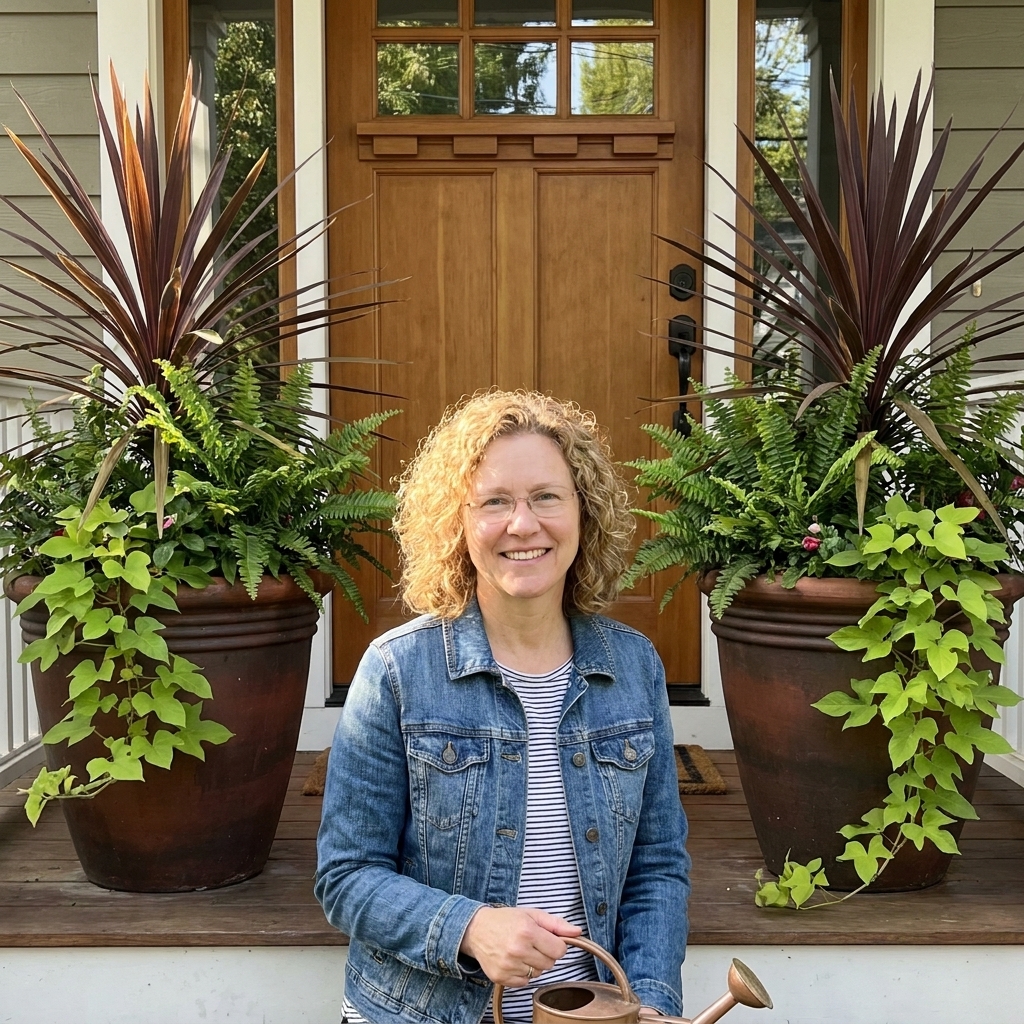
Quick styling tip: Repeat the same pot on either side of your door or steps. Even simple plants look high-end in a matched pair.
Watering that stays low-maintenance
The goal is not “never water.” The goal is water smarter, less often.
How often should you water?
Use these as starting ranges, not rules. Heat waves, wind, small pots, terracotta, and tiny root balls can turn “low-water” into “check daily.”
- Succulents and cacti: Often every 10 to 21 days in summer, depending on heat, pot size, and wind. Always check first.
- Drought-tolerant bloomers: Often 1 to 2 times per week in peak heat, especially in smaller pots. Bigger pots may go longer.
My foolproof way to check
Stick a finger 2 inches into the soil. If it is dry at that depth, water deeply until it runs out the drainage holes. If it is still damp, wait.
Make watering easier on yourself
- Use drip trays only if you empty them. Standing water is how roots rot.
- Group pots by thirst. Keep your succulents together so you are not accidentally overwatering them because the lantana looked thirsty.
- Water early. Morning watering wastes less to evaporation and helps plants handle afternoon heat.
Keep containers looking fresh
These tiny habits make a bigger difference than fancy fertilizer.
- Deadhead selectively. For lantana and verbena, a quick snip now and then keeps them blooming neatly.
- Rotate pots monthly. Sun can make plants lean. A simple quarter-turn keeps them balanced.
- Feed lightly. Too much fertilizer can mean weak, thirsty growth. A slow-release fertilizer for containers in spring (always follow the label) is often enough for flowering pots. Succulents generally need very little feeding.
- Mind the wind. Wind dries pots fast. If your porch is breezy, tuck your thirstier pots closer to a wall for a little protection.
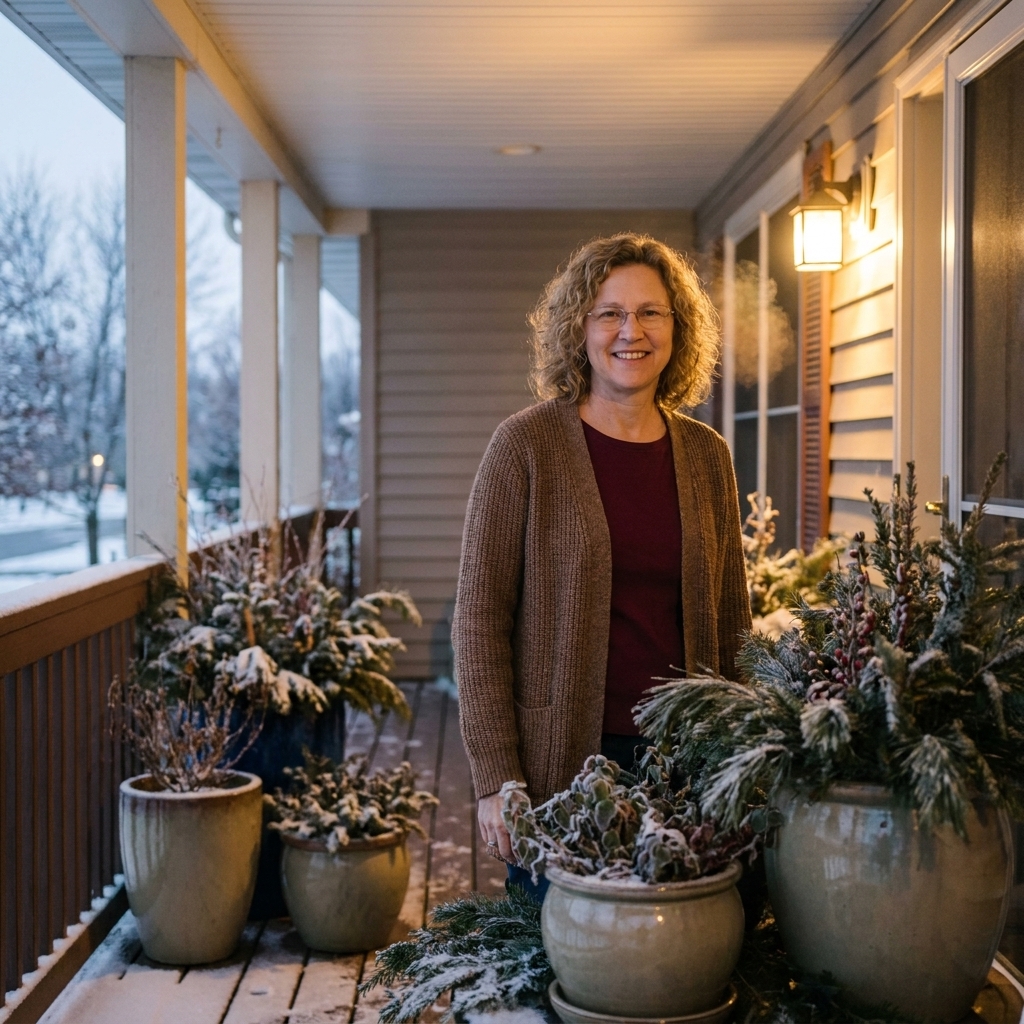
Cold weather plan
If you get frost, a porch full of pots needs a simple fall strategy.
- Treat as annuals: Many people grow lantana and portulaca as annuals in colder zones and replant each spring.
- Bring in tender succulents: Aloe, echeveria, and elephant bush can often overwinter indoors in a bright window.
- Protect the “maybe” plants: Rosemary and lavender vary a lot by variety and climate. In cold zones, they may need to come into a bright, cool space or be treated as seasonal patio plants.
- Move pots off freezing surfaces: A pot riser or piece of wood under containers can help prevent cracking and cold damage.
FAQ
What is the most drought-tolerant plant for a container in full sun?
For pure toughness, you cannot beat a well-potted agave or aloe in fast-draining soil. If you want flowers, portulaca is one of the most heat-proof container bloomers I have used.
Can I use regular potting soil for succulents?
You can, but it usually holds too much moisture in a container. For better survival in summer storms and humid stretches, mix in perlite or pumice so it drains quickly.
Do drought-tolerant container plants still need fertilizer?
A little, yes, especially flowering plants in pots. I prefer a light hand: slow-release granules once in spring (per label), then only a gentle liquid feed if blooms slow down mid-season. Succulents are happiest with minimal feeding.
What if my patio gets intense reflected heat?
Reflected heat from brick, stucco, and concrete is real. Choose tougher plants like lantana, portulaca, agave, aloe, and rosemary, and size up your pots so roots stay cooler. A layer of light-colored gravel top-dressing can help too.
Any quick safety notes for pets and kids?
Yes. Keep spiky plants like agave and yucca away from walkways, and remember lantana is toxic if ingested. When in doubt, place “look but do not touch” plants farther back and choose softer options near seating.
A final porch-friendly pep talk
Your patio does not have to be a high-maintenance hobby to be beautiful. A few sun-loving plants in the right pots can give you that lush, pulled-together look without daily watering. Start with one great container, place it where you will actually enjoy it, and build from there. That is how every cozy porch I have ever loved has come together, one easy win at a time.