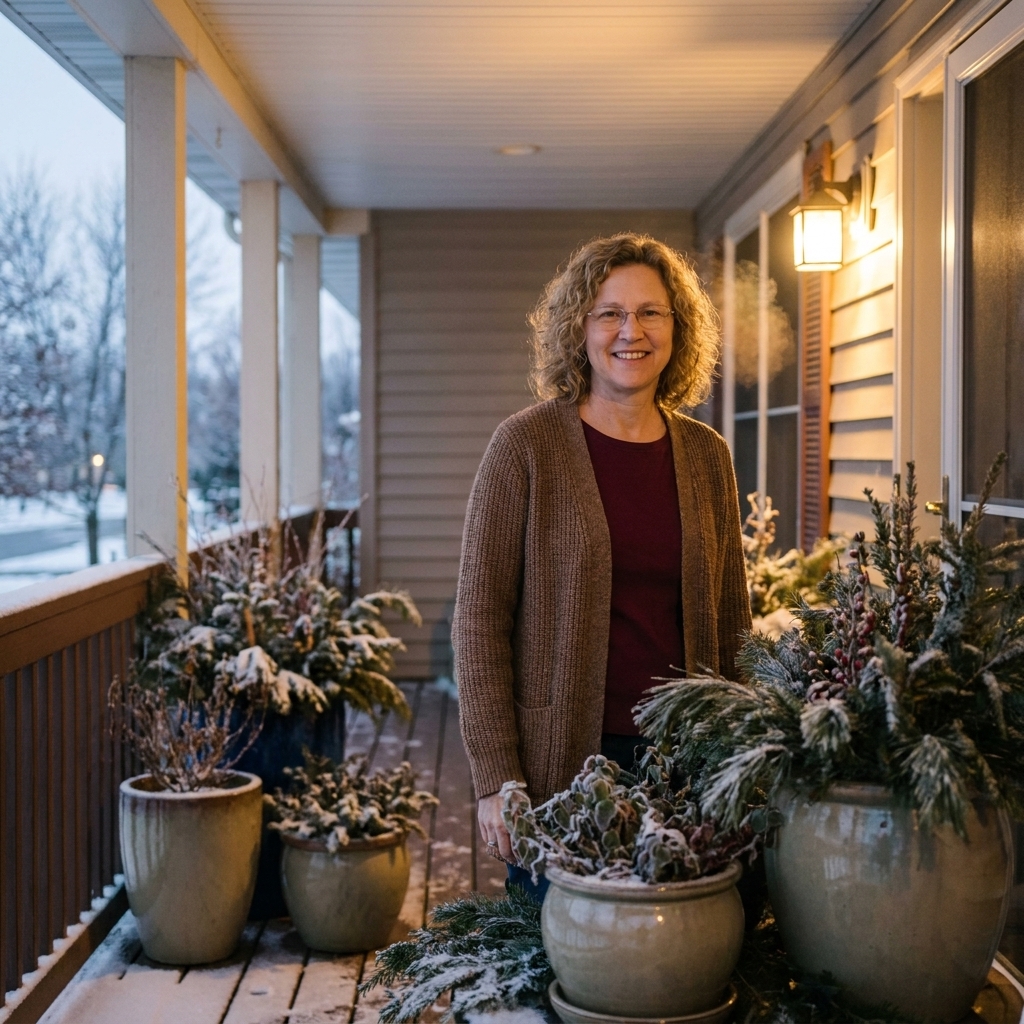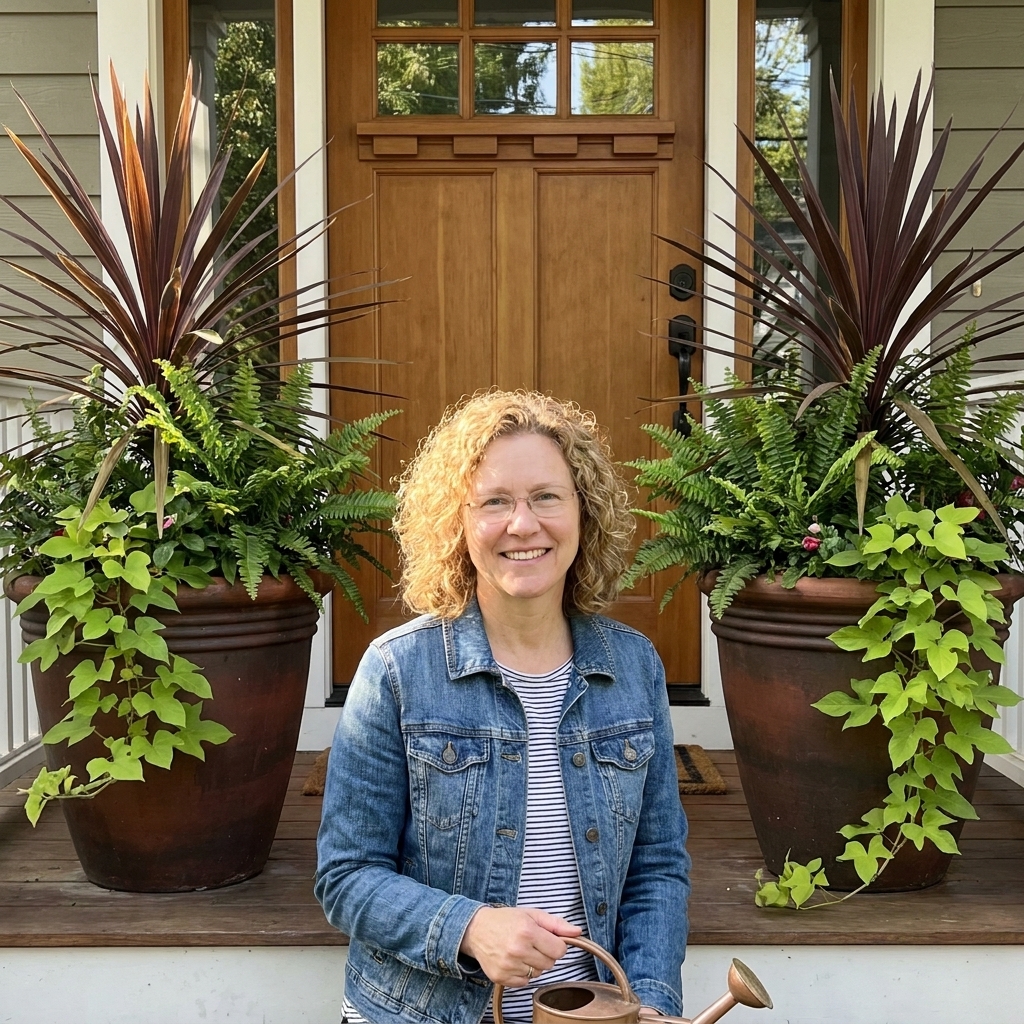
If you have ever wished your porch had a little more life, height, and that cozy “garden room” feeling, a potted tree is one of the quickest ways to get there. And yes, you can absolutely grow trees in containers, even fruit trees, as long as you treat the pot like a tiny, well-managed yard.
I learned this the trial-and-error way on my own deck: the tree choice matters, the pot size matters more than you think, and watering is the make-or-break habit. Let’s set you up for success from day one.
Start with the right tree
When a label says “dwarf,” it is often tied to rootstock on grafted fruit trees. Rootstock can control how large the tree grows, how soon it fruits, and sometimes even cold tolerance and disease resistance.
But not everything “dwarf” is about rootstock. Many ornamentals (think dwarf conifers and some Japanese maple cultivars) are naturally compact because of the cultivar itself. And some patio trees stay smaller mainly because of pruning and the limits of container life.
What to look for on the plant tag
- Dwarf, patio, or compact varieties (best for long-term pots)
- Rootstock name if listed (common on apples, pears, many stone fruits; a good nursery can tell you even if the tag does not)
- Mature size and pollination needs (some need a partner, some are self-fertile)
- Chill hours if you live in a mild-winter climate (many apples and stone fruits will not set fruit well without enough winter chill)
Quick reality check
A potted tree will not behave exactly like one in the ground. In containers, roots are more exposed to heat, cold, and drying winds. The trade-off is that you get a living focal point you can move, style, and protect.
One more porch-specific note: walls and railings can reflect heat and sun. That is great for citrus, but it can scorch more tender foliage, especially Japanese maples. If your porch runs hot, give sensitive trees a little afternoon protection.
Pot size and material
If there is one place I do not like to “make do,” it is container size. A tree can limp along in a too-small pot for a season, but it will never really thrive there.
Best pot sizes for dwarf trees
- Newly purchased 3 to 5 gallon tree: start in a 15 to 20 inch wide container (often around 10 to 15 gallons).
- Long-term home for most dwarf trees: 18 to 24 inch wide container (often around 15 to 25 gallons).
- Very vigorous dwarfs or small standards: 25 to 30 gallons can be worth it if you have the space and want less frequent root work.
Those gallon numbers are approximations since a tall narrow pot and a wide low pot can hold very different volumes. If you are in doubt, choose the one with more soil volume and a wider base for stability.
Drainage and stability
- Drainage holes are mandatory. If the pot has one tiny hole, I prefer adding more when the material allows.
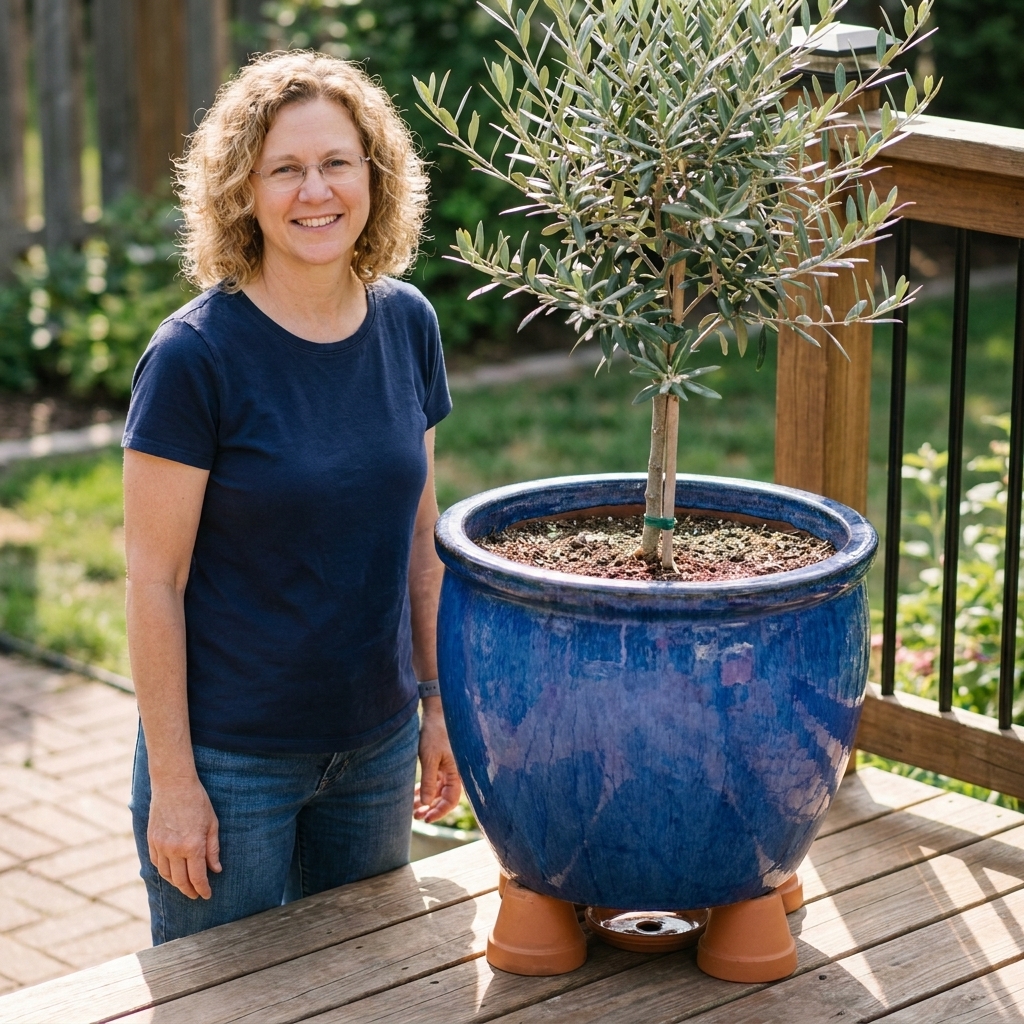
- Feet or risers help water drain freely and keep the base from staying soggy against a deck or patio.
- Wide base matters for top-heavy trees, especially when they are in bloom or fruit.
Porch note: pot feet also help prevent stains and trapped moisture on wood. If you use a saucer, pick one that lifts the pot slightly, and never let it stay full.
Choosing a pot material (my porch-tested notes)
- Terracotta: gorgeous and classic, but dries faster and can crack in freezing weather. Great for people who like to water often.
- Glazed ceramic: beautiful, holds moisture longer, heavy and wind-resistant. Make sure drainage is excellent.
- Resin or fiberglass: lightweight and weather-friendly. Perfect when you need to move pots seasonally.
- Wood planters: charming and insulating. Line the interior walls with breathable landscape fabric, not plastic, and ensure drainage.
Soil mix
Container trees need a mix that holds moisture and drains well. Garden soil compacts in pots, suffocates roots, and turns watering into a constant guessing game.
A reliable container mix for potted trees
Look for a high-quality potting mix (not “topsoil”) and consider boosting it for trees:
- 60 to 70% premium potting mix
- 20 to 30% pine bark fines (orchid bark works if you chop it smaller) for structure and airflow
- 10% perlite or pumice for drainage
If you would rather buy instead of blend, choose a potting mix labeled for containers or citrus and palms (often nice and chunky), then add a little bark for extra longevity.
Should you add rocks to the bottom?
I skip it. Rocks do not improve drainage in the way people assume, and they steal valuable root space. Better drainage comes from the right soil texture and a pot with real holes.
Fertilizer basics
Most potted trees do best with:
- Slow-release fertilizer in spring (follow label rates for container size)
- Liquid feeding for heavy feeders (especially citrus) during active growth
- Micronutrients as needed: iron and magnesium deficiencies show up often in citrus grown in containers
Best dwarf fruit trees
If you want a porch that feels like a vacation rental in the best way, fruit trees do that. Blossoms in spring, glossy leaves in summer, and the joy of picking something you grew in a pot is hard to beat.
Citrus
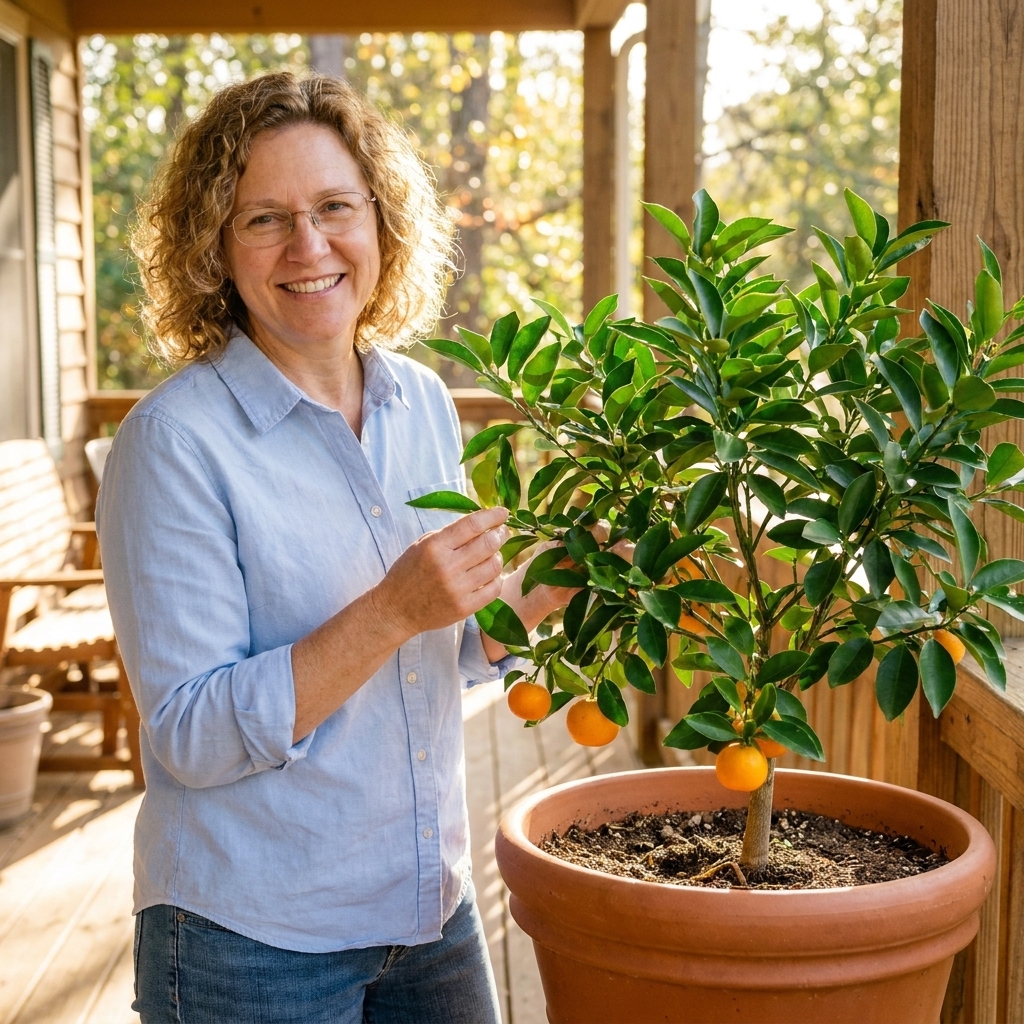
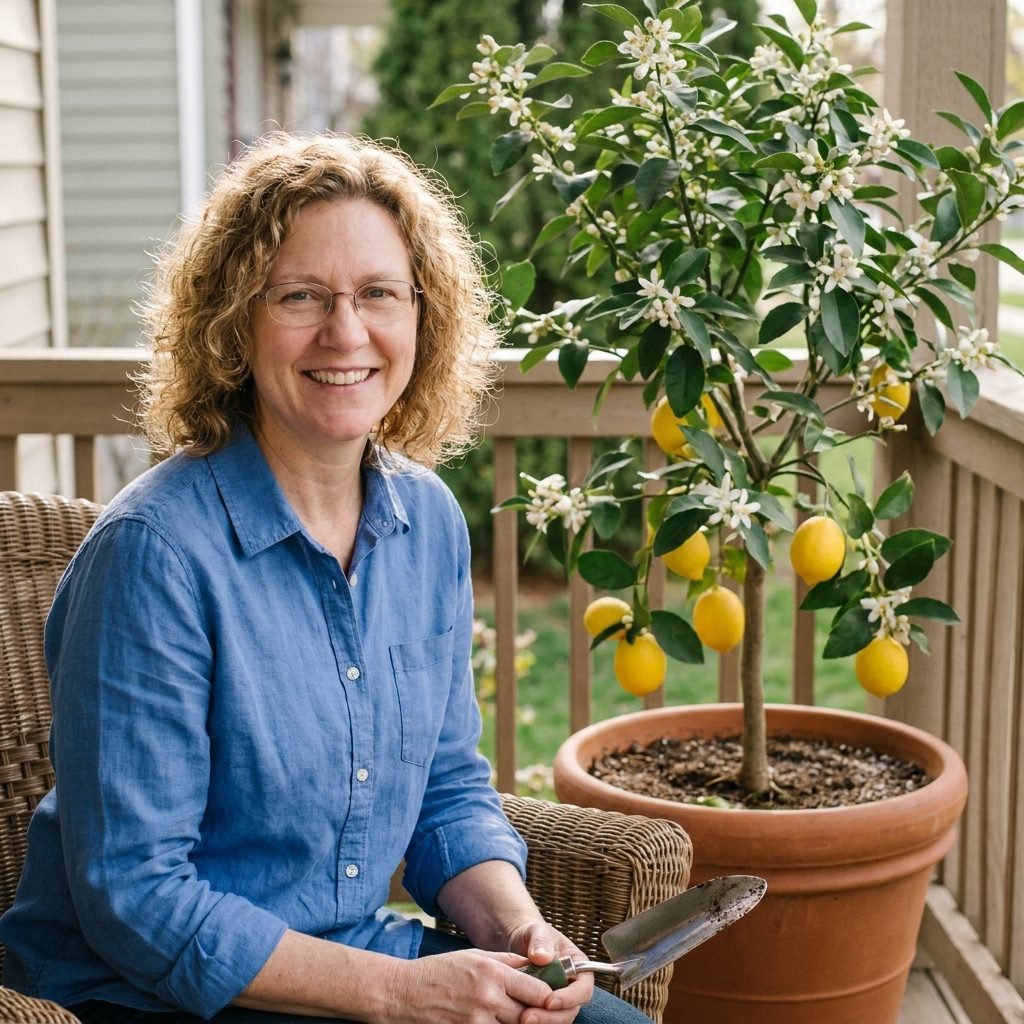
- Meyer lemon: a classic patio tree, fragrant blooms, reliable fruiting.
- Calamondin: compact, ornamental, and loaded with small sour fruit great for marmalade and drinks.
- Kumquat: pretty fruit and usually a tidy habit.
- Dwarf mandarin or lime: great fragrance, but watch watering and feeding.
Porch note: citrus loves sun and hates wet feet. If your potting mix stays soggy, adjust it before you blame yourself.
Apples
- Dwarf apple on dwarfing rootstock: look for compact or “columnar” types if you are tight on space.
- Pollination: many apples need a second variety that blooms at the same time. Some are self-fertile, but often fruit better with a partner.
Figs
- Figs: naturally do well in containers, tolerate pruning, and can be overwintered in a protected spot in cooler regions.
Stone fruits
- Choose varieties labeled for containers or “genetic dwarf.”
- These usually want lots of sun and consistent watering while fruit is sizing.
Best ornamental dwarf trees
If your goal is curb appeal and atmosphere first, ornamentals are your best friends. They give you structure year-round and can look intentionally styled even in the in-between seasons.
Small trees that shine in containers
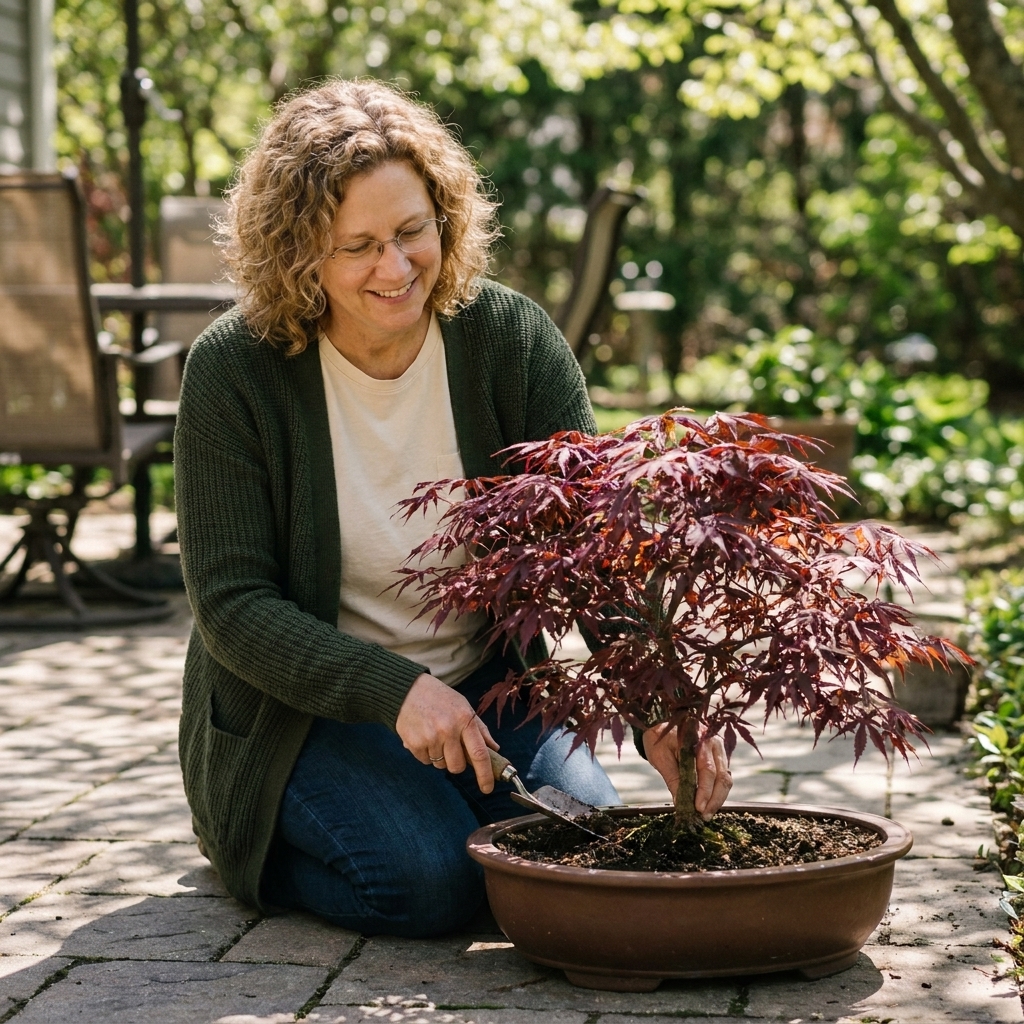
- Japanese maple (dwarf forms): dreamy texture and color, often prefers protection from hot afternoon sun.
- Dwarf conifers: mugo pine, dwarf spruce, and compact arborvitae bring winter interest and shape.
- Bay laurel: evergreen, elegant, and can be trained into a lollipop form.
- Dwarf olive (fruitless types available): silvery foliage and Mediterranean vibes where hardy.
- Crepe myrtle (dwarf cultivars): summer blooms and pretty bark, loves sun.
- Camellia (as a small tree or shrub): glossy leaves and winter blooms in mild regions.
Match the tree to your light
- Full sun (6 to 8+ hours): citrus, figs, olives, crepe myrtle, many apples.
- Part sun (3 to 6 hours): many Japanese maples, camellias (especially with bright shade), some ornamentals.
- Bright shade: choose foliage-interest plants and accept slower growth and fewer blooms.
Planting in a pot
- Pick the location first. Large pots get heavy fast. I like to set the empty pot where it will live, then plant in place.
- Cover drainage holes lightly. Use a piece of mesh screen or a shard of broken terracotta over holes to keep soil from washing out, but do not block drainage.
- Check root flare and depth. The top of the root ball should sit slightly above the finished soil line. Trees planted too deep struggle.
- Loosen circling roots. If roots are tightly wrapped, gently tease them outward. For very root-bound trees, a few vertical slices in the outer root mass can help.
- Backfill and water deeply. Water until it runs out the bottom. This settles air pockets.
- Mulch lightly. A 1 to 2 inch layer of fine bark helps with moisture, but keep mulch pulled back from the trunk.
Optional but helpful: if your tree is tall or top-heavy (very common with new purchases), add a temporary stake for the first season so wind does not rock the root ball loose.
Watering
Container trees live on a tighter margin than in-ground trees. Pots dry faster in summer, and they can stay too wet in cool weather if the mix is heavy.
My knuckle test rule
Stick your finger into the soil. If the top feels dry, water deeply. As a starting point, I check about 1 to 2 inches down for smaller pots and 2 to 3 inches for big tubs. If it is still moist, wait. (In peak heat, you might water daily. In spring and fall, maybe weekly.)
How to water correctly
- Water slowly until you get steady runoff from the drainage holes.
- Empty saucers after watering. Trees do not want to sit in a puddle.
- In hot, windy weather, check in the morning and again late afternoon for smaller pots.
Signs you are overwatering vs underwatering
- Underwatering: crispy edges, droopy leaves that perk up after watering, fruit drop during heat.
- Overwatering: yellowing leaves, leaf drop with damp soil, fungus gnats, sour smell in the pot.
Pruning and training
In a pot, you are not chasing maximum size. You are shaping a living piece of decor that also happens to bloom or fruit.
Best time to prune
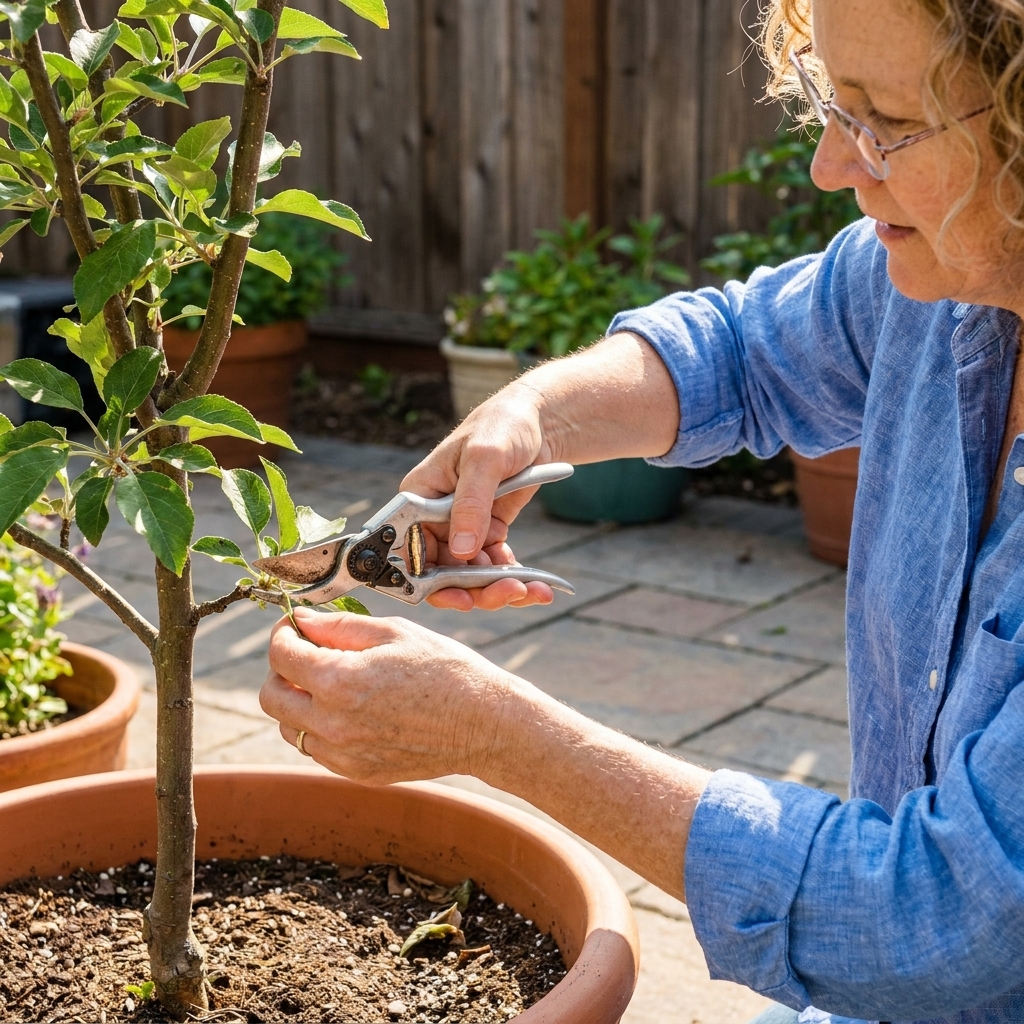
- Most deciduous fruit trees: late winter while dormant (structure pruning).
- Citrus: light pruning after harvest or in spring. Timing varies by variety and region, so keep it gentle and avoid pruning right before cold weather.
- Ornamentals: follow species timing, but generally prune after bloom if it flowers on old wood.
Easy training tips
- Keep the canopy balanced. Rotate the pot every couple of weeks so one side does not lean toward the light.
- Aim for airflow. Thin crowded interior branches to reduce pests and disease.
- Remove suckers. Growth from below the graft on fruit trees will steal energy.
Pollination and fruit set
Even if your tree looks gorgeous, fruit can be disappointing if pollination is the missing link.
Know your tree’s pollination needs
- Self-fertile: can set fruit alone (many citrus, figs, some peaches).
- Partially self-fertile: will fruit alone but improves with a partner.
- Requires cross-pollination: needs another compatible variety nearby (common with many apples and some plums).
Hand-pollination
If your porch is screened in, very windy, or you simply do not see many pollinators, you can help:
- Use a soft paintbrush to move pollen between blossoms.
- Do it mid-morning when flowers are open and dry.
Seasonal protection
Roots in pots experience more extreme temperatures than roots in the ground. This is the part most people do not realize until the first hard season hits.
Cold-weather tips
- Know your hardiness. A tree hardy to your zone in the ground may need extra protection in a pot.
- Move pots to shelter. Against a house wall and out of wind is warmer than the middle of the yard.
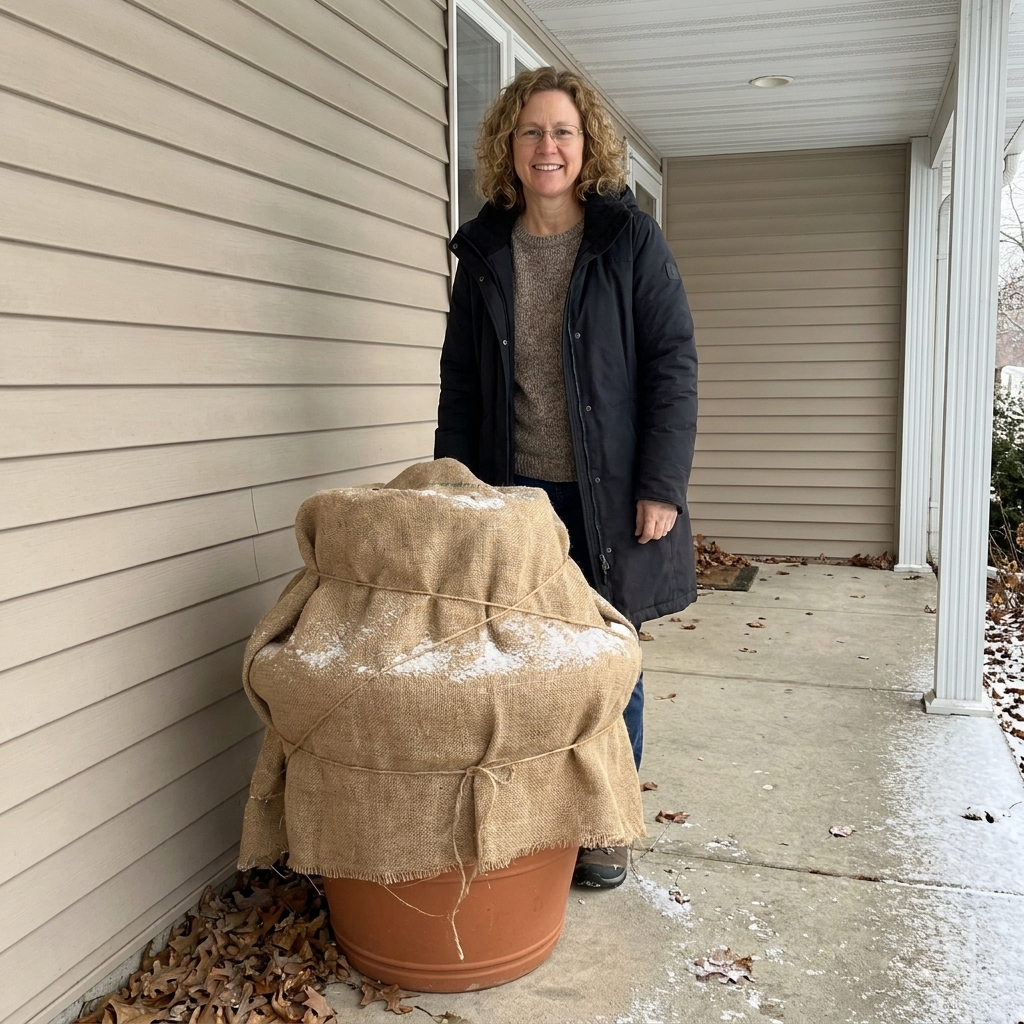
- Insulate the container. Wrap the pot with burlap or a breathable insulating layer during cold snaps.
- Water wisely. Evergreens still lose moisture in winter. In freezing climates, water on days when temperatures are above freezing so the root zone does not ice up.
- Bring tender trees inside. Citrus often needs indoor wintering in cold climates. Give it the brightest window you have, and do not overwater.
Indoor citrus reality check: some leaf drop is common when a tree moves indoors. Before you bring it in, check for hitchhiking pests (especially scale and spider mites). I like a quick rinse of the foliage, then a week of “quarantine” away from houseplants if possible. Indoor air is dry, so a little humidity and strong light help a lot.
Hot-weather tips
- Shade the pot (not necessarily the tree) to keep roots cooler.
- Mulch helps, but keep it off the trunk.
- Expect higher watering needs during heat waves, especially for terracotta.
Repotting and root pruning
Eventually, a tree fills its pot with roots. When that happens, it dries out quickly, growth slows, and you may see more leaf drop. You have two options: size up the pot or refresh the roots.
When to repot
- Roots circling the surface or coming out the bottom.
- Water runs straight through without soaking in.
- Noticeable slowdown in growth despite feeding and sun.
Simple repot routine
- Slide the tree out and inspect roots.
- Trim 1 to 2 inches off the outer root mass if pot size stays the same.
- Remove exhausted soil and refresh with new mix.
- Water deeply and keep in gentle light for a week while it recovers.
Pests and common issues
Patio trees are close to the house, so I like to stay ahead of issues with quick check-ins when I water.
Common container tree pests
- Spider mites: fine webbing, stippled leaves, common in hot dry conditions. Rinse foliage and increase humidity where possible.
- Scale: little bumps on stems and leaf veins, can weaken citrus and ornamentals. Horticultural oil is often effective when used correctly.
- Aphids: clusters on new growth, sticky residue. A strong water spray can help.
- Fungus gnats: often a sign of consistently wet soil.
My simple IPM order
- Start with the gentlest fix: prune off heavily infested tips, wipe pests away, or rinse foliage well.
- If you need a product, reach for insecticidal soap or horticultural oil and follow the label.
- Avoid spraying during high heat or full sun, which can stress leaves.
Leaf yellowing: quick causes to consider
- Overwatering or poor drainage
- Nitrogen deficiency
- Iron chlorosis (especially in citrus) when pH is off or nutrients are locked out
- Sudden temperature swings or drafty winter indoor spots
Porch tip: before you treat anything, check the soil moisture and drainage. A surprising number of “mystery” problems start right there.
Styling porch trees
This is the fun part. A potted tree is both a plant and a piece of furniture in your outdoor room.
My favorite styling moves
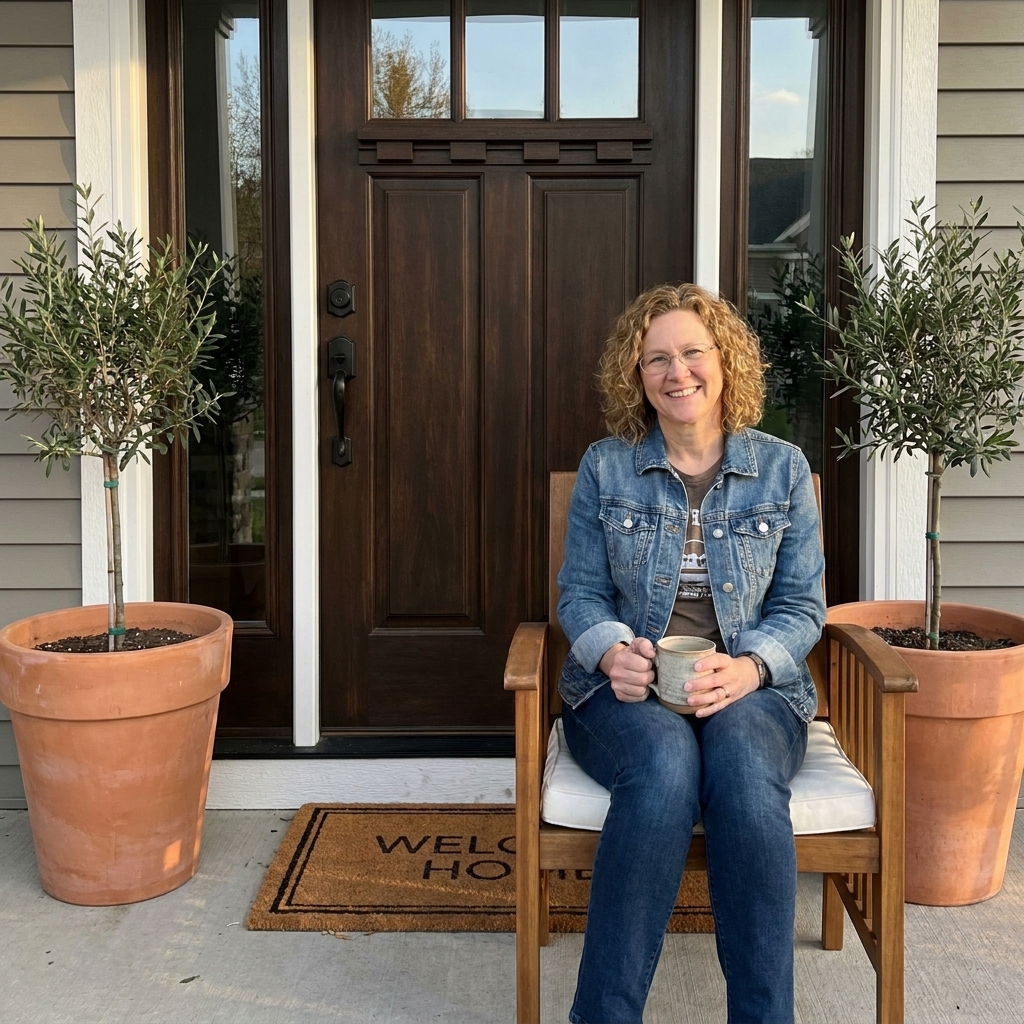
- Use pairs. Two matching pots flanking a door or steps instantly adds symmetry and curb appeal.
- Ground the pot. Add a simple outdoor rug nearby or cluster with a lantern and a smaller planter to make it feel intentional.
- Underplant the tree. Tuck in trailing bacopa, sweet potato vine, thyme, or seasonal flowers. Keep them shallow-rooted and do not crowd the trunk.
- Layer lighting. Wrap warm white micro-lights around a small ornamental tree or hang bistro lights overhead to make evening watering feel like a treat.
Quick FAQ
Can I keep a dwarf fruit tree in a pot forever?
Yes, many people do. Plan on periodic repotting and root pruning so the tree does not become permanently root-bound.
How big should the pot be for a dwarf lemon tree?
For long-term growth, aim for roughly 15 to 25 gallons with excellent drainage. Bigger is helpful if you have the space, but pot shape affects volume, so treat gallon numbers as a guide.
Do potted trees need special potting soil?
They need a container potting mix with good structure that will not collapse and compact. Avoid using garden soil.
How often do I fertilize?
Most do well with slow-release fertilizer in spring, then supplemental feeding during active growth. Citrus often appreciates regular feeding in the growing season.
What is the easiest fruit tree for a patio pot?
Figs and citrus are often the most beginner-friendly, depending on your winter temperatures and available sun.
A simple first-tree plan
If you want the easiest path to success, here is a beginner-friendly combo I recommend all the time:
- Pick one dwarf tree that matches your sun, like a Meyer lemon for full sun or a dwarf Japanese maple for part sun.
- Buy a pot you love in the 18 to 24 inch range with real drainage holes, and set it on pot feet.
- Use a chunky container mix, water deeply, and check moisture with your finger before you water again.
- Style it like decor: pair it with a lantern, a cozy chair, and one smaller planter for a layered look.
Your porch will feel more finished almost instantly, and in a season or two, that little tree will start to feel like part of the family.