By the time the first soft, brighter afternoons roll in, my porch starts begging for a reset. Winter leaves a little film on everything, plus that slightly sleepy look from months of huddling indoors. The good news is you do not need a full makeover to make your patio feel fresh again. A deep clean, a few smart swaps, and some early blooms can wake the whole space up in a weekend.
Below is the exact step-by-step routine I use each spring. You can do all of it, or pick the steps that will give you the biggest visible win first.
Quick supplies grab list
- Broom and dustpan
- Stiff outdoor scrub brush and a softer brush
- Mild dish soap or deck-safe cleaner
- Microfiber cloths or rags
- Garden hose with a spray nozzle
- Gloves
Safety note: Spot-test any cleaner in an inconspicuous area first, and never mix cleaning products. Bleach plus ammonia is especially dangerous.
Step 1: Do a quick assessment
Before you start hauling cushions around, take five minutes to walk your patio with a cup of coffee and make a short list. I like to look for:
- Grime zones: pollen, mildew, rust drips, sap spots, and anything slippery on walkways.
- Furniture needs: wobbly chair legs, peeling paint, frayed webbing, loose screws.
- Soft goods status: cushions that smell musty, faded pillows, blankets that need a wash.
- Lighting: dead bulbs, drooping string lights, solar stakes that stopped charging.
- Planter reality: soggy soil, cracked pots, last season’s stems still hanging on.
This little scan keeps you from cleaning around something that really needs repair, and it helps you prioritize if you only have a couple hours.
Step 2: Clear the space
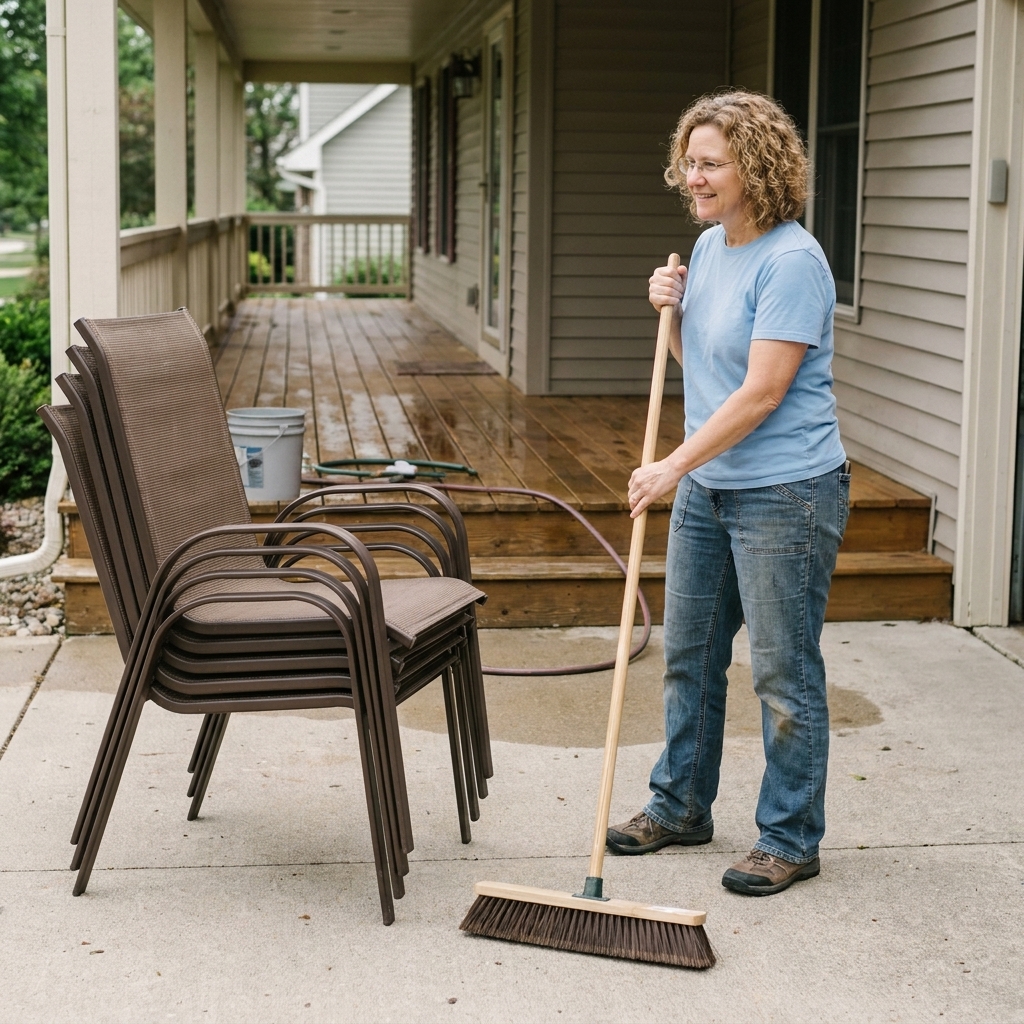
For the best clean, you need room. Pull everything into the yard or driveway, even if it is just for an hour. If you have a small front porch, stack chairs inside the door and slide a mat out of the way.
As you move things, sort into three piles:
- Keep out: pieces you love and use.
- Fix: anything that needs tightening, sanding, or a quick patch.
- Let go: broken items you keep “meaning to deal with.” Spring is your permission slip.
Step 3: Clean surfaces gently
Most patios look tired because the flat surfaces are coated in that winter mix of dust, pollen, and grit. Start here, because you will see results fast.
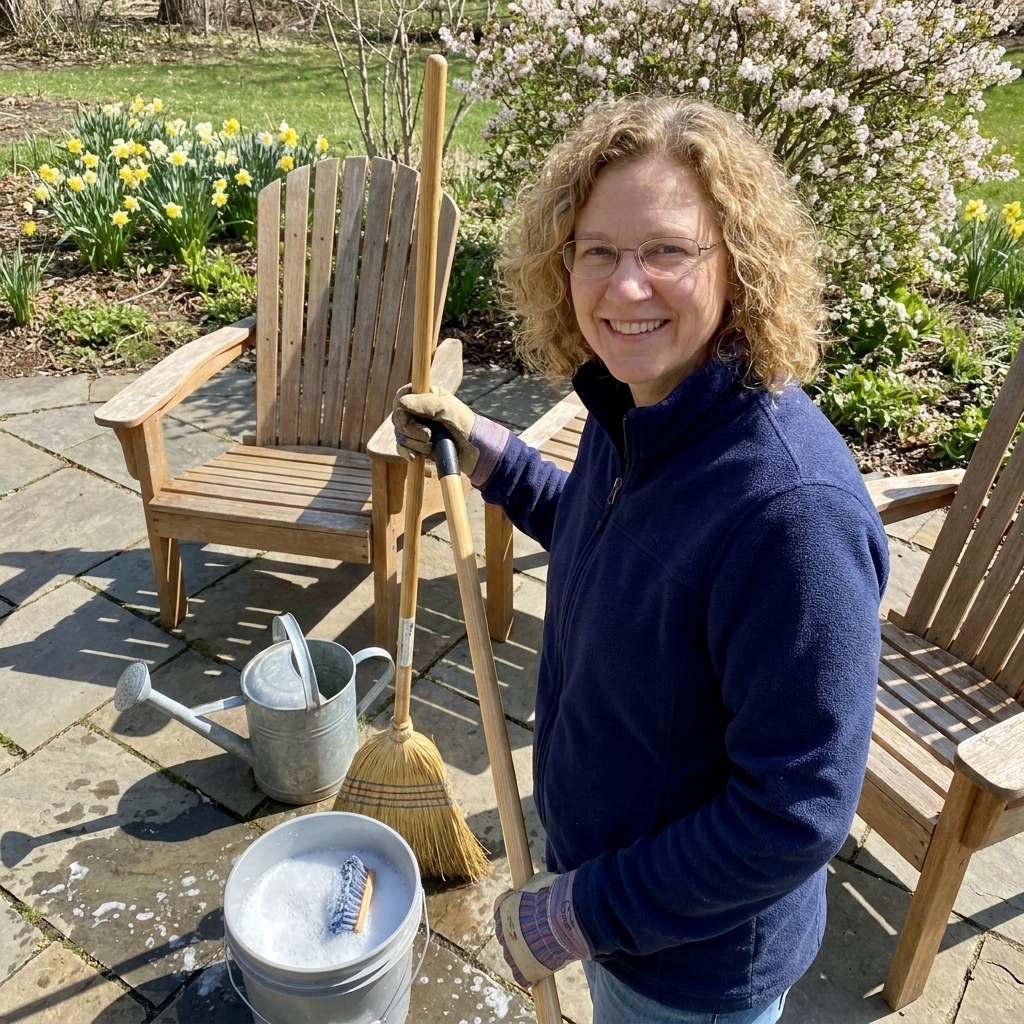
Concrete patios
- Sweep well first to remove grit that can scuff or scratch sealers and coatings.
- Mix warm water with a small squirt of dish soap.
- Scrub with a stiff outdoor brush, working in sections.
- Rinse thoroughly. A garden hose is usually enough.
Tip from too many learning experiences: Start gentle and work up only if you need to. Strong acids can etch concrete, and bleach can discolor some sealers and do a number on nearby plants.
Wood decks
- Use a deck-safe cleaner or a mild soap solution.
- Scrub with the grain and rinse.
- Check for greenish slick spots in shady corners and give those extra attention.
If you pressure wash, go easy. Use a wide fan tip, keep your distance, and keep moving so you do not fuzz the wood.
Outdoor rugs and mats
- Shake out, then vacuum both sides.
- Spot-clean stains with mild soap and a soft brush.
- Hang over a railing to dry fully before putting it back down.

Step 4: Refresh furniture
Furniture is usually the second-biggest visual payoff. A little attention here makes old pieces look intentionally charming, not just tired.
Plastic and resin chairs
- Wash with soapy water and a sponge.
- Use a soft brush for textured grooves.
- Rinse and let dry in the sun.
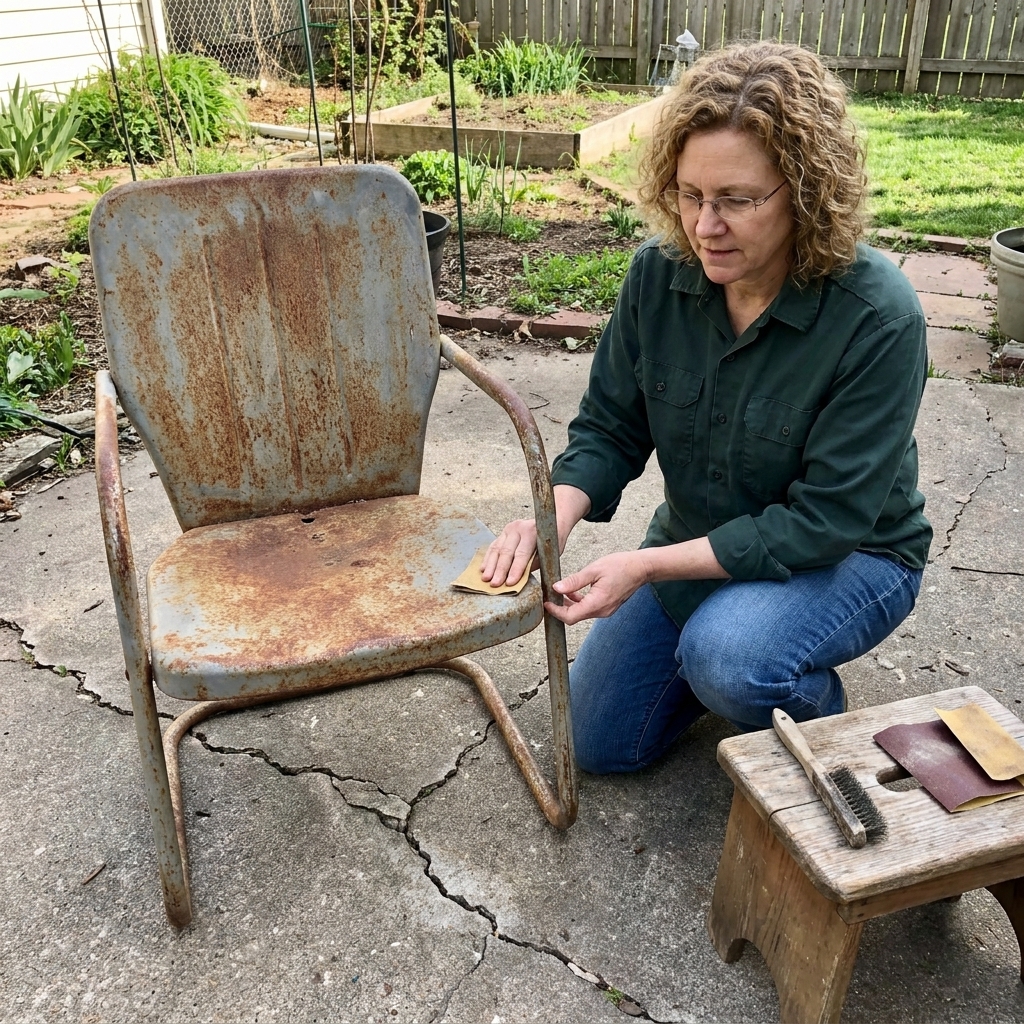
Metal furniture
- Wipe down with soapy water.
- Avoid wire brushes on powder-coated finishes. A nylon scrubber is usually plenty.
- For rust spots, lightly sand and touch up with an outdoor spray paint made for metal.
- Check and tighten bolts once everything is dry.
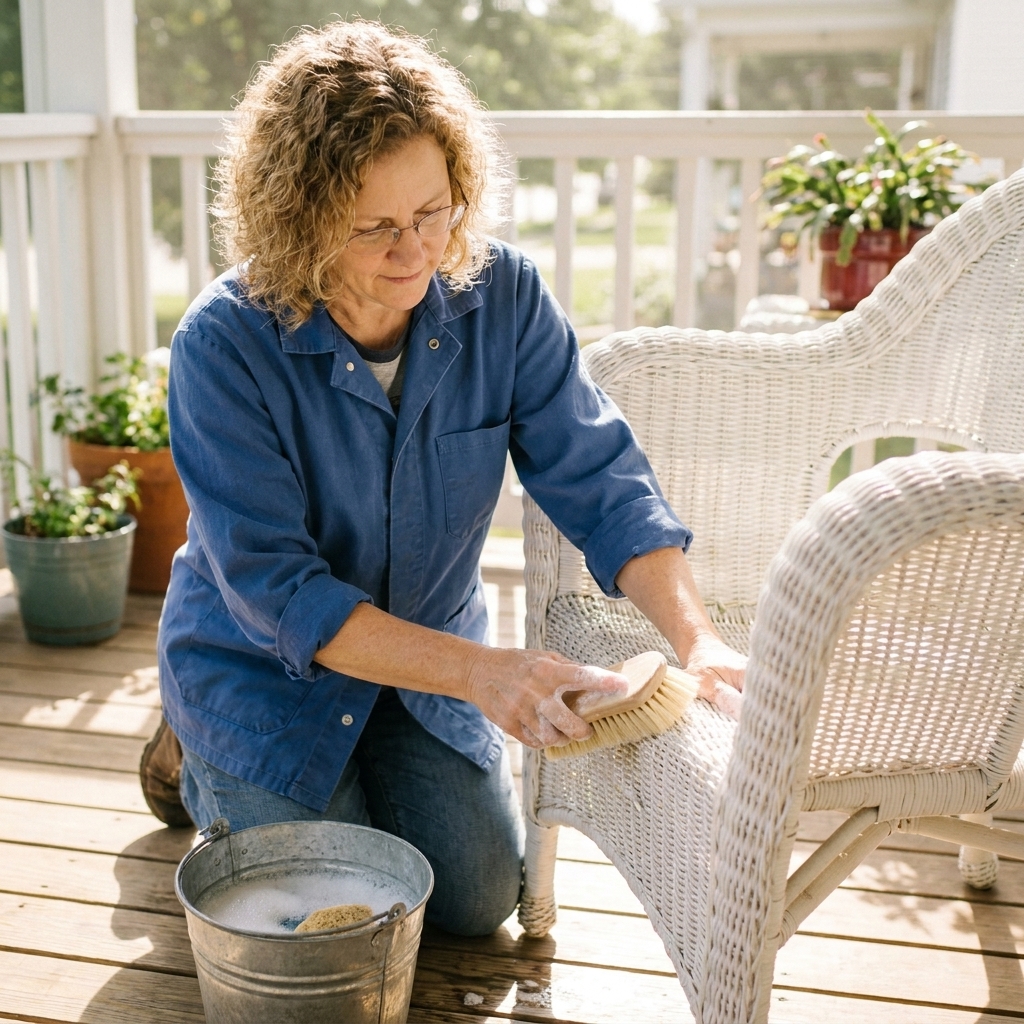
Wicker and rattan (my forever favorite)
- Vacuum with a brush attachment to pull out winter dust.
- Use a soft paintbrush or toothbrush to get into tight weave spots.
- Wipe with a barely damp cloth and let dry completely.
Try not to saturate wicker or rattan. Too much water can swell fibers and invite mildew. If your wicker looks faded, a very light coat of outdoor-safe spray paint can work wonders, but only after it is clean and fully dry.
Wood furniture
- Clean first, then assess.
- If it looks dry and thirsty, apply a suitable oil or sealer for outdoor wood.
- Replace felt pads with outdoor chair glides to prevent scratching and wobble.
Step 5: Wash or air out cushions
This is the step that makes your patio feel like a real living room again. Even clean-looking cushions can hold winter mustiness.
- Check care tags first. Some covers unzip and can go right in the wash.
- Vacuum cushions to pull out grit, then spot-clean stains with mild soap.
- Avoid bleach unless the label says it is safe. It can weaken fabric and cause uneven fading.
- Sun and air are your best friends. Set cushions upright outside for a few hours so both sides get airflow.
- Odor trick: If something smells a bit stale, sprinkle baking soda, let it sit 20 to 30 minutes, then vacuum.
If you are dealing with mildew, do not ignore it. Clean it right away and make sure the cushion dries fully before it goes back on furniture.
Step 6: Swap in spring textiles
Textiles are where spring shows up first. Even if your furniture stays the same, switching fabrics changes the mood instantly.
My easy spring textile formula
- One outdoor rug to anchor the space.
- Two to four pillows in lighter colors or a fresh print.
- One throw blanket for cool evenings, preferably in a washable fabric.
- One table linen like a simple runner for bistro tables or a small porch console.
Color shortcuts that always feel like spring
- Soft greens with crisp white
- Butter yellow with natural wood tones
- Pale blue with warm tan and black accents
- Terracotta with blush or cream
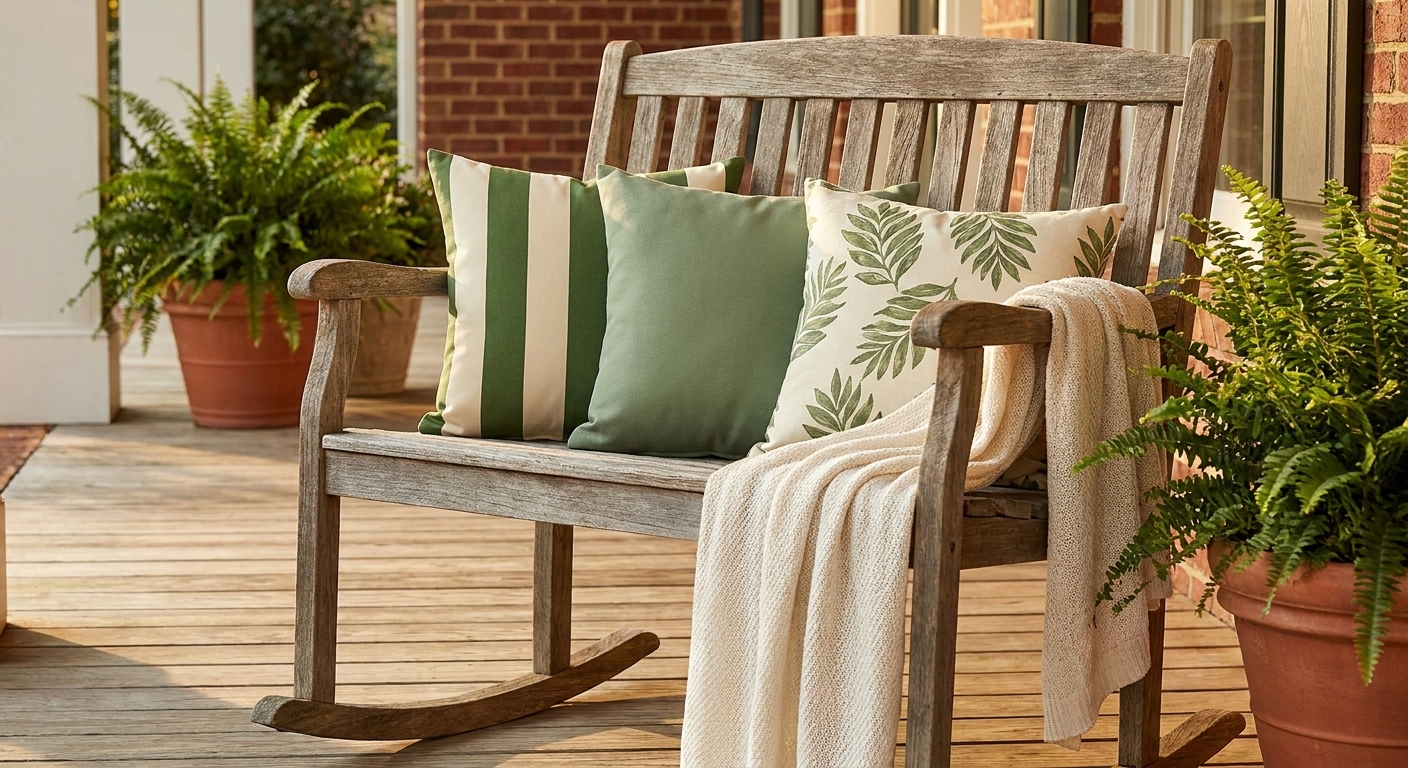
Budget note: If you want the look of new cushions without the price, swap just the pillow covers. It is my favorite “big change for a small spend” trick.
Step 7: Add layered lighting
Spring evenings can be chilly, but they are so inviting. Lighting makes you actually want to sit outside past dinner.
- Overhead glow: string lights, café lights, or a plug-in pendant on a covered porch.
- Tabletop warmth: battery candles or a small lantern on the coffee table.
- Path sparkle: solar stakes along the walkway, especially if you entertain.
Replace bulbs now, untangle cords, and use outdoor-rated clips or hooks so everything looks tidy and intentional.

Step 8: Add spring planters
This is the fun part. A couple planters can change the entire mood of a patio, even if the weather is still playing games.
Early blooms for cool nights
- Pansies and violas
- Primrose
- Snapdragons (especially in milder climates)
- Ornamental kale and cabbage for color and texture
- Small evergreen accents like dwarf boxwood
- Rosemary in milder climates, or treat it like a movable pot if frost is still in your forecast
A simple thriller, filler, spiller combo
- Thriller: a small evergreen or tall snapdragon
- Filler: pansies in two coordinating colors
- Spiller: creeping jenny or bacopa (save sweet potato vine for warmer weather)
If frost is still possible where you live, keep a lightweight sheet or frost cloth handy. I have absolutely tucked my pots close to the house wall overnight, too. No shame in protecting your pretties.

Step 9: Style one focal spot
When you are excited for spring, it is easy to scatter little decor everywhere. A cleaner look feels calmer and more grown-up, even if your style is cozy and casual like mine.
- Pick one focal point: a bistro table, a porch bench, or the area right by the front door.
- Add one welcome layer: a fresh doormat or a simple wreath.
- Finish with one functional tray: corral matches, candles, or citronella later in the season.
If you are not sure whether you have added enough, step inside and look out through the window. That view is how your porch reads from the street and from your living room.
Step 10: Keep it easy to maintain
After you do all this work, the goal is keeping your patio company ready with very little effort.
- Weekly: quick sweep, shake rug, wipe table.
- After rain: stand cushions on edge to dry, and empty saucers under pots so roots do not sit in water.
- Monthly: rinse surfaces, clean glass lanterns, check for loose screws.
Pest and mildew prevention basics: Keep airflow around furniture, avoid stacking damp pillows in a heap, and make sure planters drain freely. Small habits beat big cleanups.
I like to keep a small outdoor bin with a microfiber cloth, a brush, and a gentle cleaner. When supplies live near the porch, I actually use them.
Spring patio checklist
- Clear everything off the patio
- Sweep and deep clean the floor surface
- Wash rugs and mats
- Clean and tighten furniture
- Wash, vacuum, and air out cushions
- Swap in lighter pillows and a spring throw
- Refresh lighting and replace bulbs
- Plant early spring planters
- Style one focal area
- Set a simple maintenance routine
Common questions
When is it safe to put patio cushions back outside?
When they are completely dry and you are past long stretches of cold rain. If nights are still damp, bring them in or store them in a deck box and only set them out when you are using the space.
How do I deal with pollen without cleaning every day?
Start with a good rinse and wipe, then do quick maintenance. A light sweep and a damp microfiber cloth on tables goes a long way. Outdoor furniture covers also help during heavy pollen weeks.
What if my porch is tiny?
Focus on vertical and layered moments: one slim mat, one chair pillow, one lantern, and one strong planter. Even a single pot of pansies by the door reads like spring.