A big deck is such a good problem to have, but I will be honest: an open rectangle of boards can feel oddly hard to decorate. Everything ends up floating, the dining set looks like it got parked in the middle, and the hangout area never quite feels finished.
The fix is the same trick designers use indoors: create a floor plan. Not with walls, but with visual boundaries that tell your eyes, this is where we eat and this is where we put our feet up. My favorite tools are outdoor rugs, planters, and a few strategic furniture moves that instantly make a large deck feel warm, intentional, and easy to live on.
Start with real life
Before you drag a chair an inch, take two minutes to picture your real life out there. Not the catalog version.
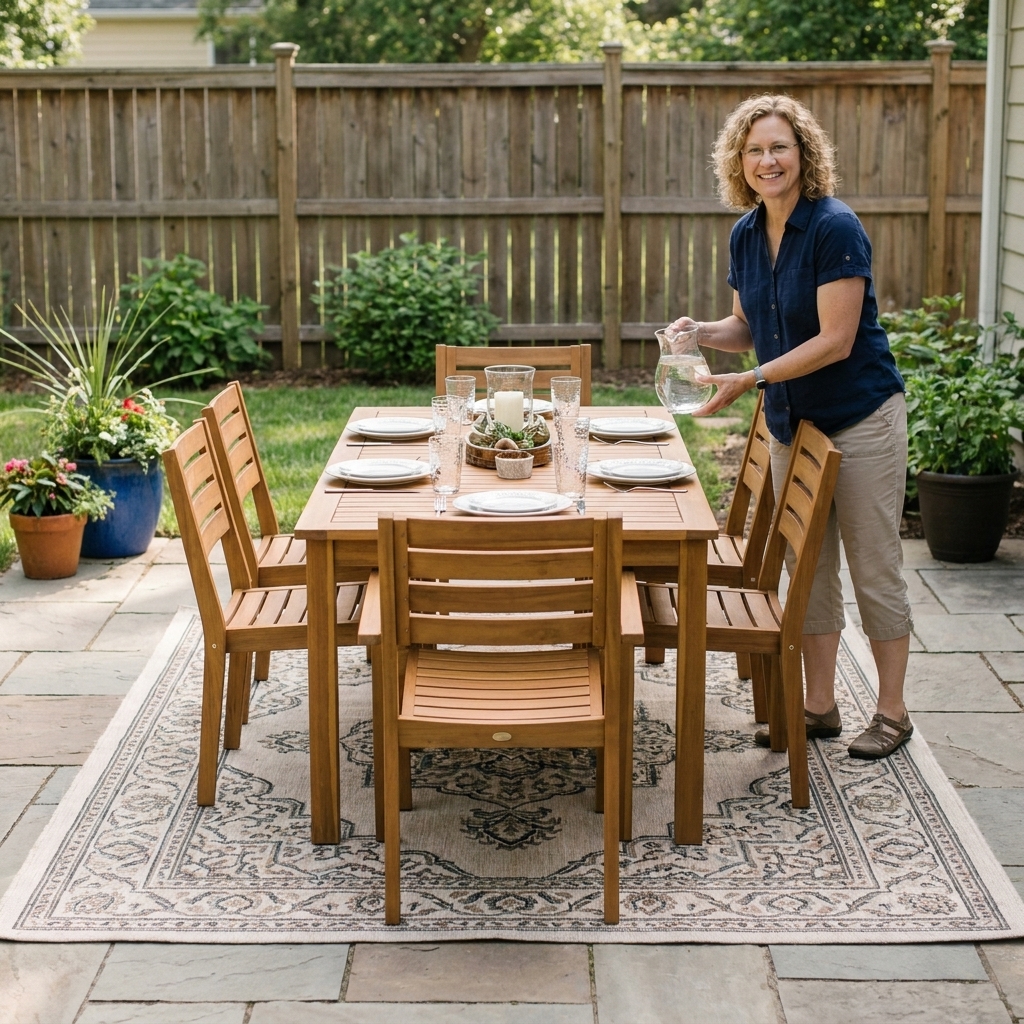
- Dining zone: family dinners, grilling nights, birthday cupcakes, card games at the table.
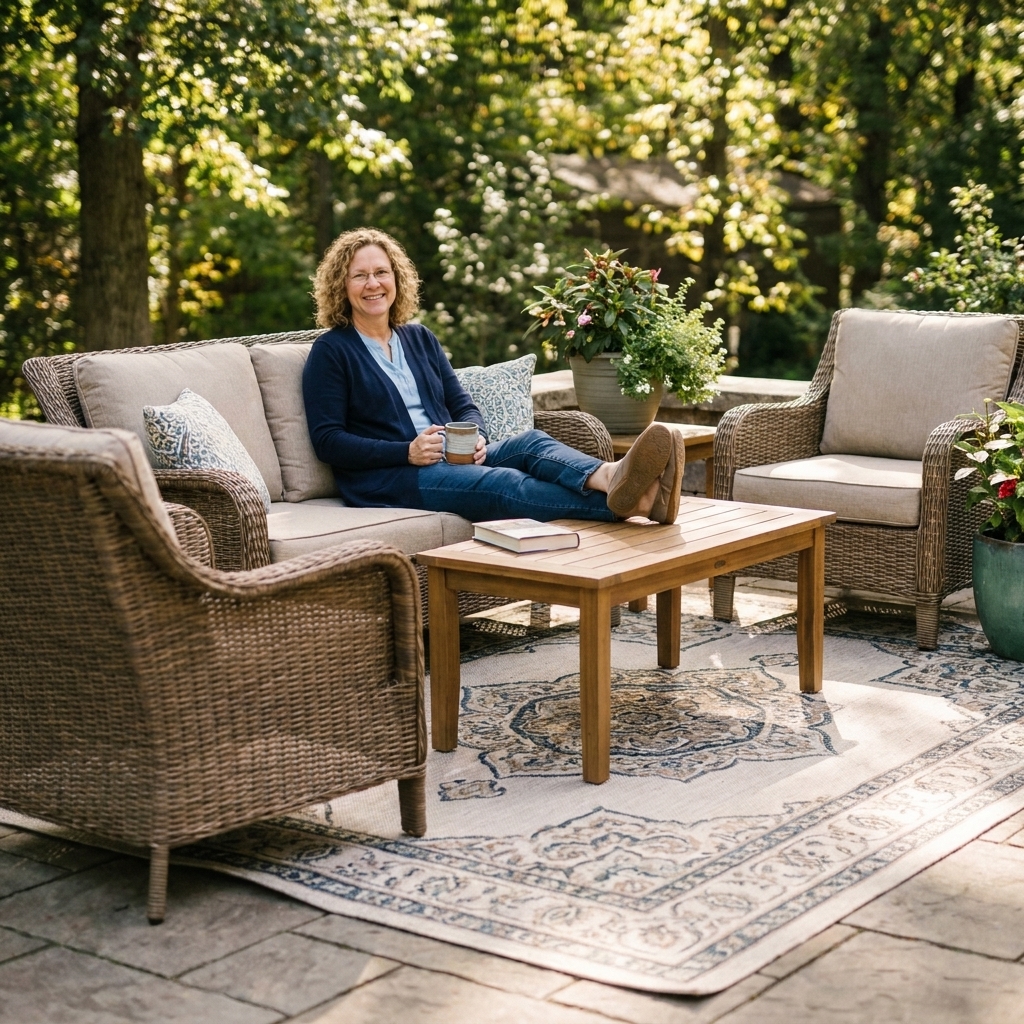
- Lounging zone: morning coffee, reading, conversation, stretching out after dinner.
- Bonus zone ideas: a little bar cart corner, a sun lounger spot, or a mudroom moment by the door with a bench and hooks.
Once you know what matters most, you can give each activity a clear home. If your deck is truly large, resist the temptation to buy one oversized sectional and call it done. Two smaller, defined areas almost always feel more polished.
One practical tip before you buy anything: grab painter’s tape or a few outdoor extension cords and tape out your zones. It is the fastest way to spot pinch points before a delivery truck does.
Use rugs as anchors
If you take only one tip from me, make it this: rugs create instant rooms. They stop that everything is drifting feeling and they tell people where to gather.
Choose the right size
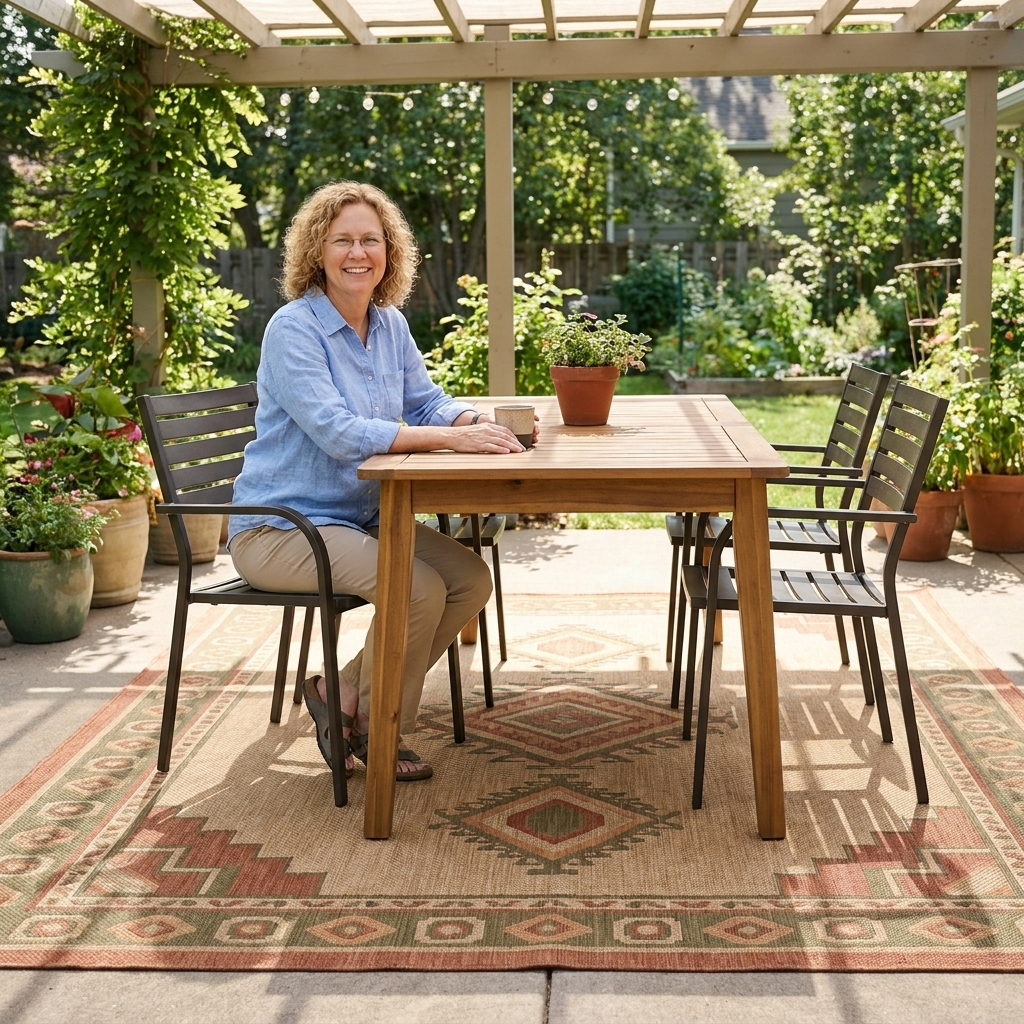
- Dining rug: go bigger than you think. You want all chair legs to stay on the rug even when chairs are pulled out. A good guideline is 24 to 36 inches beyond the table edge on all sides, depending on your chairs and how far people scoot.
- Lounge rug: aim for at least the front legs of the sofa and chairs to sit on the rug. If you can fit the whole seating group on it, even better.
Pick materials that match the job
Dining rugs need to be forgiving. Look for flatweave, polypropylene, or other rinseable, quick-dry outdoor materials, and do a quick check of the manufacturer’s care notes so the backing holds up over time. For lounging, you can go a little plusher or more patterned since it is typically less prone to crumbs and spills.
Make them relate, not match
On one deck, two different rugs can be beautiful if they share a common thread. Try:
- Same color family, different patterns
- Same pattern style, different scale
- One neutral rug for dining, one warmer or more layered rug for lounging
Quick weather note: in windy areas, rug tape, corner weights, or outdoor rug pads make a huge difference. Bonus points for anything that also reduces slipping and tripping.
Let furniture do the dividing
You do not need to build a pergola or put up a screen to create zones. A few small placement choices do the heavy lifting.
Keep a clear walkway
The biggest reason large decks feel awkward is that traffic cuts right through the spaces. Give yourself a simple path, usually from the door to the stairs and from the door to the grill. Where possible, keep that path around 30 to 36 inches wide so two people can pass without that little side shuffle. If you need more for accessibility or a busy entertaining setup, go wider.
Turn lounging inward
For a true lounging area, arrange seating so it faces itself, not the house. A sofa with two chairs across, or two chairs angled toward a loveseat, reads as a conversation area. Add a coffee table or fire table in the middle and suddenly it feels like a real outdoor living room.
Use backs like soft walls
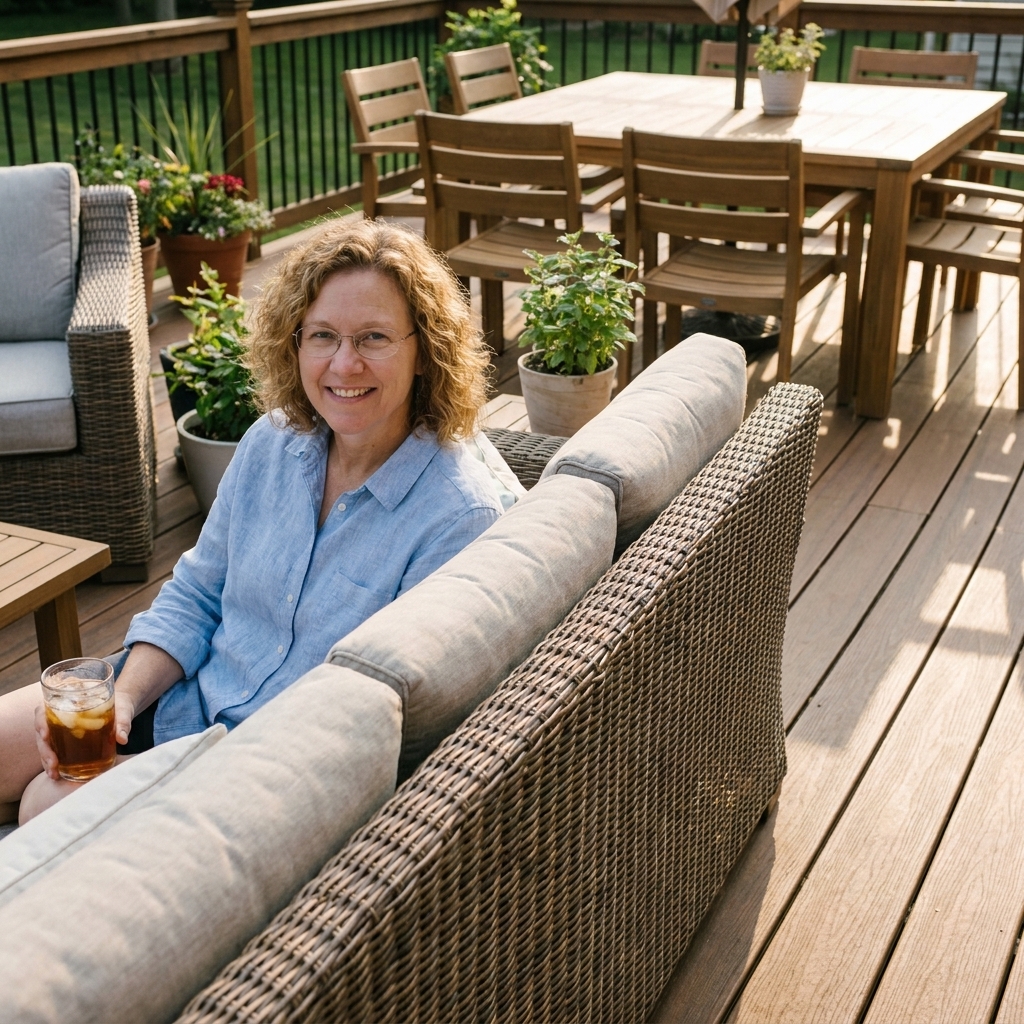
The back of a sofa, a bench, or even a long console table can act like a low wall between areas. If your deck is wide enough, try floating the sofa so its back separates lounging from dining. It is one of my favorite layout tricks because it looks intentional without closing anything in.
Use planters as dividers
When you want separation without blocking the breeze, planters are pure magic. They add height, softness, and that lush, finished feel I am always chasing.
Where planters work best
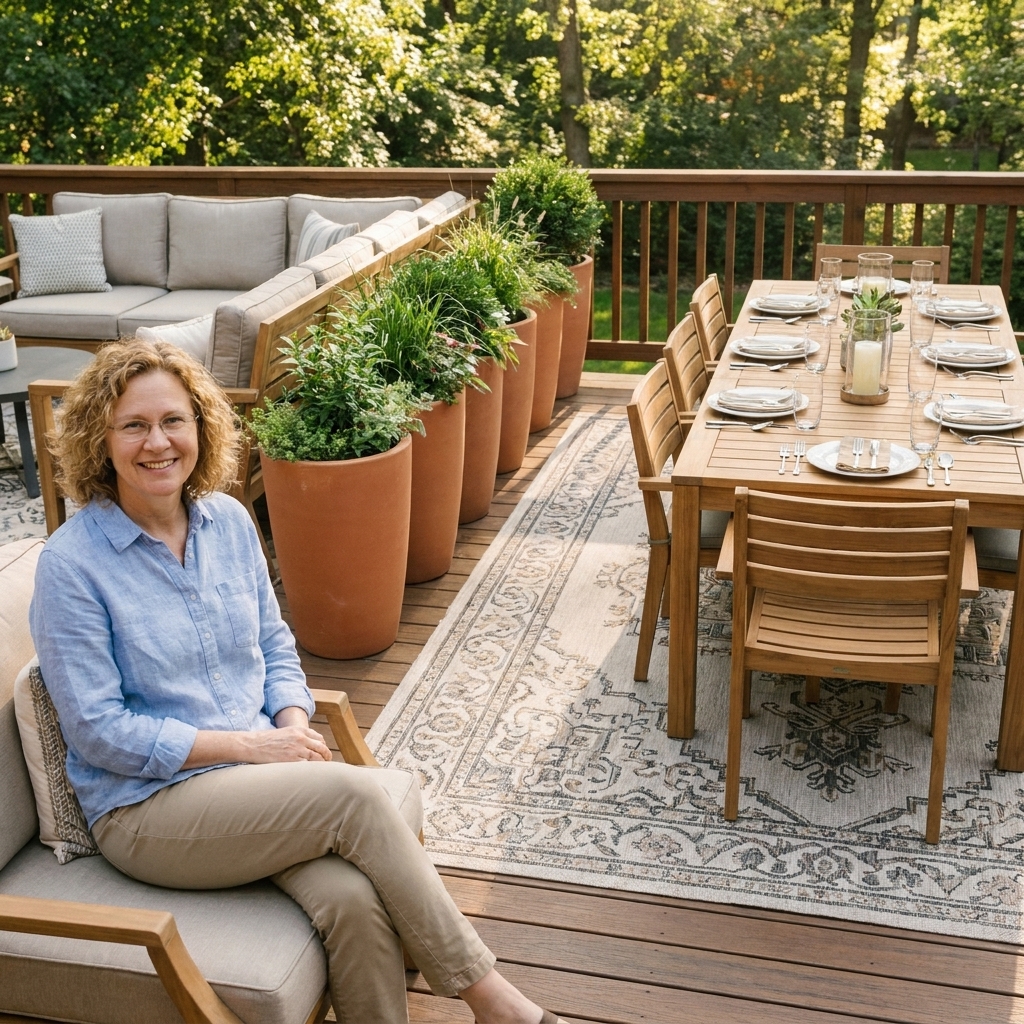
- Between dining and lounging: a row of planters creates a gentle boundary.
- At the edge of a rug: like a doorway into the space.
- In empty corners: corners swallow furniture visually. A tall planter helps the deck feel balanced.
My favorite setups
- Two tall planters plus one low: place two tall planters at the ends and a wider, lower planter in the middle for a layered look.
- Long trough planter: a single long planter (real or faux) reads clean and modern.
- Mixed heights in the same pot family: same finish, different sizes, so it feels collected but calm.
Plants that keep their shape
For that divider effect, choose plants with a strong silhouette, and pick varieties that truly suit your hardiness zone and container conditions (sun, wind, winter freezes, pot size, and watering habits all matter).
- Ornamental grasses (feather reed grass or fountain grass, sized appropriately for the pot)
- Dwarf evergreens in pots (boxwood or container-friendly arborvitae varieties, with winter protection where needed)
- Tall seasonal combos (thriller, filler, spiller) with an upright centerpiece

Use lighting to define areas
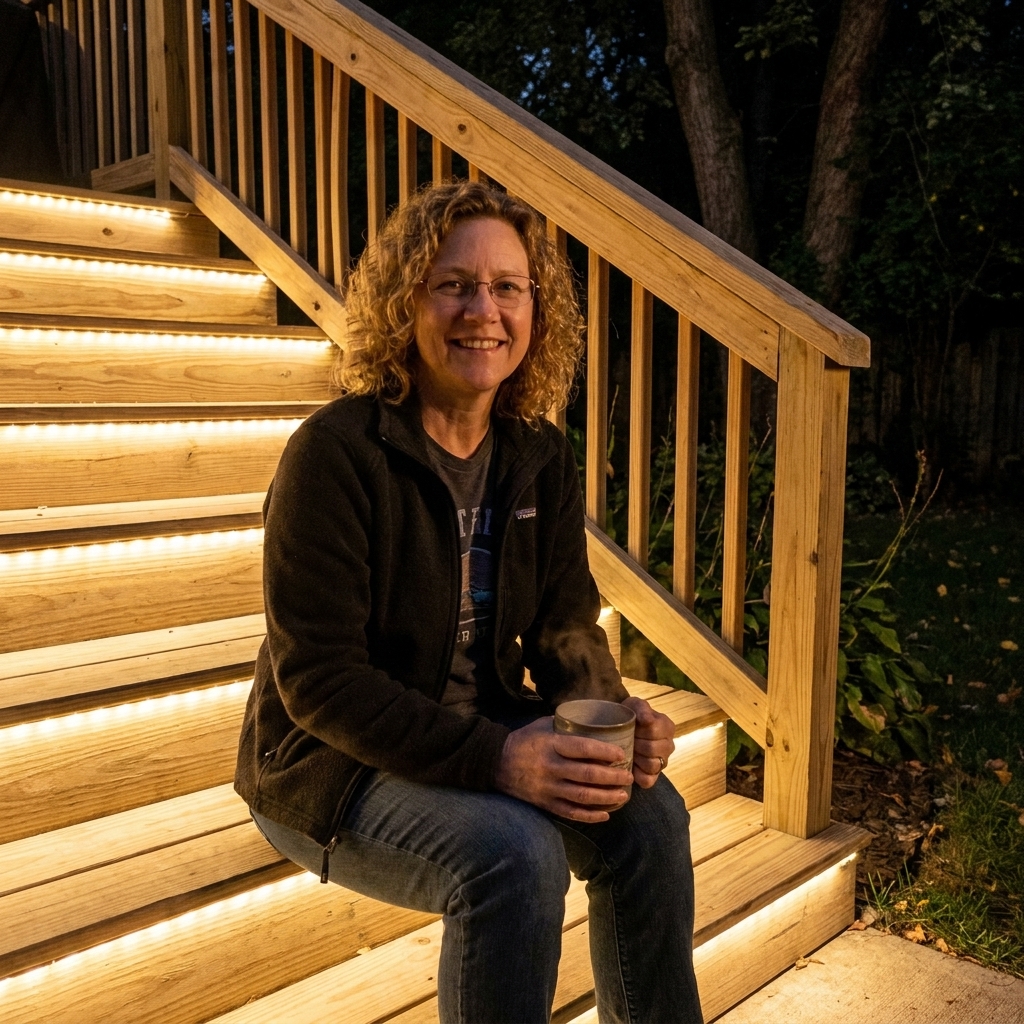
This is the part that makes your deck feel like a destination after sunset. When each area has its own light source, your brain reads them as separate spaces.
Dining lighting
- Overhead glow: string lights above the table or along a nearby railing
- Tabletop light: a cordless lamp or two keeps dinner feeling intimate
Lounging lighting
- Layered low light: lanterns on the coffee table, solar stakes in nearby planters, or small LED candles in hurricanes
- One anchor light: an outdoor floor lamp or a bright lantern near seating makes the space feel grounded
Tip from my own deck: if everything is lit exactly the same, the whole deck becomes one big stage. If you light in pockets, it becomes a series of cozy scenes.
Finish each area
Once the big pieces are placed, it is the little touches that keep a space from feeling like furniture parked on boards.
Dining finishing touches
- A centerpiece that can live outside (a shallow bowl, a small lantern, or a low planter)
- Outdoor cushions for the dining chairs for comfort and color
- A slim serving cart or console if you entertain often
Lounging finishing touches
- Throw pillows in two to three coordinating colors
- A side table for every seat if possible
- A soft throw blanket in a lidded basket for cool evenings
I always ask myself: can everyone set down a drink, and can everyone put their feet up somewhere nearby? If the answer is yes, your lounging area will get used.
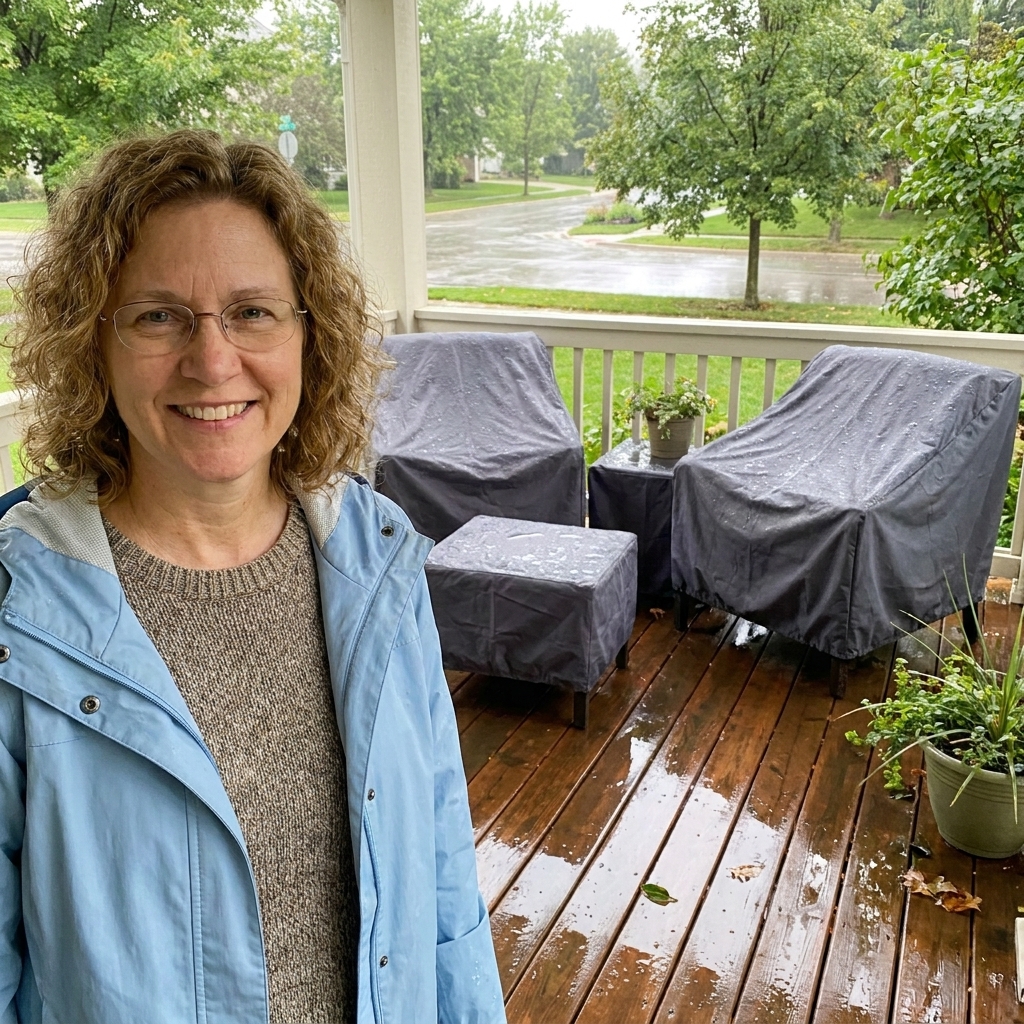
Durability note that saves headaches: look for rust-resistant frames (aluminum, teak, powder-coated steel) and stash cushions in a deck box or bring them in when storms roll through. Your future self will be grateful.
3 simple layouts
1) Side-by-side
Put dining on one half and lounging on the other, with planters or a console table between. Great for wide decks.
2) Door to table to seating
Place the dining area closer to the door and grill, then put lounging farther out for quiet. This keeps traffic and food mess near the house and gives the lounging spot a calmer vibe.
3) Lounging as the destination
If you have a view, a fire pit, or a sunset side, put lounging there and let dining tuck closer in. People naturally drift to the best spot, so let the layout lean into it.
Common mistakes
Mistake: furniture floating
Fix: add a rug under each area, or at minimum under the lounging group.
Mistake: dining too tight
Fix: give the table breathing room. Aim for about 30 to 36 inches behind chairs for easy movement, more if you can. If space is tight, choose armless dining chairs or a bench on one side.
Mistake: too many small pieces
Fix: simplify. In each area, pick one main piece (table or sofa) and build around it. Too many tiny chairs and tables can make a big deck feel busy instead of welcoming.
Mistake: areas that compete
Fix: repeat one element across the whole deck, like matching wood tones, the same cushion color, or the same planter finish. Cohesion makes separation feel intentional, not random.
Quick checklist
- Two outdoor rugs (one for dining, one for lounging)
- At least two planters with height (or one long trough planter)
- A coffee table or fire table to center the lounging group
- One to two side tables
- Lighting for both areas (string lights plus lanterns is a classic combo)
- Outdoor pillow covers that coordinate across the whole deck
- Optional but smart: rug pad or corner weights for wind and slip resistance
FAQ
How do I divide spaces without blocking the view?
Use low or airy dividers: planters with grasses, a bench, a console table, or the back of a sofa. Save tall screens for privacy needs only, and place them where the view is not the star.
Can I mix furniture styles?
Yes, and it can look beautifully collected. Just repeat something consistent across the whole deck, like black metal accents, warm wood tones, or a shared cushion color.
What if my deck gets full sun all day?
Let shade be part of the plan. Put the lounging area where you can add an umbrella, pergola shade, or a canopy. Choose fade-resistant outdoor fabrics and rotate pillows seasonally if your deck is a sun magnet.
What is the simplest way to make dining feel separate?
Put the table on a generously sized rug and add two tall planters at the entrance to the space. It reads like a room instantly.
A quick safety note
Keep grills in a well-ventilated spot and follow the manufacturer’s clearance guidelines, especially near railings, siding, and overhead structures. And if you add rugs, make sure edges lie flat so they do not become trip hazards, particularly in high-traffic walkways.
One last neighborly nudge
A large deck does not need more stuff, it needs clearer yes spots. Once you anchor dining and lounging with rugs, give them a gentle green divider with planters, and protect your walkways, the whole space feels calmer and more welcoming. And that is the goal, right? A deck that feels like it has always been your favorite room.