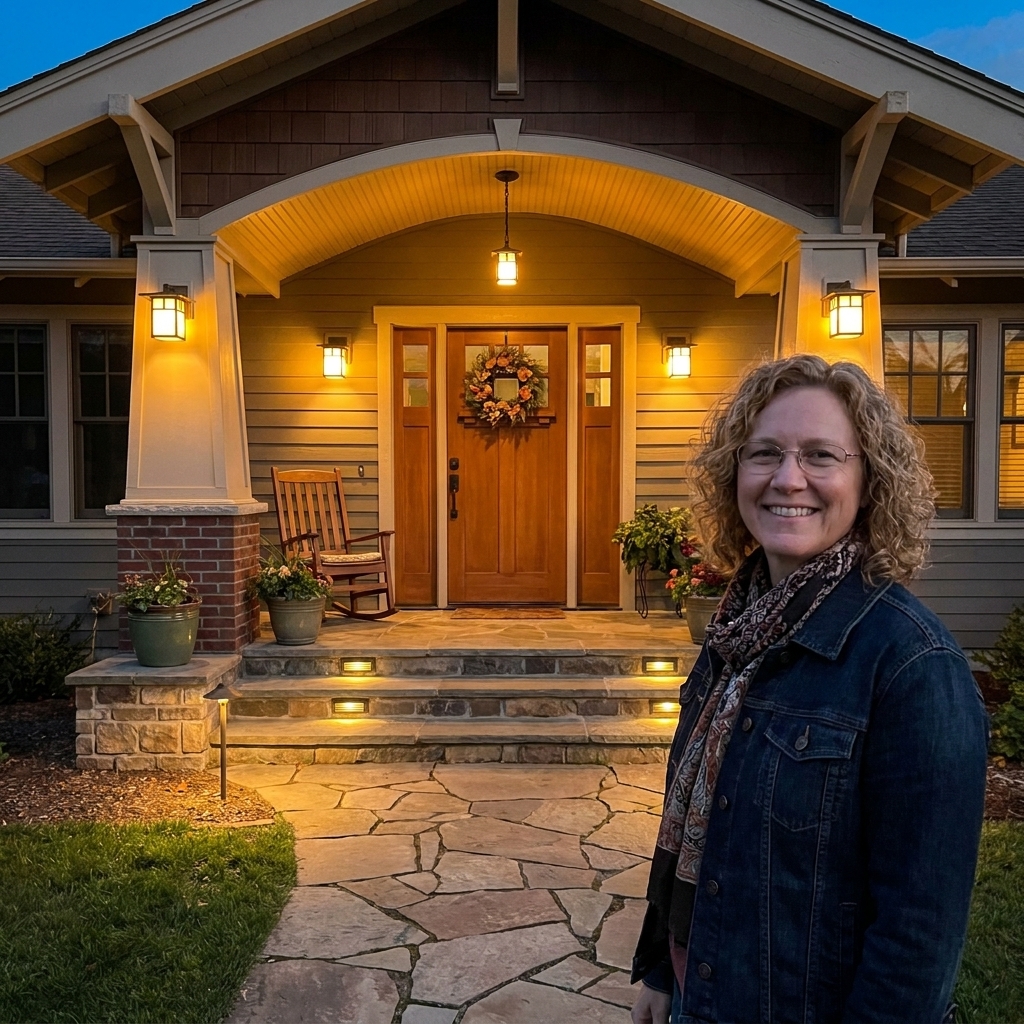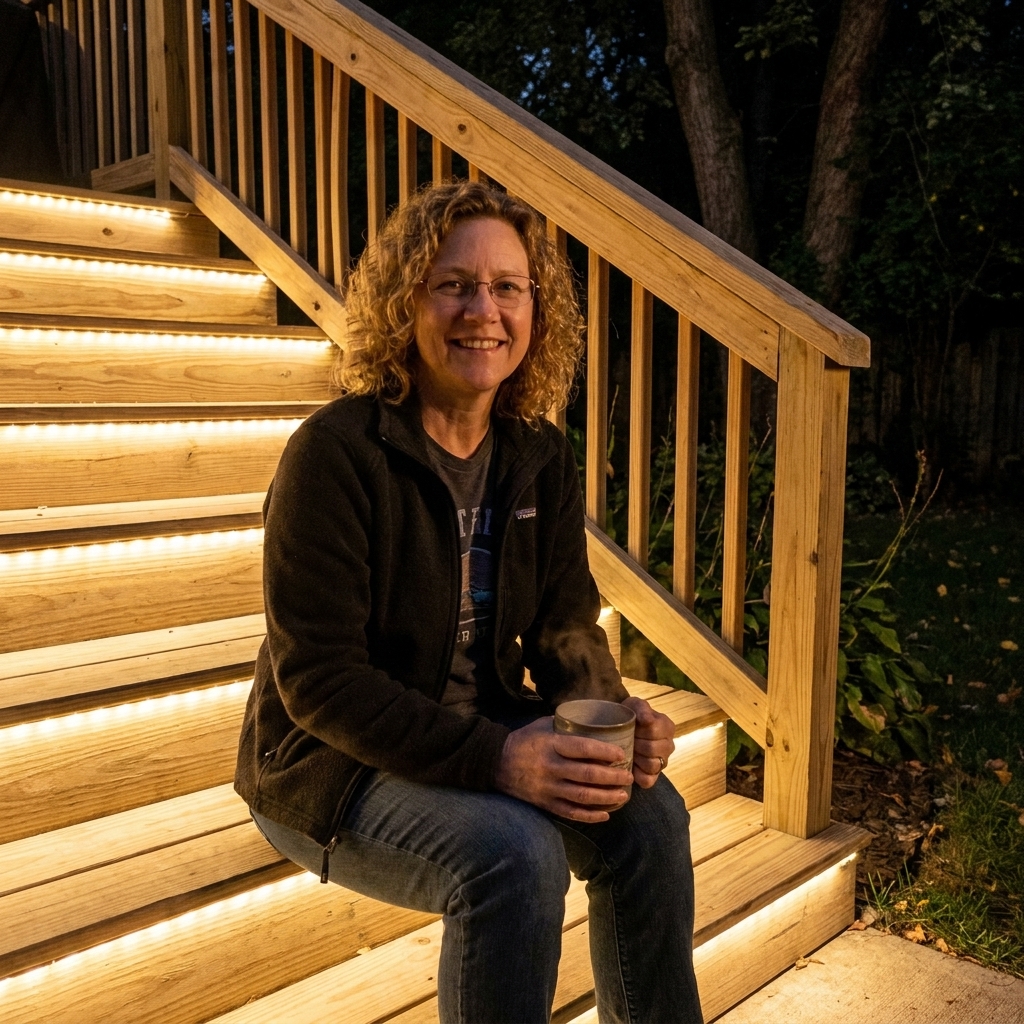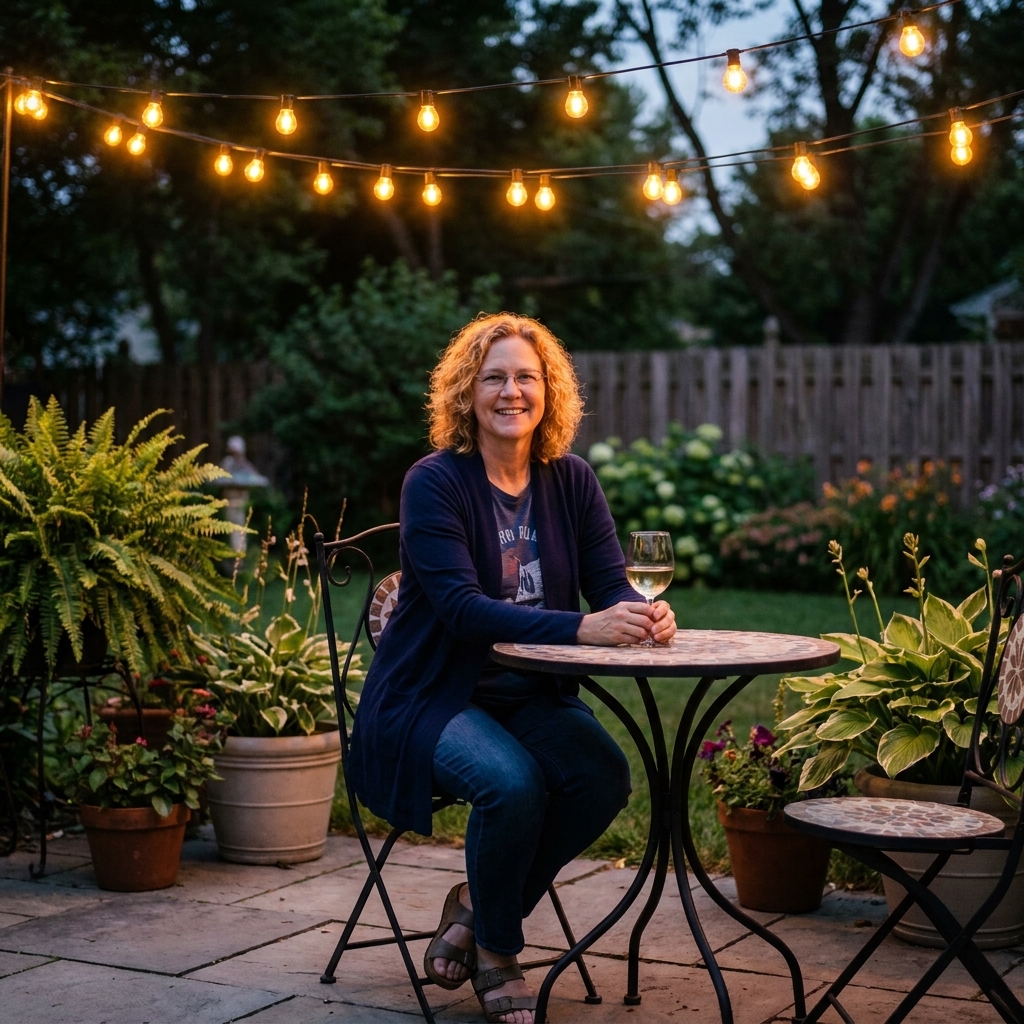
My favorite patios feel like a gentle exhale at the end of the day. You step outside, the air shifts, and the lighting is soft enough to flatter everyone, bright enough to find your drink, and calm enough that you can still see the stars. That balance is exactly what dark sky friendly lighting is all about.
Whether your town has outdoor lighting rules or you simply want to be a good neighbor, you can absolutely create that cozy porch glow without washing the whole block in glare. It comes down to three habits: shield the source, lower the lumens, and warm up the color.
What “dark sky friendly” means
Dark sky friendly lighting is designed to minimize light pollution while still keeping your outdoor areas comfortable and safe. Practically speaking, it means:
- Light goes down, not out or up into the sky.
- No harsh glare that hits your eyes or your neighbor’s windows.
- Only as bright as needed for the task at hand.
- Warm color temperatures that feel inviting and can be easier on wildlife and human sleep rhythms than cooler, blue-heavy light.
If your city or HOA mentions “fully shielded” fixtures, “cutoff” fixtures, curfew hours, or maximum lumens, these are all pointing to the same goal: usable light where you need it, darkness where you do not.
One more helpful note: cutoff usually describes the light distribution (little to no uplight above horizontal), while shielding is about hiding the light source so you reduce glare and light trespass. In real life, the best patio fixtures do both.
Start with the rule: shield the bulb
If you do one thing today, make it this: choose fixtures where you cannot see the bulb when you are standing on the patio or sidewalk. Exposed bulbs are charming in catalogs, but they are one of the quickest ways to create glare and “why is it so bright out here?” lighting.
What to look for in fixtures
- Fully shielded: the light source is recessed, covered, or otherwise blocked so light is directed downward.
- Cutoff: a term used in ordinances that generally means the fixture sends 0 percent uplight above horizontal (specific definitions vary by code and standard).
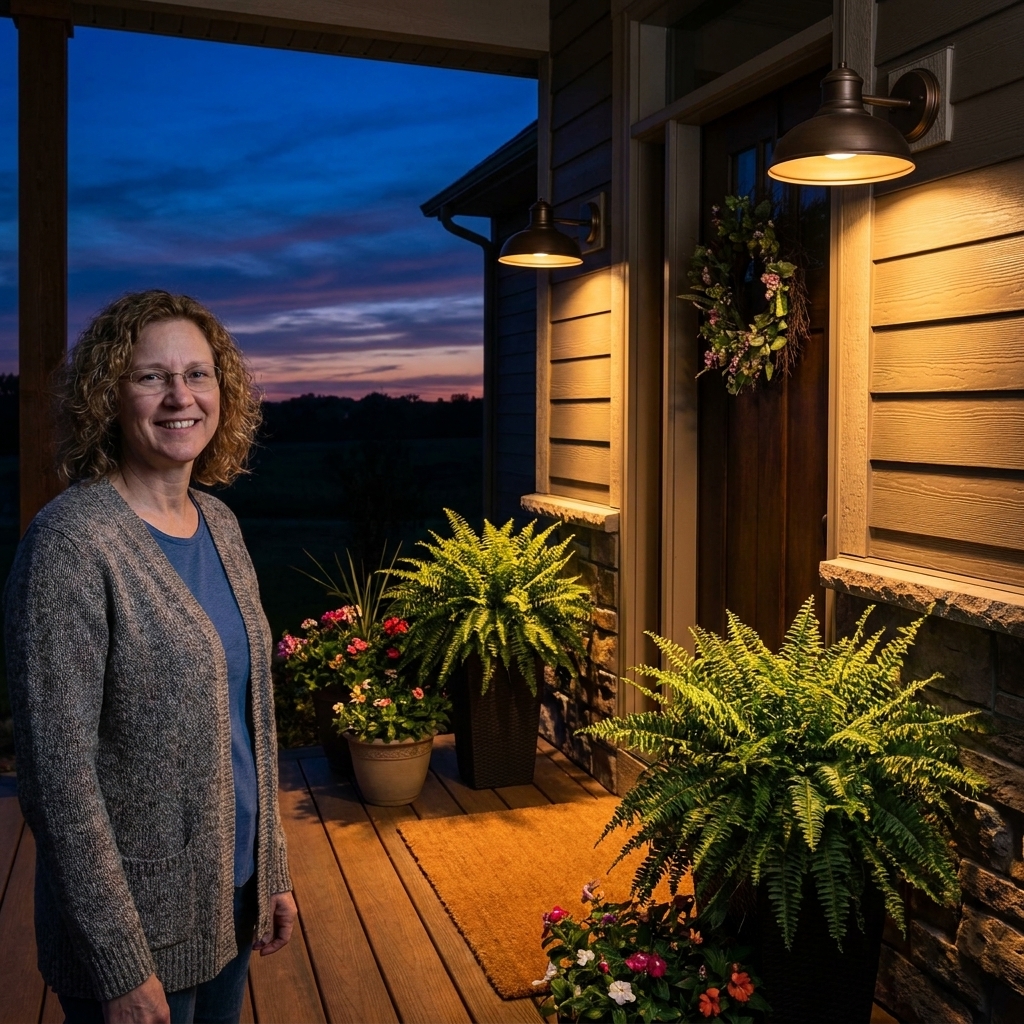
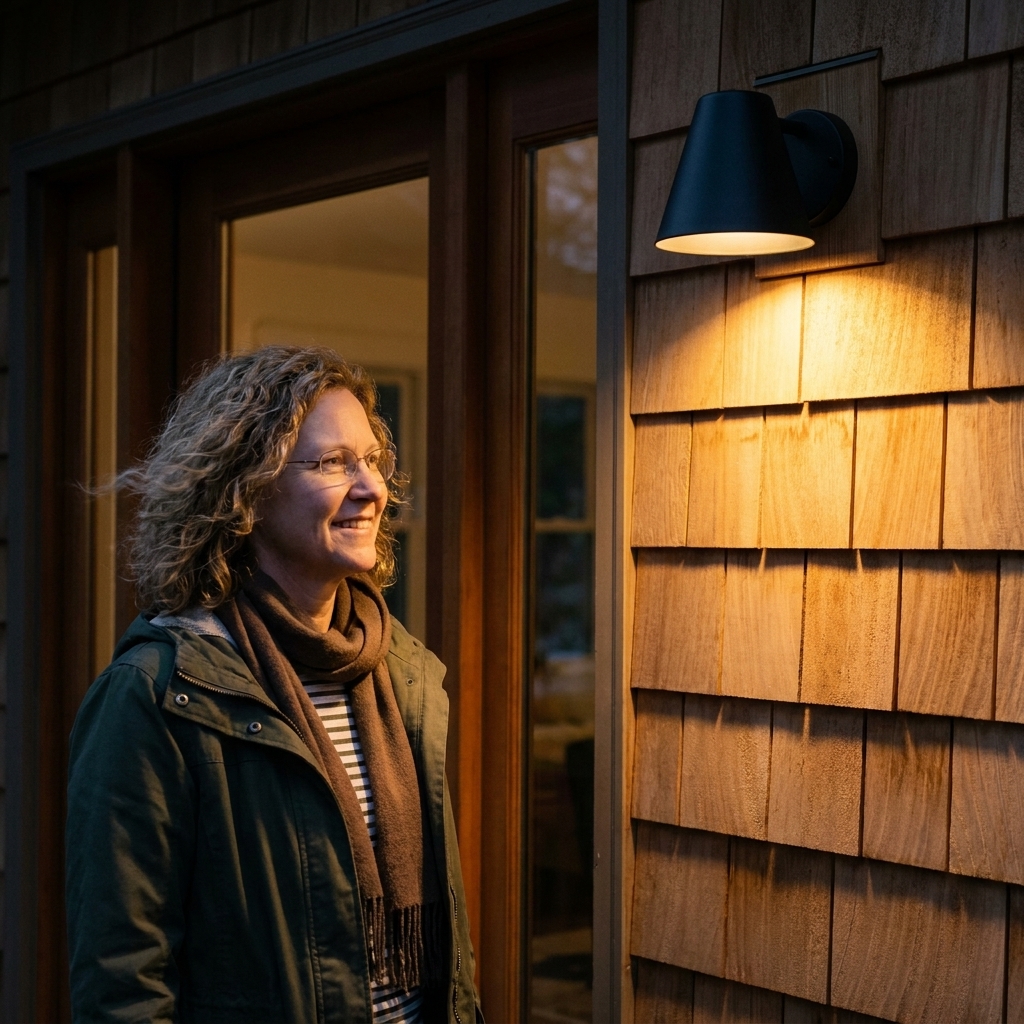
- Deep shades on gooseneck lights and barn lights: the deeper the shade, the less sideways spill.
- Downlight sconces instead of lantern-style “coach lights” with clear glass.
Fixtures that behave well on patios
- Downward-facing wall sconces by doors
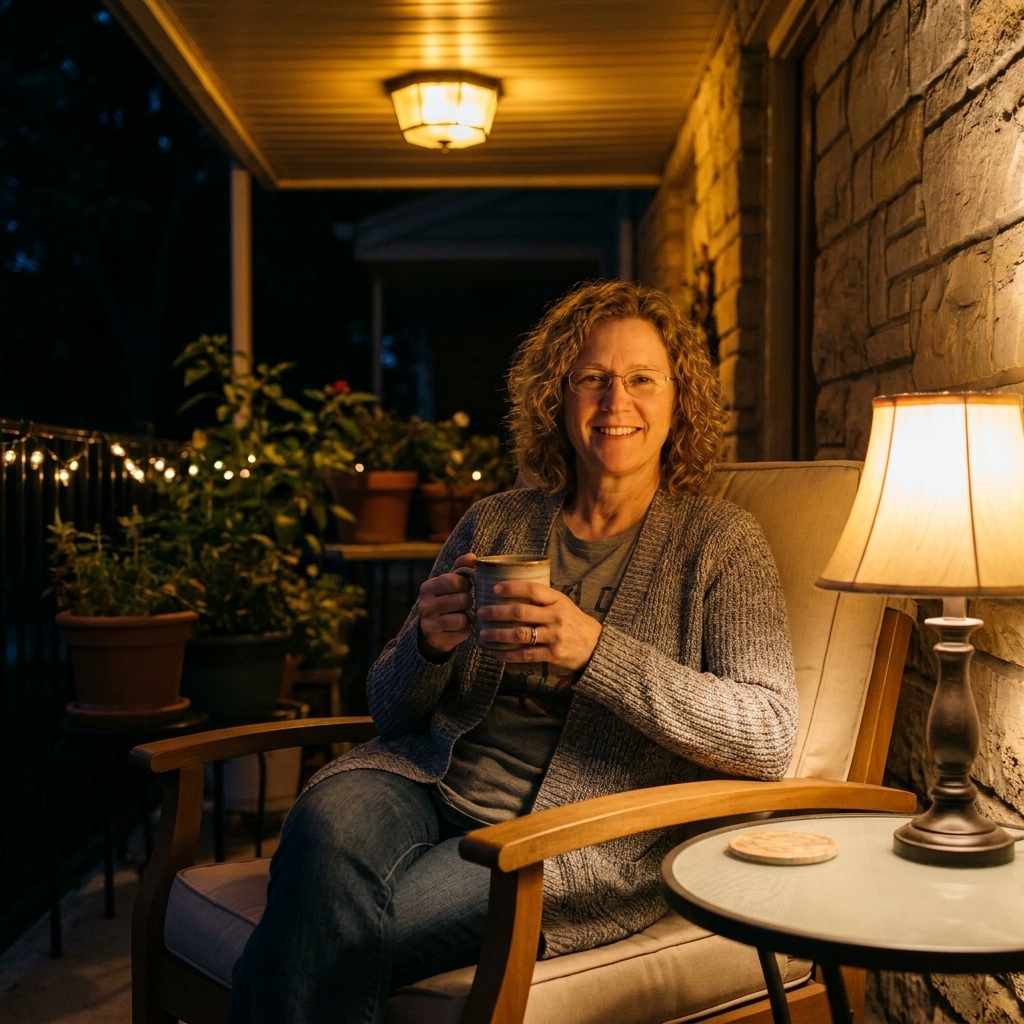
- Shielded flush mounts under a covered porch ceiling
- Low-voltage path lights with opaque tops that direct light down
- Step lights and hardscape lights tucked under a capstone or stair lip
And yes, you can still make this look pretty. I lean on fixture finishes and shape for style, then let the light itself stay quietly in its lane.
If you like having a simple label to look for while shopping, some manufacturers also offer fixtures that meet DarkSky Approved criteria. It is not required, but it is a handy shortcut when you want a strong dark-sky signal without reading a spec sheet all afternoon.
Pick bulbs by lumens, not watts
Watts tell you energy use. Lumens tell you brightness. If you have ever bought a “60W equivalent” LED and felt like your patio turned into a parking lot, lumens are why.
A cozy lumen cheat sheet
- Ambient glow (string lights, gentle wall light): typically 100 to 300 lumens per bulb or fixture
- Entry and steps (safe footing): often 300 to 700 lumens where needed
- Task lighting (grill prep, outdoor sink): often 700 to 1,100 lumens, aimed tightly at the work zone
These are rules of thumb, not laws of physics. Mounting height, shielding, nearby surfaces, and even paint color can change how bright a light feels.
Most patios do not need a single 1,600 lumen bulb. Instead, aim for multiple small, shielded light sources. The space feels layered and luxe, and you stay neighbor-friendly.
Also worth remembering: reducing glare can actually improve visibility. When your eyes are not squinting into a bright point source, you often see steps and edges more clearly, even at lower overall brightness.
Go warm: color temperature
If you want that welcoming “porch living room” feeling, choose warm light. On bulb boxes, this is measured in Kelvin (K).
- 2200K to 2700K: warm, candle-like to classic warm white, my go-to range for porches
- 3000K: still warm, but a bit crisper
- 4000K and up: cool and bright, often reads stark outdoors and can feel intrusive at night
For dark sky friendliness, warmer temperatures are typically preferred because they contain less blue light, which scatters more in the atmosphere. In plain terms, warmer, lower-blue light can reduce skyglow compared with cool-white options.
Bonus: warm and amber-leaning lights may attract fewer insects than cooler, blue-rich lighting. It is not a guarantee, but it can help.
Use layers, not one bright light
This is the design trick that makes dark sky lighting feel like a choice, not a compromise. Instead of one super bright overhead, build three layers:
1) Low ambient glow
- Shielded porch ceiling fixture on a dimmer
- Wall sconces with downlight
- Low-lumen, warm bistro lights installed thoughtfully (more on that below)
2) Guidance lighting
- Step lights
- Path lights aimed down
- Under-rail lighting on stairs or deck edges
3) Task lighting where you work
- A shielded spotlight over the grill
- A focused downlight near the outdoor trash or gate latch
When the layers are balanced, you can run most of it on low, then add task light only when you need it. Your patio stays dreamy, not glaring.
String lights, the neighbor-friendly way
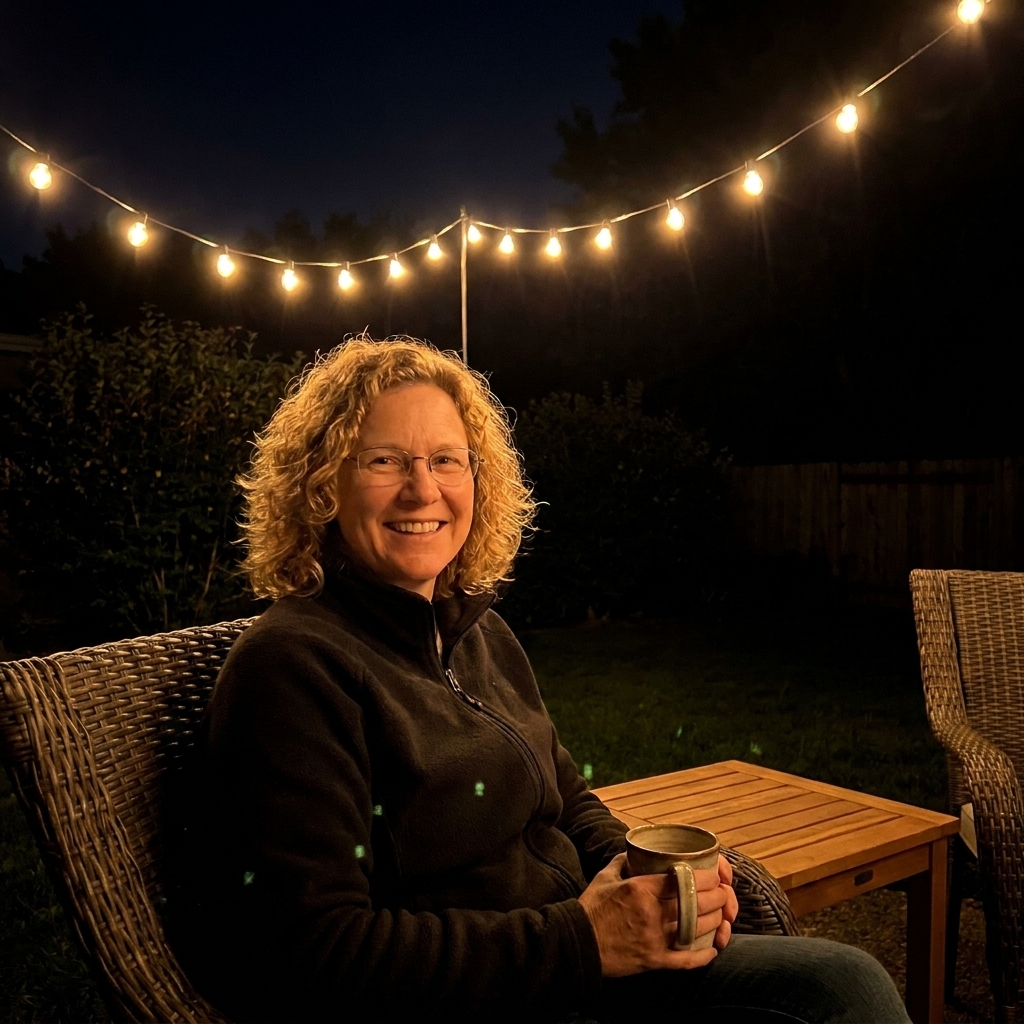
I love bistro lights. I also think they are one of the most common sources of accidental light pollution on small porches. The fix is simple: keep them low-lumen, warm, and controlled.
String light best practices
- Choose warm bulbs: 2200K to 2700K.
- Look for low lumens per bulb: many “vintage” LED string bulbs come in gentler outputs.
- Hang them lower and tighter to your seating zone: the higher they are, the farther the light travels.
- Avoid bare, clear high-output bulbs: they create sparkle, yes, but also intense points of glare.
- Put them on a dimmer or smart plug: the ability to dial down brightness changes everything.
If your patio is right next to a neighbor’s bedroom window, consider swapping some string lights for downward sconces or lanterns with shades. You will still get that twinkle feeling, just more contained.
Placement tricks that work
You can buy the perfect fixtures and still end up with stray light if placement is off. These are my tried-and-true porch fixes.
Mount lights lower when possible
A fixture mounted very high throws farther and can feel harsher. On a porch, aim for light that washes the floor area, not the entire yard.
Aim and shield
- Angle spots down toward plants or a wall, never outward.
- Add simple glare shields where applicable.
- For path lights, choose styles with an opaque top “hat” that blocks the upward view of the LED.
Use surfaces to your advantage
Bounce light gently off a warm-toned wall, a fence panel, or a pergola beam. Reflected light feels softer than direct light, so you can use fewer lumens overall.
Controls that help a lot
The most polite outdoor light is the one that is not on all night long.
- Dimmers: My number one recommendation. Set your everyday level, then bump up only when you need it.
- Timers and smart plugs: Great for string lights and lamps. I love an automatic “off” at a reasonable hour.
- Motion sensors: Best used for brief safety lighting, not decorative fixtures that will trigger constantly with pets or passing cars. If you use them, set a short timer, lower the sensitivity, and aim the sensor toward your own walkway, not the street.
If your area has a curfew requirement, timers are the easiest way to comply without thinking about it every night.
Ordinance-friendly checklist
Local rules vary, but these points are commonly included. If you are trying to stay on the safe side, this list gets you close in most places.
- Use fully shielded and or cutoff fixtures for permanent exterior lights.
- Keep brightness reasonable by choosing lower-lumen bulbs.
- Stick to warm color temperatures (often 3000K or warmer, sometimes 2700K or warmer depending on the area).
- Prevent light trespass into neighboring properties by aiming light down and using shields.
- Add dimmers, timers, or curfews so lights are not burning at full power late into the night.
If you want to be extra careful, search your city website for “outdoor lighting ordinance” and look specifically for words like shielded, cutoff, lumens, and curfew.
My patio lighting formula
If you are standing on an empty porch wondering where to start, here is a simple setup that looks finished without feeling over-lit:
- 1 to 2 shielded wall sconces by the door, warm bulbs, on a dimmer
- Guidance lighting on steps or along a short path, warm and downward
- One cozy “glow” element like a shaded outdoor-rated table lamp or a lantern with a warm LED
- Optional low-lumen string lights over the seating area, on a timer
It reads like a well-styled room outdoors, but it keeps the night sky intact.
FAQ
Are solar path lights dark sky friendly?
Some are, some are not. Look for solar path lights with an opaque top and a downward lens so you do not see the LED directly from the side. Skip the ones that look like bare, exposed dots of light.
What is the best color temperature for a porch?
For a cozy, welcoming look, I recommend 2200K to 2700K. If you need a slightly crisper look for visibility, 3000K can still feel warm, especially with dimming.
How bright should a porch light be?
For most homes, 300 to 700 lumens at the entry is usually plenty when the light is well-shielded and aimed down. If you have steps or a longer walkway, add guidance lighting rather than jumping to a much brighter bulb.
Can I keep my existing fixtures and make them more dark-sky friendly?
Often, yes. Start by swapping in a lower-lumen warm bulb, then consider adding a shade, a glare guard, or replacing clear glass panels with frosted or seeded glass if your fixture allows it. If the bulb is fully exposed, a fixture upgrade is usually the most effective fix.
Keep it gentle
I think of dark sky friendly lighting as hospitality that extends past your own property line. Your patio can feel magical, your plants can look lush, and your guests can see where they are going, all while the neighborhood gets to keep its nighttime calm.
If you are making changes one step at a time, start with the bulb swap. Warm, lower-lumen bulbs in shielded fixtures are the quickest route to a porch that feels cozy to you and considerate to everyone else.